 Crispy Jackie
FC 27 Career Mode Guide Quick Summary:
- FC 27 Career Mode is built around Dynamic OVR — a system that affects player performance and transfer market cost based on their Morale, Form, and Match Fitness. Staying in tune with your roster and ensuring that everyone gets to play to their true potential is key to success.
- FC 27’s Transfer Market is far more nuanced and complex, with many added opportunities, including paying for players in several installments and renegotiating the deals based on the market situation and player demands.
- EA aims to make career choices feel more dramatic and impactful with upgraded Unexpected Events and Press Conferences with long-lasting consequences.
At Skycoach, you can Get FC 27 Coins at the best market price and enjoy any amount of the in-game currency to afford anything you like.


Read closely 
Browse our hottest FC 27 Boosting services








What is Career Mode in FC 27?
FC 27 Career Mode follows the old and familiar formula, allowing fans to take on the role of a manager or an individual player and build a long-lasting legacy. As a manager, you get to control the club’s overall performance on the pitch, as well as finances, transfers, and the youth academy. As a player, you take on the role of one particular athlete during the games and try to sign the best possible contracts to maximize your potential outside the pitch.
Most of this year’s additions to the game affect Manager Career, which is also the default single-player mode, so we will mostly focus on it. While there is a lot to cover, FC 27’s Dynamic OVR is by far its most exciting and impactful feature, so we’ll have to speak about it first.
Dynamic OVR and How It Works
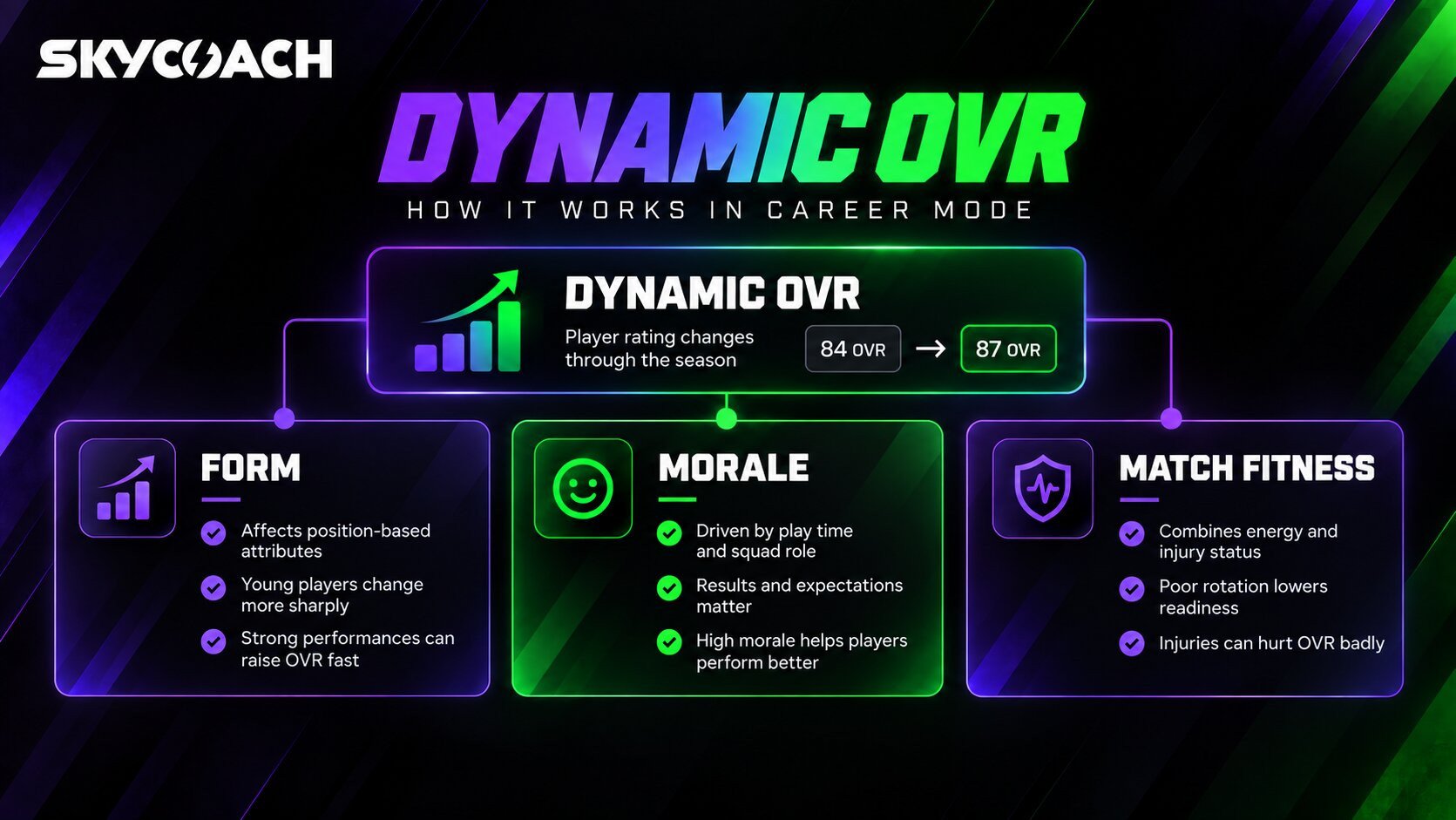
From now on, players aren’t confined to a static and predetermined Overall Rating that won’t budge no matter the circumstances. EA is looking to make the Career Mode both more realistic and more dramatic, with players reaching new peaks and lows based on the events of each season.
Essentially, Dynamic OVR introduces a system consisting of three parameters, all of which affect the player’s overall score.
Form
To better fit the new OVR system, EA has reworked Form into a more flexible metric. First off, it affects players differently based on their age and talents, with younger athletes getting a higher ceiling and more dramatic changes, and veteran players showing a more consistent performance. From now on, Form will also only influence attributes that affect a player’s preferred positions, so any changes to it will be way more noticeable.
Morale
Morale is significantly more volatile in FC 27, and any changes to play time, squad roles, performance level, and expectations will directly affect the player’s Dynamic OVR. EA tries to introduce more nuance to managing teams, highlighting the importance of the mental aspect of the game. While FC 27 currently doesn’t seem to offer that many ways to affect someone’s morale, the system might get expanded in future installments.
Match Fitness
Match Fitness is an entirely new parameter that represents a player's physical condition. To put it simply, it is a combination of Energy Level and Injury Status that is designed to separate stamina management from long-term readiness. From what we’ve seen so far, Match Fitness is focused on negative impact rather than performance boosts — it is here to show just how devastating bad rotations and injury mismanagement can be.
How Important is Dynamic OVR in FC 27?
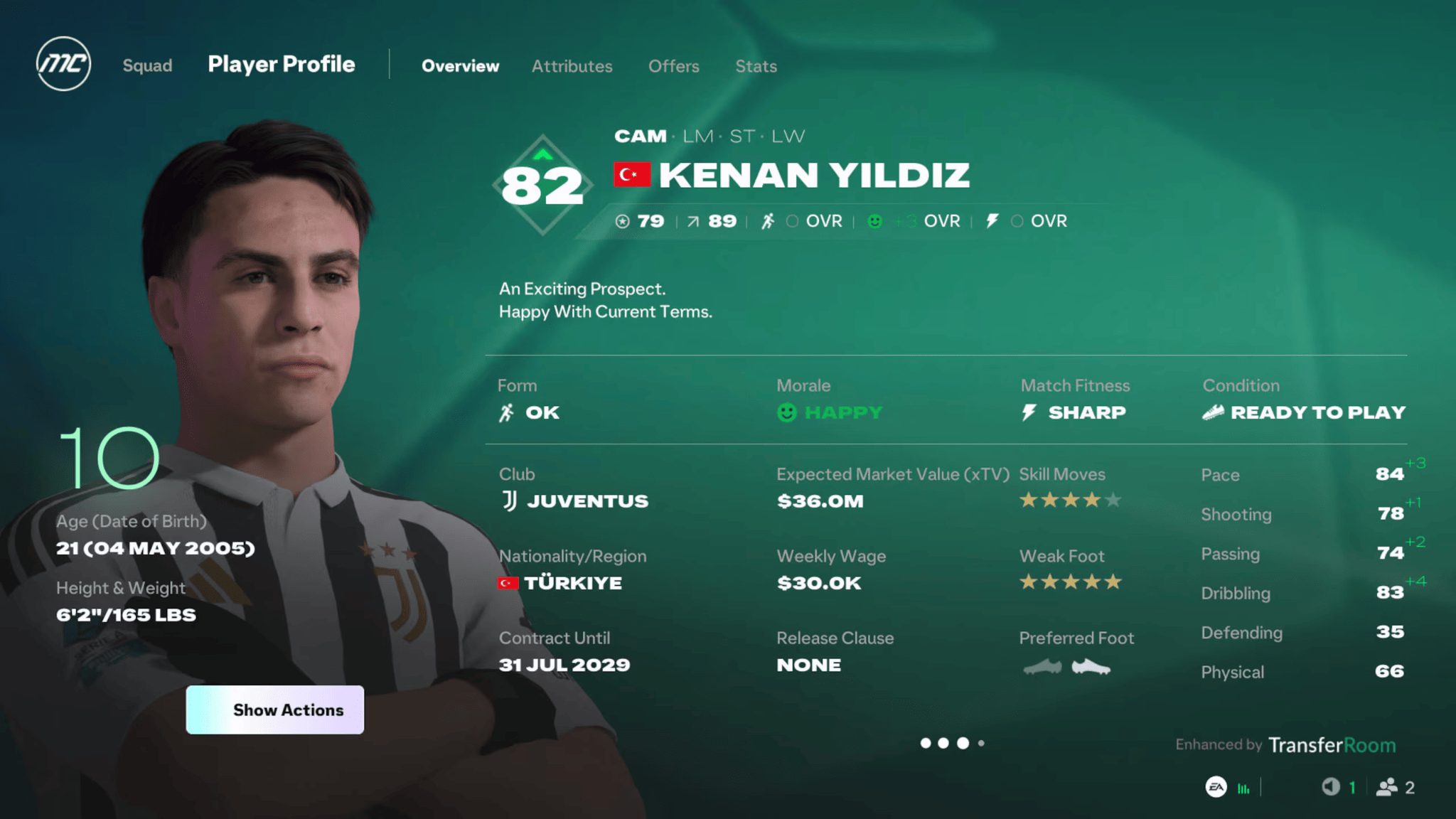
As of now, Dynamic OVR’s impact on gameplay is hard to predict. EA might decide to tinker with it prior to release, and since most fans haven't got to try the game out yet, we cannot be sure how it will feel. It is definitely the cornerstone of the game, and it does look fun at the moment, but a system like that can only improve your experience if it’s incredibly well-balanced.
If undertuned, Dynamic OVR can go completely unnoticed, making everyone wonder why EA even bothered with implementing it in the first place.
Here’s a hypothetical: one of your reserve players gets a two-point OVR boost thanks to decent Form and Morale — will this result in a meaningful difference in terms of their performance? Now imagine if they lose three OVR points due to not getting to play often enough. It’s not a lot, but it will likely incentivize you to stick with your current main roster at all times, which seems like the opposite of what the developer intended.
At the same time, if EA overtunes it, the game will quickly turn into chaos, forcing managers to prioritize juggling their rosters at the cost of other activities.
From what we’ve seen so far in the beta version of the game, players’ scores can easily drop or rise by two to three points after a single game.
Here’s a quick example of how the system currently looks in action:
|
Player |
Baseline OVR |
Starting OVR |
OVR after 1 game |
OVR after 6 games |
Mid-season OVR |
|
Dominik Szoboszlai |
83 |
84 (+1 from Morale) |
84 (+1 from Morale) |
88 (+4 from Form, +1 from Morale) |
80 (-3 from Form, -1 from Morale) |
|
Alexander Isak |
88 |
89 (+1 from Morale) |
89 (+1 from Morale) |
91 (+2 from Form, +1 from Morale) |
90 (+1 from Form, +1 from Morale) |
|
Florian Wirtz |
89 |
90 (+1 from Morale) |
88 (-2 from Form, +1 from Morale) |
90 (+ 1 from Morale) |
96 (+2 from Growth, +3 from Form, +1 from Morale) |
Great performance leads to significant boosts throughout the season, but the coin has a flip side: it is possible for a player to lose up to 9 OVR points due to injury, relegating them from a world-class athlete to someone you would rather not see on the pitch during an important game. If injuries can lead to such massive OVR losses, you might feel incentivized to save scum, which is the opposite of a dynamic and realistic experience.
Browse our hottest FC 27 Boosting services








Transfer Overview
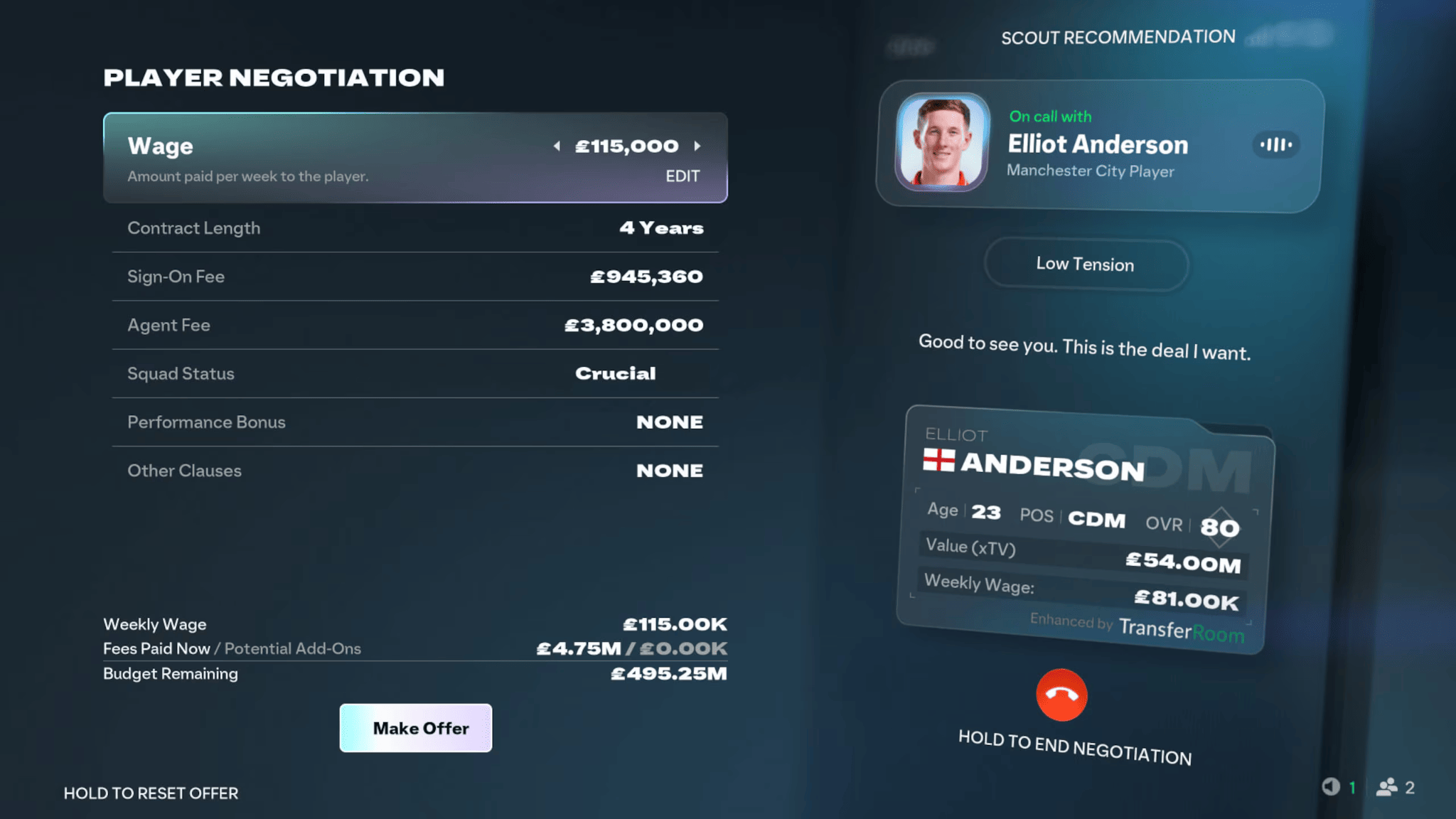
Some of the FC 27 Career Mode changes were, frankly, long overdue.
Yes, we’re talking about interactive negotiation cutscenes, which are finally being replaced with simple 2D menus. Fans have been asking for it for almost a decade at this point, and the accumulated frustration has moved the needle. What might’ve looked like a good idea on paper quickly turned into an annoying waste of time, and the lack of variety in animations made these slow and clunky cutscenes feel repetitive after your first transfer window. Good riddance.
Transfers themselves have become more competitive, complicated, and realistic. What most players will likely notice right away is that purchasing players with high potential is going to be far more costly: FC 27 makes sure that you aren’t the only one who realizes these players’ true value. A future football star that you could get for 6 million in the past will now cost you over 20 million, meaning that you’ll have to manage your finances far more carefully.
At the same time, it’s not like developers have locked you out of efficient transfer tactics. Content creators have tried out the beta version of the game and have quickly pointed out that the Dynamic OVR can have a massive influence on transfers, leading to easy purchases of players with lowered scores. Boost their morale and performance, and you can easily get to witness their true potential on the pitch, or sell them for a significantly higher price.
Scouting
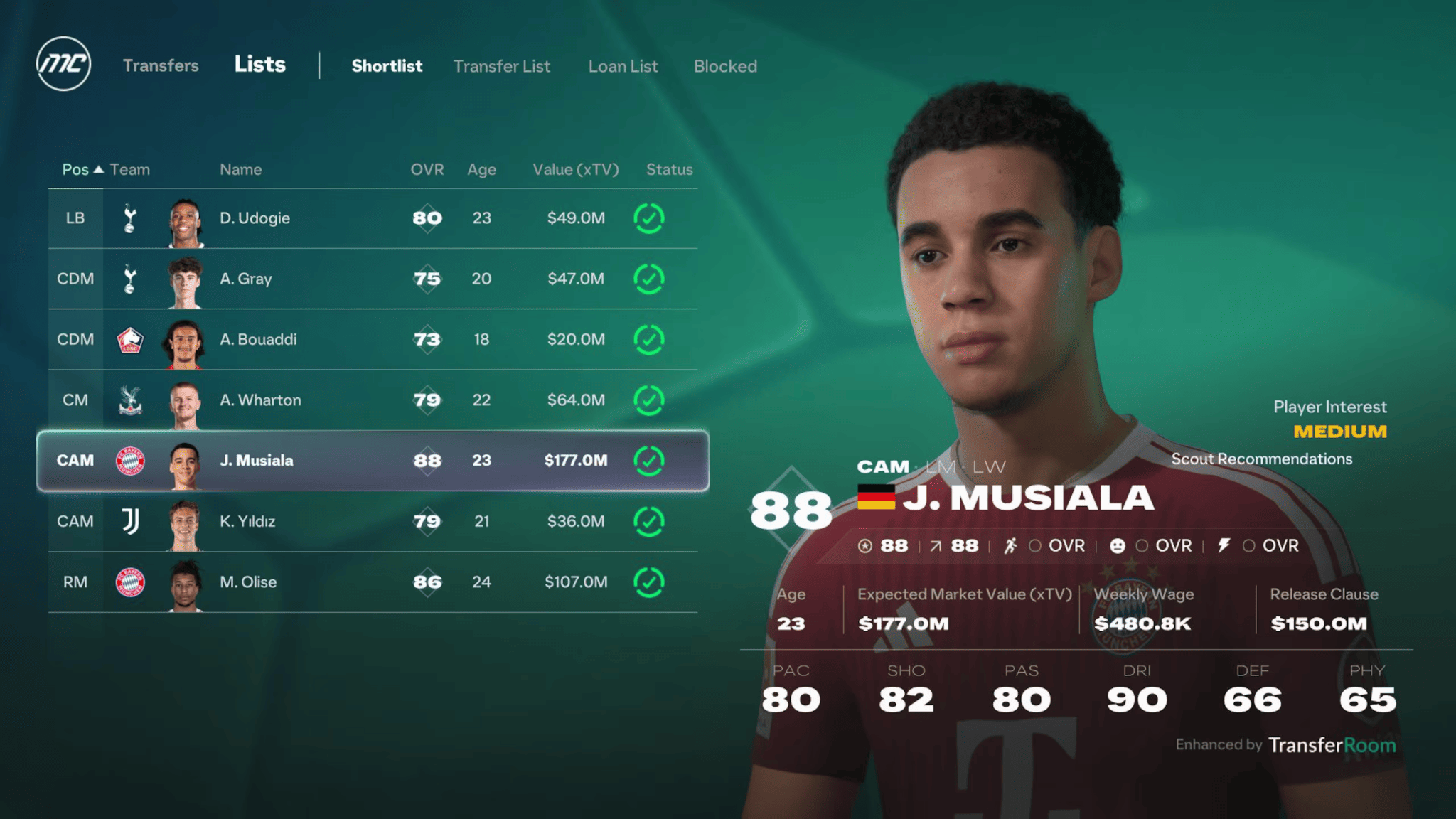
Many fans will be happy to learn that FC 27 won’t obscure the player’s attributes. The information game is changed: while you do know all the baseline numbers, assessing the player’s current state is something that requires a proper investigation.
The new version of Scouting consists of four distinct stages:
- Tactical fit — your Scout determines the player’s performance and match ability.
- Future — the Scout evaluates the player’s potential.
- Financial assessment — your Scout estimates the cost of a potential signing as well as the player's interest in moving anywhere at all.
- Status — your Scout learns about the player’s happiness and interest in your specific club.
As you can see, EA clearly builds the entire game around Dynamic OVRs, and Scouting is no exception. However, even if fans end up disliking the system, getting to know the baseline attributes right away still feels much better than what we’ve had before. This is especially true if you consider the expanded Deeper Simulation system, which can now calculate up to ten leagues at a time and allows for a wide and realistic Scouting network.
A New Transfer Process
It is impossible to consider FC 27 career mode explained properly without diving deep into how the transfers are handled. This year, EA introduces a four-step negotiation process, which is going to take a bit more time and consideration, with many opportunities for dramatic twists.
- You start with an inquiry, which is all about catching the club or player’s attention first.
- If the other side is interested in what you have to offer, you will get permission to move to the negotiations between the clubs and the player, all happening simultaneously.
- If you can reach an agreement, the buying club and player enter another round of negotiations, focusing on contract, salary, etc.
- If successful, this leads to the final opportunity to revisit the terms.
The transfer system itself is far more flexible in FC 27, allowing you to pay for players in several installments, offer multiple achievement-based bonuses, and create highly detailed individual contracts with various rewards tied to appearances, goals, assists, clean sheets, or other objectives.
It’s not like EA decided to make the process more drawn out for no reason. FC 27 features a much more competitive market, with other clubs willing to interfere at any stage of your deal to steal your potential new player, which will inevitably lead to the selling club increasing their demands. Rival clubs will outright refuse to negotiate with you, and their improved AI will ensure that their transfers will be made in accordance with a long-term vision — at least, that’s what EA promises.
All of this will likely push your transfer strategy to the limit, making you fight tooth and nail for every opportunity. If you find dealing with all of that more exhausting than exciting, you are free to delegate the entire process to one of your subordinates.
Players: Growth and Flexibility
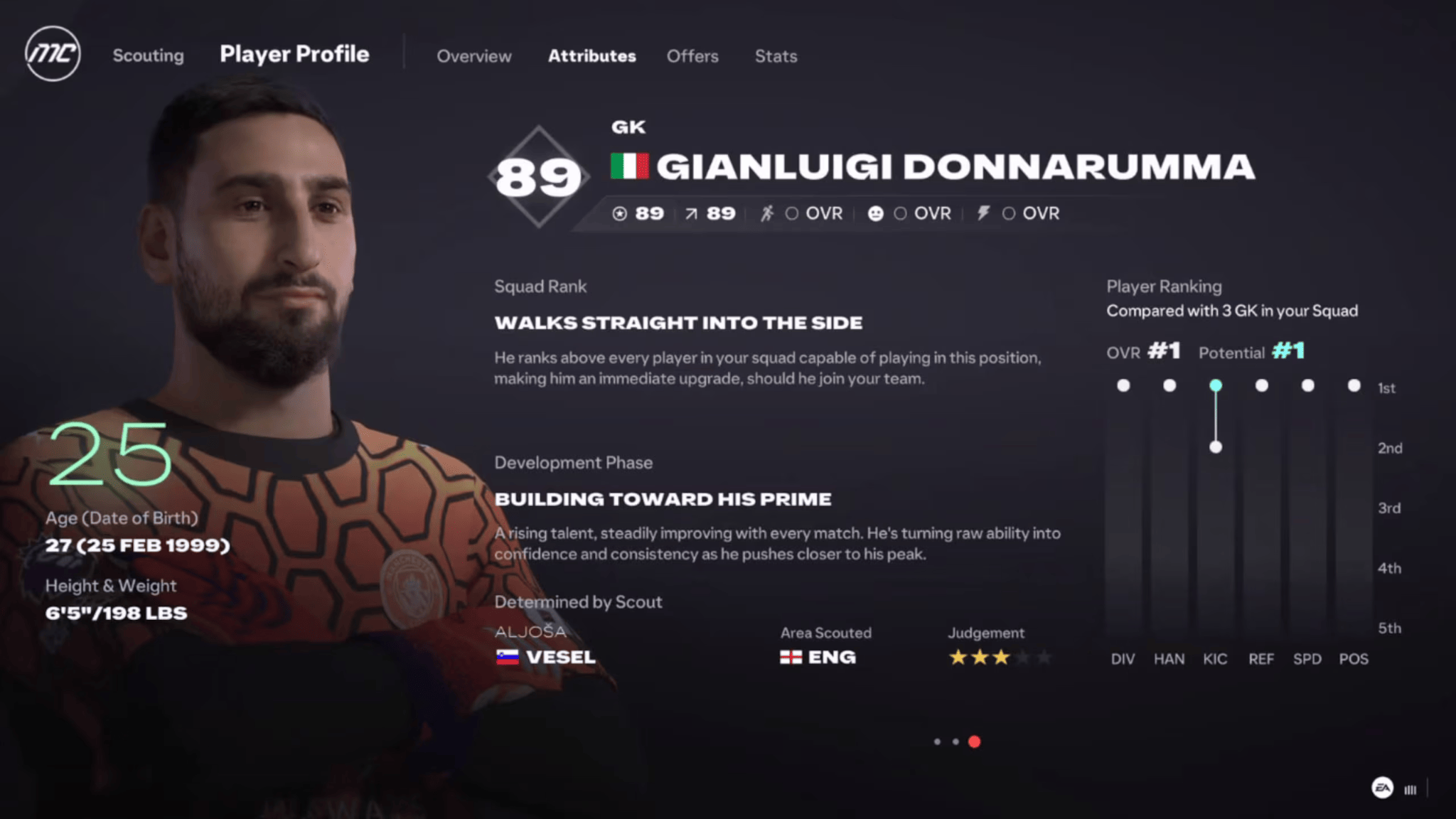
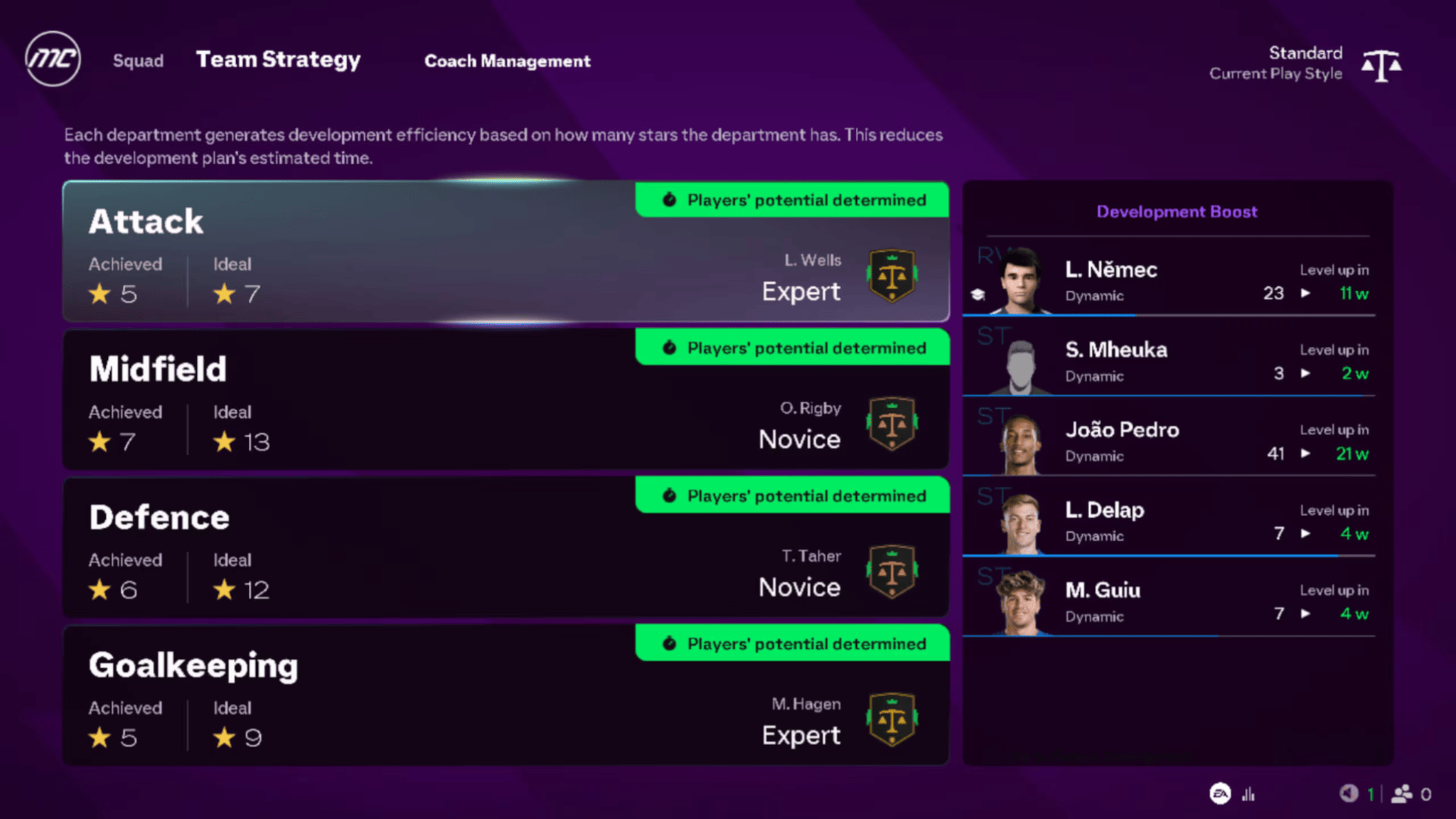
One of the most noticeable changes introduced by FC 27 is Growth Profiles — a system determining how each player develops their skills over the course of their career.
As developers mention, real athletes show varied growth trajectories: some might peak at a very young age, while others continue to steadily improve into their late twenties. Some players might plateau for years, while others will show a noticeable decline after just a few great seasons.
The new system is designed to reflect that, and it works together with Dynamic OVR to ensure that players’ growth is a much less static and predictable metric. So far, there are six different Growth Profiles added to the game, but we believe that EA might add a few more in future games if fans respond positively to this addition.
Speaking of growth, coaches in FC 27 no longer improve your players’ attributes, but rather assess their potential. The more experienced your coach is, the higher level of accuracy you can expect from them.
So far, we’ve mentioned a lot of changes that aim to deepen the gameplay by adding nuance and complexity, but these aren’t always good things. Too much complexity in FC games usually leads to players getting stuck in menus, dealing with too many systems at a time, and feeling limited in their choices.
A good example of EA addressing this issue is an updated version of Positions, now allowing players to have up to seven positions they can perform in without suffering major penalties. On paper, you’re given more space to experiment with your roster and tactics, and that might lead to cool discoveries along the way. From what we’ve seen so far, this level of flexibility doesn’t seem to make positions meaningless — players still very much prefer playing in their comfort zone.
If you like to play multiple seasons throughout your Career, you will be happy to hear that FC finally brings a new player data system. Newcoming players will receive randomly generated attributes based on the reference player instead of being a straight copy of them. While still a half-measure, this at least helps the game distance itself from a fantasy-esque cycle of legendary hero rebirths.


You got -20% OFF 
Unexpected Events and Press Conferences
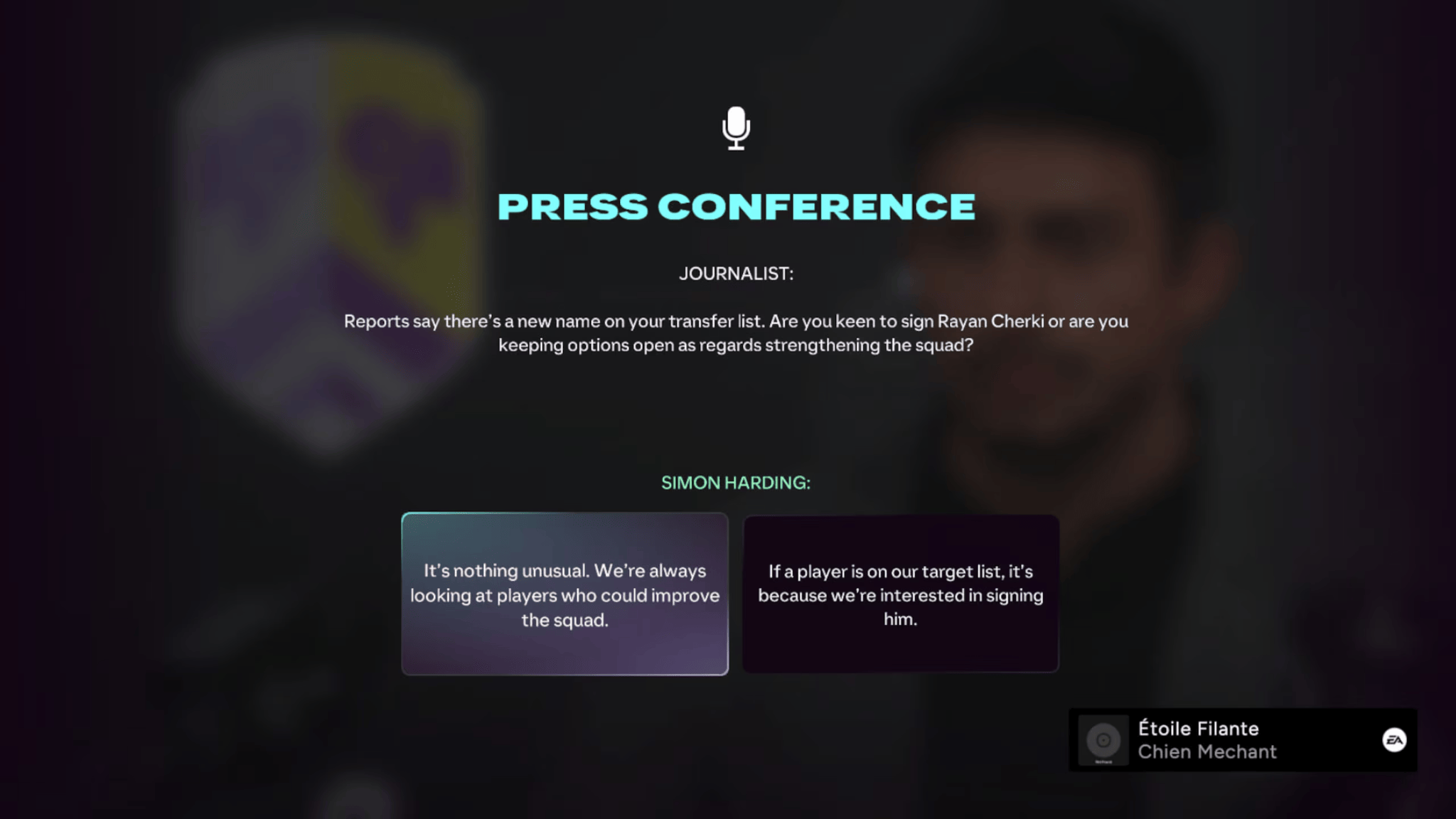
Part of a manager's job is dealing with all sorts of unpredictable situations that happen outside the pitch, and FC 27 doubles down on this aspect of gameplay by further expanding its Unexpected Events system. This includes surprising injuries, financial mismanagement situations, internal conflicts, player behavior issues, and more.
EA’s stated goal here is to turn some of these events into “genuinely high-stakes moments in your Career”, further adding drama and tension. These events aren’t a one-time deal either — developers promise that they will evolve through multiple stages across your career, with long-lasting consequences coming from each of your previous choices.
Press Conferences are reworked to occur only during major events, bearing more weight. Still, the system is rather straightforward: the game will present two options to choose from, generally with opposite results.
Read our other FC 27 guides:
F.A.Q.
What’s new in FC 27 Career Mode?
First of all, FC 27 features a fresh Dynamic OVR system that ties player performance to their current Form, Morale, and Match Fitness. EA has also reworked Transfers, adding multiple stages to the process as well as making it far more competitive and interactive. There are also several changes to Positions, Unexpected events, and the UI.
What is Dynamic OVR?
The Dynamic OVR system is meant to represent player performance over the season more realistically. Good Morale and Form ensure that athletes play at their peak, while injuries and lack of practice lead to lower ratings. The system affects players across the league and can influence game results as well as transfer market decisions.
How do transfers work in FC 27?
The transfer process is divided into four stages, including the inquiry, two negotiation stages, and the final offer. Rival clubs can interfere at any point, offering better deals for the player, forcing you to renegotiate the terms and spend more than you have initially planned. Transfer costs are also affected by the player’s current performance thanks to the newly added Dynamic OVR feature.