 Dallon Avery
Best Modifiers in Escape from Tarkov Quick Summary:
- When picking personal modifiers, the sum of their points must always be equal to zero
- Some positive modifiers are better than others and are worth investing in
- Certain negative modifiers are not as bad as they may seem
Need some Rubles to set you up for the rest of the season? Buy EFT Rubles at Skycoach and get any amount you need. Now available to Seasonal Characters as well!


Read closely 
Browse our hottest EFT Boosting services






How KORD BREACH Personal Modifiers Work
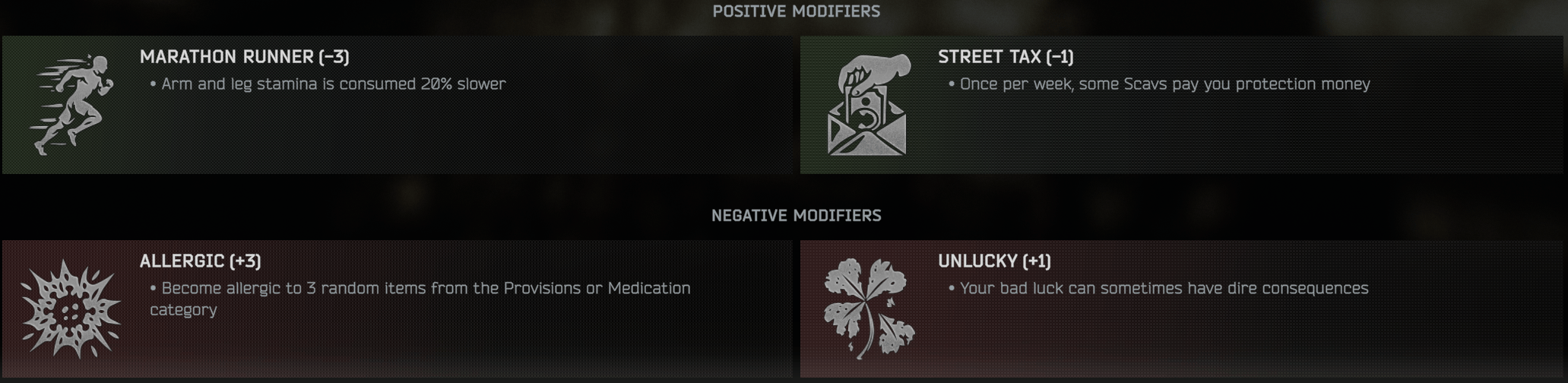
You can pick any amount or combination of positive and negative modifiers when you create a seasonal character on top of the default ones that are active for all players. This way you can make your character different from others and simplify or make your seasonal journey more difficult.
You can’t just pick a bunch of positive modifiers; that would not be fair. So the way this works is - negative ones add points, and positive ones reduce them. Your final modifier balance must be zero or higher. You can also create a character without selecting any Personal modifiers, although that means giving up on a few pretty good advantages that almost cost nothing. Selected modifiers apply to that Seasonal Character (PvP-only) throughout its playthrough.
I can tell you right now - picking the best-looking bonus isn’t the right move. One modifier can seem too good, but different players see different value in the same modifiers. Once you see my ranking, you’ll know that the right setup depends on how long you plan to play, which systems you rely on, and whether you are chasing the seasonal achievements.
Best Positive Personal Modifiers Tier List
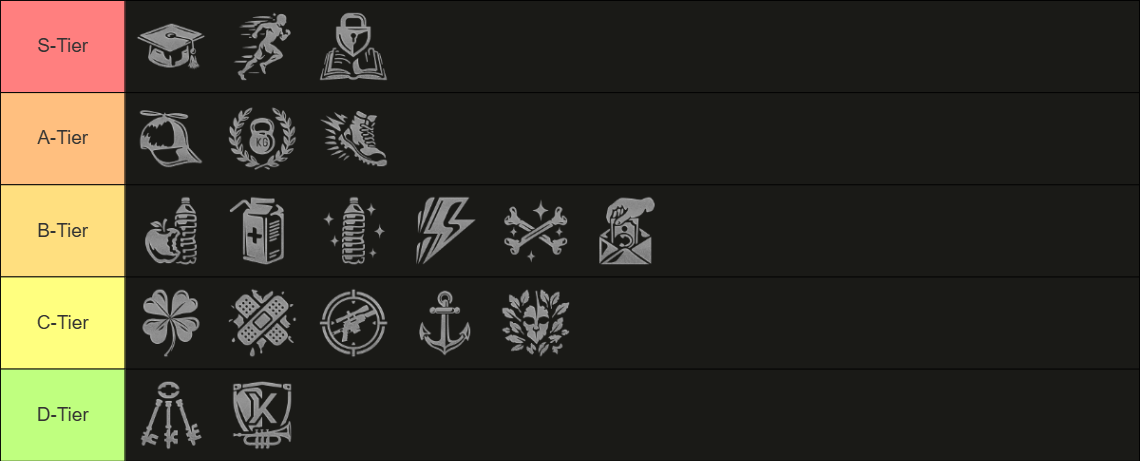
For this tier list, positive modifiers are ranked by the value they provide for their cost. Negative modifiers use the opposite logic. An S-Tier negative modifier is one of the safest penalties to accept, not one of the most punishing.
|
Tier |
Positive Personal Modifiers |
|
S-Tier |
Prodigy, Marathon Runner, Average |
|
A-Tier |
Youth, Hercules, Sprinter |
|
B-Tier |
Diet, Juice Time, Hypodipsia, Polyphagia, Sturdy Bones, Street Tax |
|
C-Tier |
Lucky, Thrombophilia, The Tarkov Shooter, Sailor’s Nostalgia, Bushborne |
|
D-Tier |
Safecracker, Kappa Protocol |
The current positive modifier roster contains 19 options. Their live effects and costs differ from several pre-release versions, including the reduced 12-point cost of Kappa Protocol and Average, the addition of Prodigy and Lucky, and higher values for several stamina and survival modifiers. I mean, please be careful which sources you’re using to make the decision - some pre-patch and news-based sources, even those that reference the official posts, are now outdated. The only really up-to-date info on these modifiers and their values is in the game right now.
S-Tier Positive Modifiers
Prodigy

Cost: 5 points
Prodigy increases all skill experience gain by 30%. It is the best long-term modifier in KORD BREACH and should be one of the first choices for anyone planning to keep the same character throughout the season. I personally didn’t think much of this modifier, but if you think about it, it really is just a net positive. When your character gets better 30% faster at every skill in the game, you can’t go wrong with it. And it costs not as much as the other ones.
With Prodigy, you’ll level up Strength, Endurance, Metabolism, Health, weapon skills, armor skills, Mag Drills, and almost every other skill that develops through regular gameplay.
The longer you play, the more value it generates. A player who would normally require around 1,000 raids to reach certain skill goals could theoretically make similar progress in roughly 700 raids. The exact result depends on skill exhaustion and how efficiently each skill is trained, but the time-saving potential is enormous.
Prodigy is less impressive during the first few raids than Hercules or Average. It doesn’t have that “immediate value”, but, as I said, it gets way better the more you play.
Do not combine it with Average. Average prevents most skills from progressing beyond level 25, removing the main reason to take Prodigy.
Verdict: The best modifier for a long-term Seasonal Character. In other words - a must-have if you plan to play throughout the season until it ends and get the most out of it.
Marathon Runner
Cost: 3 points
Marathon Runner makes arm and leg stamina drain 20% slower. That affects sprinting, aiming down sights, and other stamina-heavy actions.
This one was a no-brainer for me, because I sprint like an idiot all the time, and since I don’t bring any food or drinks with me in a raid (why would I? I’m usually dead in the first 3 minutes), if the raid goes my way and I am actually making my way to extraction with a loaded backpack and pockets, the stamina is my worst enemy. The time is ticking, and having that extra oomph from stamina is pure gold.
You can cross open ground with fewer stops, hold an angle for longer, reposition more comfortably while carrying loot, and spend less time waiting for stamina to recover. Unlike a fixed starting skill bonus, this remains useful after you have developed high Strength and Endurance.
This one is not just my top pick. You could also hear Pestily and SheefGG both recommending it for all types of players.
Verdict: The most universally useful Personal modifier.
Average

Cost: 12 points
Average sets almost every character skill to level 25 but prevents those skills from increasing further. Crafting is excluded from the restriction. If you didn’t know, the skill's maximum level is 51, which makes it an Elite version of that skill. So, is cutting that number by half for the rest of the season worth it? Let’s talk about it.
This is a huge upgrade, right off the bat, when you’re just starting. Your Seasonal Character begins with improved physical skills, weapon handling, metabolism, health, armor repair, magazine handling, searching, looting, and numerous smaller bonuses that normally take a long time to develop.
Average also helps counter several common negative modifiers. Starting with better Health and Metabolism makes increased food, hydration, bleeding, and fracture penalties easier to handle from the first raid.
The drawback becomes more important over time. A character locked at level 25 will eventually fall behind an active player who naturally pushes important skills beyond that point. Average is therefore strongest for casual and medium-length playthroughs, not for a character expected to complete hundreds of raids.
You’ll only start seeing the drawback of taking this modifier way into the season. Think about how many raids it took you to get your skills past level 25 normally? Then think about the 25% experience bonus from the common modifier and another 30% if you get Prodigy. If that’s worth it or not is up to you, but the point I’m making here is this - if you don’t plan to stay with Seasonal Character till the last day, and you’d rather keep working on your permanent character, then it is the best pick for you.
Verdict: The best bonus out of the box if you don’t plan to play on leveling the seasonal character to the max.
A-Tier Positive Modifiers
Youth

Cost: 5 points
Youth reduces energy consumption by 20% and adds ten points to arm and leg stamina.
The stamina increase is its real selling point. It improves both movement and weapon handling from the first raid and continues to matter after your skills increase. The slower energy drain is useful during long raids, although food is rarely difficult to obtain after you’re done with the first tasks.
Youth is pretty good, but its five-point cost creates stiff competition with Prodigy. For a long playthrough, Prodigy usually takes the cake. For a short or PvP-heavy character, Youth provides a more immediate benefit.
Verdict: A powerful permanent stamina bonus with an expensive point cost.
Hercules

Cost: 5 points
Hercules starts Strength and Endurance at level 15.
Those are two of Tarkov’s most important physical skills. The early boost improves stamina, movement, carrying capacity, and general comfort before most players have developed their characters.
Its weakness is that the advantage can be reproduced naturally. Active players will eventually reach level 15 Strength and Endurance without spending modifier points. The gym and Prodigy also reduce the time needed to close that gap.
Hercules is much better on a character that you don’t plan to use too often. For long-term progression, Prodigy should take priority.
Verdict: Excellent early power that gradually loses value.
Sprinter

Cost: 3 points
Sprinter increases running speed by 5%.
An extra 5% bump to sprint speed is nice, especially if you love doing those looting runs, especially if you pair it with a good PC setup that lets you load into the raid faster than others.
The practical difference over a short distance is small. A route that normally takes one minute will be just a few seconds shorter. Sprinter also cannot be combined with certain opposing movement modifiers, including Third Leg.
Marathon Runner is generally easier to build around because it improves sprint duration and ADS stamina without removing Third Leg as an easy negative pick.
Verdict: Good mobility, but less efficient and flexible than Marathon Runner.
B-Tier Positive Modifiers
Diet

Cost: 2 points
Diet makes all provisions consume 50% fewer resources. A food or drink item effectively provides twice as many partial uses.
This is convenient during long raids and works well with items saved for tasks or barters. It can also make expensive provisions last longer.
But come on, dude. Does anyone really think they can last long enough in a raid for this modifier to kick in? I can recall the number of times I died from dehydration in this game by my digits. And that was primarily on Woods with me sitting in the corner scared half to death.
Verdict: Cheap but only useful if your raids last long enough.
Juice Time
Cost: 2 points
Drinking juice grants the Painkiller effect for 60 seconds.
The modifier currently appears to activate even when only one resource point is consumed. So a Vita Juice with the capacity of 40 points means you have 40 Painkillers that only take two slots.
Even without that interaction, Juice Time offers a practical alternative to carrying additional painkillers. But the painkiller effect duration is pretty short, which is a balancing thing.
Verdict: A clever utility pick that may depend on an unintended interaction.
Hypodipsia
Cost: 2 points
Hypodipsia reduces hydration consumption by 20%.
It helps during long raids and partially removes the need to carry drinks. The bonus is obvious but not especially impactful once food and water become easy to acquire.
It also spends two points to solve a problem that can normally be handled with inexpensive provisions and higher Metabolism.
Verdict: Comfortable, safe, and unremarkable.
Polyphagia

Cost: 2 points
Polyphagia reduces energy consumption by 20%.
Same as Hypodipsia but for food. Slower energy drain helps during long raids, but the problem becomes less serious once your stash and Metabolism improve.
Youth provides the same energy reduction alongside additional stamina, although it costs considerably more.
Verdict: Useful filler for players who dislike managing provisions.
Sturdy Bones

Cost: 3 points
Sturdy Bones reduces limb fracture chance by 25% and fall damage by 20%.
It protects against unlucky fractures and makes aggressive movement slightly safer. However, fractures can already be treated with cheap medical items, while fall damage is usually avoidable. I do recall a couple of times of me breaking my legs after jumping from somewhere no human was supposed to jump off. But I still get shot more often, so the use of this is debatable.
Spending three points to reduce occasional injuries is difficult to justify when Marathon Runner costs the same amount.
Verdict: A safe defensive option with stronger competitors.
Street Tax

Cost: 1 point
Street Tax causes some Scavs to pay protection money once per week.
How much money do you get? It’s about 150k Rubles, some Dollars, and some Euro. The one-point cost makes it easy to add to a finished build. It also appears in a seasonal achievement that requires players to accumulate enormous amounts of currency while using Street Tax.
I took it because I know I will struggle with getting money, especially until I unlock Flea Market and some of its more lucrative deals. Those who decided to play without the Flea Market, this is also a good pick.
Verdict: Low-cost filler with achievement value.
C-Tier Positive Modifiers
Lucky

Cost: 1 point
Lucky only provides the phrase “Audentes fortuna iuvat,” meaning fortune favors the bold.
The actual effect is intentionally vague and was still unclear during early testing. It’s hard to tell exactly what it does, but I assume that it gives you a small bonus chance to find more valuable items in the loot boxes.
Lucky could move considerably higher once its mechanics are fully decoded. Until then, it is difficult to recommend over a known benefit.
Verdict: Cheap enough to experiment with, but impossible to value reliably.
Thrombophilia
Cost: 2 points
Thrombophilia reduces bleeding chance by 25%.
Bleeding is dangerous, but this modifier mostly cancels Hemophilia or reduces a problem that can be handled with medical supplies and skill progression.
A positive modifier should ideally create an advantage rather than spend points undoing a manageable negative. Thrombophilia may still appeal to PvP players who, I bet, would prefer not to deal with heavy and light bleedings after every bullet exchange. Provided they survived it.
Verdict: Useful protection, but poor point efficiency.
The Tarkov Shooter

Cost: 2 points
The Tarkov Shooter starts the Bolt-Action Rifles skill at level 25 and increases its leveling speed by 100%.
It is excellent for a player committed to bolt-action rifles. For everyone else, it affects one mediocre weapon category and provides little value outside specialized quests or sniper gameplay. Don’t get me wrong, those Jaeger quests that require kills with bolt-action rifles are pure evil, but even having this weapon type skill level at 25 doesn’t guarantee anything. You still have to pick your spots, find enemies to kill, and land your shots.
Changes to seasonal task progression may also reduce the need to force bolt-action skill levels solely for quest requirements.
Verdict: Okay for dedicated snipers and easy to skip for everyone else.
Sailor’s Nostalgia

Cost: 2 points
Eating canned fish grants Health Regeneration +2 for 30 seconds.
The healing effect is not useless, especially when recovering after a fight. The problem is that it depends on carrying and consuming a specific food type for a short regeneration window. It’s more of a meme modifier in my book.
Medical items restore health more quickly and predictably. Juice Time at least provides a utility effect that can change how you prepare for pain.
Verdict: Fun and flavorful, but not much else.
Bushborne

Cost: 5 points
Bushborne reduces movement noise in vegetation by 75% and reduces the slowdown caused by vegetation by 75%.
The effect is good on Woods, Shoreline, Lighthouse, and parts of Customs. Players who regularly move through bushes can reposition faster and create much less noise.
The five-point cost is the problem. You need to accept several additional negatives to unlock a bonus that does nothing on Factory and provides limited value across many indoor areas.
Bushborne can be excellent for one particular playstyle. It is poor value for a general Seasonal Character.
Verdict: Powerful on the right maps, but far too expensive for general use.
D-Tier Positive Modifiers
Safecracker

Cost: 6 points
Safecracker gives mechanical keys a 20% chance not to lose durability when used. Keycards are excluded.
Keys do not lose durability frequently enough to justify six points. Even on an expensive key, the modifier only adds extra uses.
Why on earth would you want to use it when most keys have between 20 and 40 uses? Even if all you do is run to the specific door to open it, you’ll still get the key’s worth in like 2-3 runs. And look at that points cost!
Verdict: The worst value among conventional positive modifiers.
Kappa Protocol

Cost: 12 points
Kappa Protocol immediately grants the Secure Container Kappa.
Starting with Kappa sounds so good that I even considered it the moment I learned about it. Especially since I have the cheapest game edition. The 12-point price still forces you to select a large package of negative modifiers.
Those disadvantages affect every raid. The extra secure-container space is helpful, but it does not improve combat, movement, skills, or progression speed.
Kappa Protocol is mainly worth selecting for the achievement connected to receiving Kappa through the modifier. The recommended achievement route is to unlock it, enter a raid to trigger the achievement, and then reset the Seasonal Character.
Verdict: Best used to get the achievement, no good value otherwise.
Browse our hottest EFT Boosting services






Best Negative Personal Modifiers Tier List
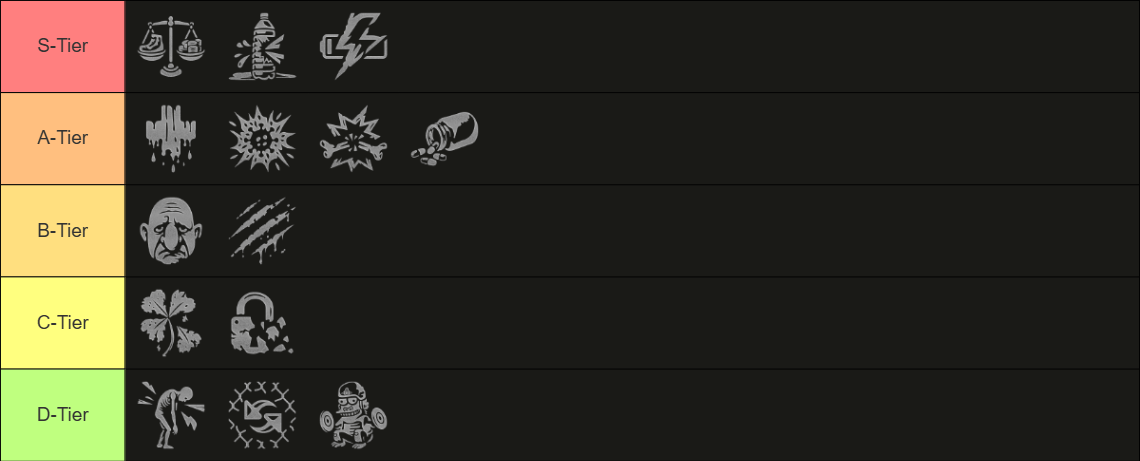
What do I call the best negative modifiers? The ones that add the most points and the ones with the easiest negative effects.
|
Tier |
Personal Modifiers |
|
S-Tier |
Third Leg, Polydipsia, Chronic Fatigue Syndrome |
|
A-Tier |
Hemophilia, Allergic, Osteoporosis, Well That Hurt! |
|
B-Tier |
Personality Vacuum, Dr. Jekyll |
|
C-Tier |
Unlucky, Broken Secure Container |
|
D-Tier |
Exhaustion, No Flea Market, Incompetent |
An S-Tier placement here means that the modifier provides relatively safe points. D-Tier modifiers are extremely disruptive and should normally be reserved for achievements or self-imposed hardcore runs.
The live negative modifier roster contains 14 choices. Several costs increased after their initial announcement, including No Flea Market and Incompetent at ten points each, Broken Secure Container at six, and Exhaustion at five.
S-Tier Negative Modifiers
Third Leg

Value: 1 point
Third Leg reduces movement speed by 1% but makes purchases from Therapist 5% cheaper.
A 1% movement penalty is almost impossible to notice during normal gameplay. Armor and carried weight create far larger movement changes. The Therapist discount partly compensates for the disadvantage and can save money on medical purchases.
The main limitation is that Third Leg cannot be used with Sprinter. For a Marathon Runner build, it is probably the easiest point available.
Verdict: The safest negative modifier in KORD BREACH.
Polydipsia
Value: 2 points
Polydipsia increases hydration consumption by 20%.
This is annoying during the early raids, when the stash is empty, and Metabolism is low. It becomes much easier to manage once drinks are plentiful and the character’s skills improve.
Most players already loot provisions or carry water on longer maps. Polydipsia changes what you pack but does not fundamentally change how you fight or progress.
Verdict: Two efficient points for a manageable resource penalty.
Chronic Fatigue Syndrome

Value: 2 points
Chronic Fatigue Syndrome increases energy consumption by 15%.
Like Polydipsia, it is mostly an inventory and planning tax. Carry more food, eat during long raids, and develop Metabolism.
It may become uncomfortable when combined with Polydipsia because you must manage both resources. Long-term characters can still absorb both penalties without much difficulty.
Verdict: Easy points for players willing to carry food.
A-Tier Negative Modifiers
Hemophilia

Value: 2 points
Hemophilia increases bleeding chance by 25%.
The modifier only matters after taking damage, so confident fighters may consider it relatively cheap. Bleeding resistance also improves through character progression, reducing the penalty over time.
The early game is more dangerous. Every fight has a higher chance of consuming bandages, medkit durability, or valuable seconds while you search for somewhere safe to heal.
Hemophilia becomes much worse when combined with Dr. Jekyll or Well That Hurt. Taken alone, it remains one of the better combat-related negatives.
Verdict: Good long-term value with a rougher early wipe.
Allergic

Value: 3 points
Allergic makes the character allergic to three random provisions or medical items.
You are not told which items trigger the reaction. The only way to identify them is to consume different items during raids. Depending on the result, the modifier can range from almost free to extremely inconvenient.
Most important consumables have alternatives. Propital can be replaced with Adrenaline in some situations. Ibuprofen can be replaced with Golden Star or Vaseline. M.U.L.E. can be partially replaced with other carrying-capacity stimulants. Food and drink allergies are usually even easier to work around.
There is still genuine risk. An allergy to a favorite stimulant or common medical item could force you to change a familiar loadout for the entire playthrough.
Verdict: Excellent point value for players willing to adapt.
Osteoporosis

Value: 3 points
Osteoporosis increases limb fracture chance by 25% and fall damage by 20%.
Splints and surgery kits provide straightforward answers to fractures. The modifier also becomes easier to manage as relevant physical skills improve.
It does punish careless movement and can create extra problems during firefights. A fractured leg at the wrong moment can end a raid, especially when painkillers are not active.
Three points are still generous for a penalty that can be prepared for with inexpensive medical supplies.
Verdict: One of the best high-value negatives.
Well That Hurt!
Value: 2 points
Well That Hurt makes all medkit uses consume 25% more resources.
It does not stop you from healing or change the items you can use. You simply burn through medkits faster.
That makes it much safer than modifiers that restrict the secure container, Flea Market, or skill progression. The additional cost becomes less important once money and medical supplies are stable.
The combination with Hemophilia and Osteoporosis can become expensive because you will suffer more injuries and spend more resources treating them.
Verdict: A manageable economic penalty with solid point value.
B-Tier Negative Modifiers
Personality Vacuum

Value: 2 points
Personality Vacuum prevents Charisma from increasing and raises all trader item prices by 20%.
The Charisma restriction is not especially painful. The global price increase is much more serious. Ammunition, armor, weapons, medical items, containers, and hideout purchases all become more expensive.
Experienced players who make most of their money through the Flea Market can work around it. New players who rely heavily on trader purchases may struggle.
Verdict: Acceptable for wealthy players and risky during early progression.
Dr. Jekyll
Value: 1 point
Dr. Jekyll prevents the Fresh Wound status from disappearing before the raid ends.
A Fresh Wound can reopen after further damage, sprinting, or jumping. This creates a recurring bleed risk after you have already treated an injury.
The effect is survivable but irritating. Hemophilia makes it considerably worse because you are already more likely to bleed in the first place.
Third Leg provides the same one point with a far less disruptive penalty.
Verdict: Only take it when Third Leg is unavailable or incompatible.
C-Tier Negative Modifiers
Unlucky

Value: 1 point
Unlucky states that bad luck can sometimes have dire consequences.
Like Lucky, its exact mechanical effect is unclear. That makes it impossible to prepare for or evaluate consistently.
A known penalty is usually preferable to a hidden effect that may trigger at the worst possible moment. Unlucky is useful for the ten-negative achievement setup, but it is difficult to recommend for a normal character.
Verdict: Too unpredictable for one point.
Broken Secure Container

Value: 6 points
Broken Secure Container restricts the secure container to cash, keys, dog tags, special equipment, selected containers, and Battle Pass documentation.
It provides six points, but it removes one of Tarkov’s most important safety nets. Valuable barter items, hideout materials, stimulants, ammunition, and other loot can no longer be protected normally.
The modifier also complicates medical preparation. Players commonly keep expensive stims, surgery kits, ammunition, and spare supplies in the secure container.
Experienced players with a high survival rate may accept the restriction. Most players will lose more value than the six points are worth.
Verdict: A major restriction best saved for achievements.
D-Tier Negative Modifiers
Exhaustion
Value: 5 points
Exhaustion reduces arm and leg stamina recovery by 20% and lowers both stamina pools by ten.
This directly harms movement and combat in every raid. You sprint for less time, aim for less time, and wait longer before either stamina bar is ready again.
Five points sound attractive, but much of that value must then be spent repairing the damage through Marathon Runner, Youth, or other movement bonuses.
Verdict: Never sabotage the resource used in almost every fight and rotation.
No Flea Market

Value: 10 points
No Flea Market disables player trading for the Seasonal Character.
This changes the entire economy. Specific task items, hideout materials, weapons, armor, ammunition, keys, and barter components must come from raids or traders. You also lose the ability to sell valuable items at player-market prices.
Ten points can fund almost any positive modifier, but the restriction remains active throughout the entire playthrough.
No Flea Market makes sense for a deliberate hardcore run or the associated achievement. It is a poor choice for an ordinary seasonal character.
Verdict: A challenge modifier disguised as a point bargain.
Incompetent
Value: 10 points
Incompetent reduces skill leveling speed by 25% and caps most character skills at level 30. Crafting is excluded, while Bolt-Action Rifles have a separate exception.
It damages long-term progression and limits the maximum strength of the character. Prodigy can partly offset the slower experience rate, but spending five points to repair part of a ten-point negative defeats the purpose.
The level-30 cap is permanent and becomes increasingly painful as the season continues.
Verdict: The worst negative modifier for a long-term character.


You got -20% OFF 
Best KORD BREACH Modifier Combinations
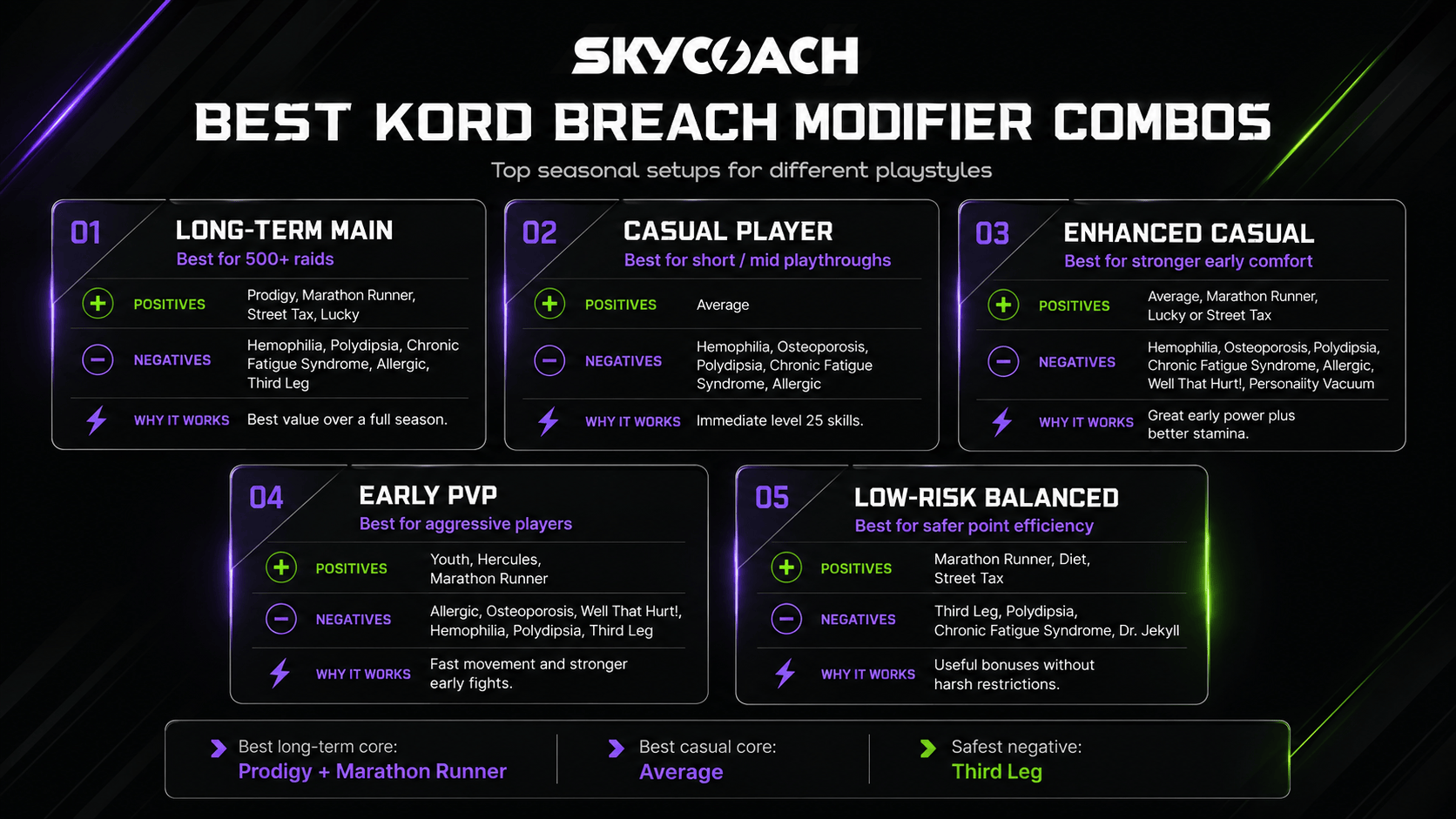
There is no universal setup that works equally well for every player. The largest difference is the expected length of the playthrough.
Average dominates short and medium playthroughs because it provides immediate level-25 skills. Prodigy becomes stronger across a long season because it keeps accelerating progress after Average would have reached its cap.
Best Long-Term Modifier Combination
Best for: Active players expecting at least 500 raids
Positive Modifiers
- Prodigy: -5
- Marathon Runner: -3
- Street Tax: -1
- Lucky: -1
Total cost: 10 points
Negative Modifiers
- Hemophilia: +2
- Polydipsia: +2
- Chronic Fatigue Syndrome: +2
- Allergic: +3
- Third Leg: +1
Total gained: 10 points
This is the strongest general long-term setup from the practical sources.
Prodigy accelerates progression for the entire season. Marathon Runner provides a stamina bonus that remains relevant even after Strength and Endurance have been developed. Street Tax and Lucky use the final two points without requiring another serious negative modifier.
The chosen penalties are deliberately manageable. Food and hydration consumption can be covered with provisions. Hemophilia becomes less troublesome as survivability skills increase. Allergic requires adaptation but usually has alternative items. Third Leg is barely noticeable.
The setup may feel uncomfortable during the first 50 to 100 raids. It becomes progressively better as skills, money, and supplies improve. Both experienced sources arrived at almost the same long-term combination.
Best Casual Modifier Combination
Best for: Players expecting fewer than 500 raids
Positive Modifiers
- Average: -12
Total cost: 12 points
Negative Modifiers
- Hemophilia: +2
- Osteoporosis: +3
- Polydipsia: +2
- Chronic Fatigue Syndrome: +2
- Allergic: +3
Total gained: 12 points
Average is the center of this build. It immediately gives the character level-25 skills, including many categories that normal players barely develop during a short season.
Those starting skills also soften several selected penalties. Better Health and Metabolism help manage bleeding, fractures, hydration, and energy consumption.
The negatives are still noticeable. Carry food, drinks, splints, and enough supplies to handle extra bleeding. The character begins much stronger than a standard level-one PMC despite those drawbacks.
This combination becomes less attractive if you unexpectedly play several hundred raids. Your skills remain capped at 25 while other active players continue developing theirs.
Best Enhanced Casual Combination
Best for: Casual players who want Average and better stamina
Positive Modifiers
- Average: -12
- Marathon Runner: -3
- Lucky or Street Tax: -1
Total cost: 16 points
Negative Modifiers
- Hemophilia: +2
- Osteoporosis: +3
- Polydipsia: +2
- Chronic Fatigue Syndrome: +2
- Allergic: +3
- Well That Hurt!: +2
- Personality Vacuum: +2
Total gained: 16 points
This expands the Average setup with Marathon Runner and a one-point filler.
It creates an extremely capable early character. Average supplies level-25 physical and utility skills, while Marathon Runner adds stamina efficiency that remains useful despite the level cap.
The cost is a much heavier collection of economic penalties. Medical supplies disappear faster, trader purchases cost more, and additional provisions are required. This build makes more sense for experienced players who know how to earn money through raids and the Flea Market.
Lucky can be replaced with Street Tax for a known weekly benefit and achievement relevance.
Best Early PvP Combination
Best for: Experienced players prioritizing immediate mobility
Positive Modifiers
- Youth: -5
- Hercules: -5
- Marathon Runner: -3
Total cost: 13 points
Negative Modifiers
- Allergic: +3
- Osteoporosis: +3
- Well That Hurt!: +2
- Hemophilia: +2
- Polydipsia: +2
- Third Leg: +1
Total gained: 13 points
This build is built around immediate physical power.
Hercules starts Strength and Endurance at level 15. Youth adds stamina and reduces energy drain. Marathon Runner makes both stamina bars last longer.
The character can move, rotate, and hold angles more comfortably from the beginning. It is a good fit for players who want to rush PvP areas or bosses instead of waiting for physical skills to develop.
The medical penalties make failed fights expensive. Hemophilia and Osteoporosis create more injuries, while Well That Hurt consumes additional medkit resources when treating them.
For a longer playthrough, replace Hercules with Prodigy. You lose the immediate level-15 start but gain faster development across every skill.
Best Low-Risk Combination
Best for: Players who want useful bonuses without stacking harsh penalties
Positive Modifiers
- Marathon Runner: -3
- Diet: -2
- Street Tax: -1
Total cost: 6 points
Negative Modifiers
- Third Leg: +1
- Polydipsia: +2
- Chronic Fatigue Syndrome: +2
- Dr. Jekyll: +1
Total gained: 6 points
This setup avoids the larger three-point and six-point penalties.
Marathon Runner provides the main combat and movement benefit. Diet helps food and drink items last longer, partly compensating for the increased resource drain. Street Tax uses the final point.
Dr. Jekyll is the awkward part of the build. It can be replaced by Unlucky, although that exchanges a known bleed-related issue for an unknown effect.
This combination is weaker than the long-term meta setup, but it does not require Allergic, Osteoporosis, Broken Secure Container, or an economy restriction.
Best Modifier Combination for Achievements
Players trying to earn every seasonal achievement should not attempt to complete everything on one permanent character. The achievement requirements push the player toward modifiers that create a terrible normal build.
The most efficient route described by the source uses three playthroughs.
Playthrough One: Kappa Protocol Achievement
Select enough negative modifiers to fund Kappa Protocol’s 12-point cost. Create the character, enter a raid, and trigger the achievement connected to receiving Kappa through the modifier.
After completing the requirement, reset the Seasonal Character.
There is little reason to keep this profile unless you specifically want to play with immediate Kappa access and a large collection of penalties.
Playthrough Two: Ten-Negative Achievement Character
Select the following modifiers:
- Hemophilia
- Osteoporosis
- Polydipsia
- Chronic Fatigue Syndrome
- Dr. Jekyll
- Allergic
- Broken Secure Container
- No Flea Market
- Third Leg
- Unlucky
Do not select any positive modifiers.
This single profile can cover several overlapping goals:
- Reach level 30 without positive modifiers
- Reach level 30 with ten negative modifiers
- Complete the Genetic Lottery modifier requirements
- Obtain Kappa with Broken Secure Container
- Obtain Kappa with No Flea Market
This will be a punishing character. It exists to combine achievement requirements, not to provide an enjoyable general playthrough.
Playthrough Three: Permanent Seasonal Character
After finishing the achievement profile, reset again and create the long-term setup:
- Prodigy
- Marathon Runner
- Street Tax
- Lucky
- Hemophilia
- Polydipsia
- Chronic Fatigue Syndrome
- Allergic
- Third Leg
This profile can then be used for the rest of the season, including the currency-related Street Tax achievement.
Which KORD BREACH Modifiers Should You Pick?
I’ll admit, when I created my Seasonal Character, I didn’t pick the best possible combination of modifiers, and I wish I could change them after having looked at them from different angles. Don’t make the same mistake I made and follow these easy rules:
|
Player Type |
Best Core Choice |
|
New or casual player |
Average |
|
Unsure how much you will play |
Average and Marathon Runner |
|
Active seasonal player |
Prodigy and Marathon Runner |
|
Early PvP-focused player |
Youth, Hercules, and Marathon Runner |
|
Long-term progression player |
Prodigy |
|
Achievement hunter |
Three-playthrough route |
|
Hardcore player |
No Flea Market and Broken Secure Container |
|
Woods or Shoreline specialist |
Bushborne |
|
Bolt-action specialist |
The Tarkov Shooter |
Average is the strongest short-term choice. Prodigy is the strongest long-term investment. Marathon Runner is the safest positive modifier to recommend to almost everyone.
On the negative side, Third Leg is practically a free point. Polydipsia and Chronic Fatigue Syndrome are manageable with provisions, while Hemophilia, Allergic, and Osteoporosis offer good value for players willing to prepare around their effects.
Avoid selecting Incompetent or Exhaustion on a normal character. Both attack core systems that affect almost every raid. No Flea Market and Broken Secure Container should also be treated as challenge or achievement modifiers rather than efficient sources of points.
The final choice still depends on how you enjoy Tarkov. An optimized setup is useful, but it is not worth locking yourself into a character you will hate playing for the rest of the season.
Check out more Escape From Tarkov guides:
F.A.Q.
What are the best seasonal modifiers to pick in Escape from Tarkov?
Prodigy and Marathon Runner are the best choices for a long-term Seasonal Character. Prodigy speeds up skill leveling by 30%, while Marathon Runner reduces arm and leg stamina consumption by 20%.
Can I change personal modifiers in EFT: Kord Breach?
You cannot replace individual modifiers after creating your Seasonal Character. You must reset the seasonal profile for 100 TarCoins and select a new combination.
Do I have to pick personal modifiers in Escape from Tarkov?
No, personal modifiers are optional. You can create a Seasonal Character without choosing any positive or negative modifiers.
Is Kappa Protocol worth it in Escape from Tarkov Season 1?
Kappa Protocol is mainly worth picking for its related achievement. Its 12-point cost requires too many negative modifiers for most normal playthroughs, although Standard Edition players may value the immediate Kappa container more.
What is the best personal modifier for casual players in EFT Season 1?
Average is the best choice for most casual players. It sets nearly all character skills to level 25 immediately, but prevents them from leveling any further.