 Rick Flair
Lol Classic Runes and Masteries Guide Quick Summary:
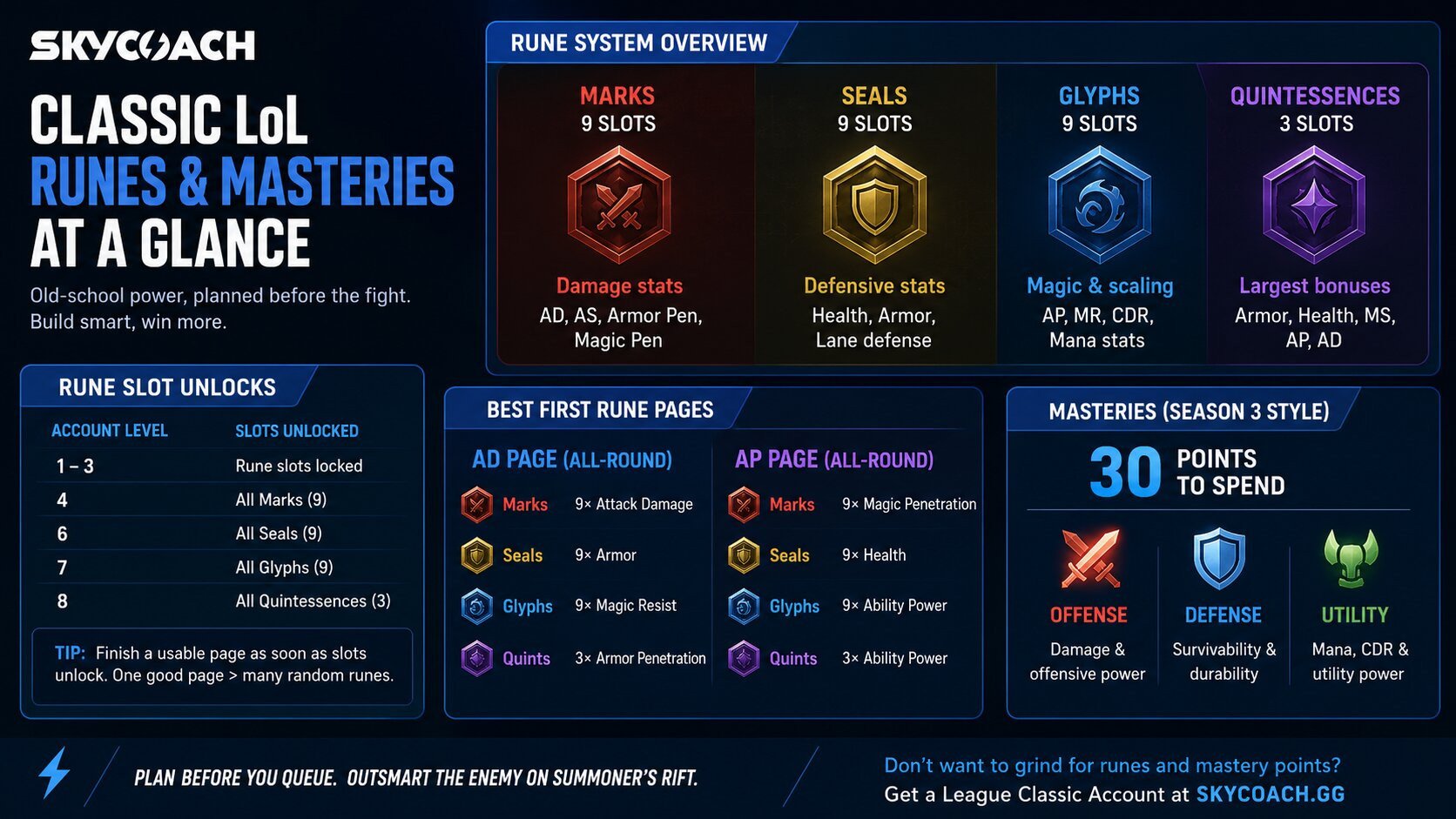
- A full Classic LoL rune page has 30 slots: 3 Quintessences, 9 Marks, 9 Seals, and 9 Glyphs.
- Rune slots unlock early: Marks at level 4, Seals at level 6, Glyphs at level 7, and Quints at level 8.
- Marks usually give damage stats, Seals give defensive stats, Glyphs handle magic or scaling stats, and Quints give the largest bonuses.
- The first two pages I’d build are one AD page and one AP page.
- PBE numbers make Armor Quints + HP Seals look better than the old Armor Seals + HP Quints setup.
- Classic also brings back Season 3-style masteries with 30 points across Offense, Defense, and Utility.
Want to start playing League Classic without worrying about farming all the Runes and Mastery points? Get one of our LoL Accounts and save the hassle.


Read closely 
Browse our hottest LoL Boosting services








How Classic LoL Runes Work
Classic LoL runes are stat bonuses you set before the match. It’s drastically different from the modern keystone system, which you can edit during the Champion select screen. You have to prepare your rune pages in advance and then pick one when the game starts. You don’t have many of them either, and they’re quite pricey. You can only have a handful of them for your mains. Usually, the first rune page you get should work for most champions instead of being a Lux-specific build. A full rune page has four slot types:
|
Rune Type |
Slots |
What they do |
|
Marks |
9 |
Damage stats |
|
Seals |
9 |
Defensive stats |
|
Glyphs |
9 |
Magic, mana, scaling stats |
|
Quintessences |
3 |
Biggest stat bonuses |
You start with a few runes, and then you unlock some through leveling. As for the rest, you buy them with Influence Points. You get IPs at a decent pace, at least in my opinion, but you’ll find out that you run out of them very quickly if you just start buying everything without having a clear idea behind your purchases. Runes are the first difficulty spike in understanding how to be better than most other players. It’s not very player-friendly, and that was even worse in the old League where you had to upgrade them to Tier 3. Now they all come Tier 3 by default. TL;DR, don’t buy everything you see, just follow the guides you find on the Internet, much like this one.
Classic LoL Rune Slot Unlocks
The old League system unlocked one rune slot per account level until level 30, which was very slow and wasn’t very fair to beginner players who could’ve been matched against players with all Rune pages unlocked on some lower-populated servers. Classic makes this much faster. You have to buy runes anyway, but you don’t need to wait until level 30 to use a complete page. Here’s how the rune slot unlocks work:
|
Account Level |
Rune Slots Unlocked |
|
1-3 |
Rune slots locked |
|
4 |
All red Marks |
|
6 |
All yellow Seals |
|
7 |
All blue Glyphs |
|
8 |
All 3 Quintessences |
There is also a starter page with attack speed, armor, and cooldown reduction. It’s a weird stat mix, but it’s better than nothing. Don’t sit on it for long, though. Once slots unlock, focus on finishing a usable page instead of buying random pieces. One finished AD page makes all the difference in the world.
Rune Types Explained
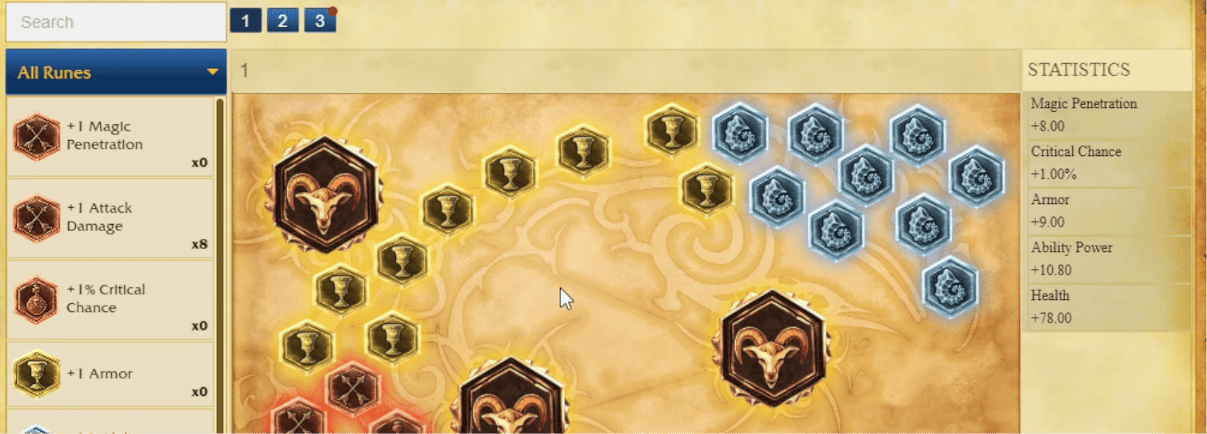
Each rune color has a preferred stat group. While you can technically put the same stat into different colors, the result is not gonna be the best. Basically, you can push for those extra little bonuses to your stats, but it’s useless. For instance, here’s how it would work with Armor runes:
|
Rune Color |
Armor Per Rune |
|
Yellow Seal |
1 armor |
|
Red Mark |
0.9 armor |
|
Blue Glyph |
0.7 armor |
That’s why you never put armor into red or blue slots. The same logic applies to damage stats in Marks and magic stats in Glyphs. Quints are different from those because they give larger bonuses and will be the main identity of the rune page. In short, here’s how the rune types work in LoL Classic:
- Marks: Attack Damage, Magic Penetration, Attack Speed, Armor Penetration
- Seals: Health, Armor, and lane defense
- Glyphs: Ability Power, Magic Resist, Cooldown Reduction, mana stats
- Quints: Armor, Health, Movement Speed, AP, AD
Do note that Quints are quite expensive and go for 1250 IP. Don’t buy niche Quints first unless you already know exactly why you need them. I can see why you’d want Movement Speed Quints, but they won’t help if your basic AD and AP pages are unfinished.
Best First Rune Pages in Classic LoL
Most experienced players start with two pages: one AD page and one AP page. Boring? Yeah, not much variety and experimentation in that. It’s super efficient, though, because those two pages cover a big chunk of the roster. ADCs, AD junglers, bruisers, and most top laners can use the AD page. Mages and AP assassins can use the AP page. Let’s look at these best first rune pages in Classic LoL.
Best AD Rune Page
This is the best AD rune page in Classic League I’d build first for ADC, AD jungle, and most AD top champions. It has some nice early damage and durability. It also has some MR for later magic damage during teamfights.
|
Slot |
Rune |
|
Marks |
Attack Damage Marks |
|
Seals |
Flat Health Seals |
|
Glyphs |
Scaling Magic Resist Glyphs |
|
Quints |
Flat Armor Quintessences |
In olden days, the rune setup was usually AD Marks, Armor Seals, Scaling MR Glyphs, and Flat Health Quints. For the most part, you can still make it work, but this page is much better with modern knowledge and understanding of the deeper mechanics. Don’t forget that in older days there weren’t as many knowledgeable players as there are now. If you’re feeling sassy, you can also add one crit Mark. The idea is going from 0% crit to 1% crit, which may sound stupid (it is), but it creates the tiny chance of stealing a lane trade with one auto, and one small chance is all you need to start snowballing.
Best AP Rune Page
This is the page you’ll use for Annie, Brand, Ahri, Lux, Ryze, and Anivia. In short, any powerful AP attacker in Classic League. It buffs your early magic damage while still keeping enough defensive stats to survive the laning stage.
|
Slot |
Rune |
|
Marks |
Magic Penetration Marks |
|
Seals |
Flat Health Seals |
|
Glyphs |
Flat Ability Power Glyphs |
|
Quints |
Flat Armor Quintessences |
The old AP page was usually Magic Pen Marks, Armor Seals, Flat AP Glyphs, and Flat Health Quints. You can keep the damage side the same, but I recommend going with Flat Armor Quints over HP ones. For Glyphs, it’s better to have Flat AP over Scaling AP. Scaling AP potentially allows you to have better odds at winning during late game, but considering how most mages are vulnerable to early jungle ganks, Flat AP is much more useful. Plus, if you’re playing someone like Brand, you need to start oppressing your opponent as early as possible.
Classic LoL Best Runes by Role
Once your two starter pages are done, you can start slowly building role-specific pages. Unless you already know what role you’re pursuing from the first moment, I don’t recommend rushing these Runes. If you’re still testing champions, keep the pages wide and spend IP carefully. Here are the best Runes by Role in Classic LoL:
|
Role |
Recommended Rune Setup |
|
ADC |
AD Marks, HP Seals, Scaling MR Glyphs, Armor Quints |
|
AD Top |
AD Marks, HP Seals, Scaling MR Glyphs, Armor Quints |
|
AD Jungle |
AD or Attack Speed Marks, HP Seals, Scaling MR Glyphs, Armor Quints |
|
Mid Mage |
Magic Pen Marks, HP Seals, Flat AP Glyphs, Armor Quints |
|
Tank |
Defensive or AD Marks, HP Seals, MR Glyphs, Armor Quints |
|
Support |
Armor or utility Marks, HP Seals, MR or CDR Glyphs, Armor or Movement Speed Quints |
While it can be enticing to go for economy stats as a Support, giving up one too many combat stats will turn you into a punching bag for an opposing Leona or Blitzcrank, and you’ll lose much more gold than you could’ve gained. For jungle, Attack Speed Marks can be worth buying after your basic AD Marks. Classic jungle is hard for slower early clearers, if you’re not Nunu. Extra attack speed can make the first jungle clear much easier.
Niche Runes Worth Buying Later
After, and only after, your starter pages are finished, then you can buy the fun stuff. Not before. Don’t ruin your progression and drop playing League cause of that. The niche pages are a fun way to turn your standard rune build into something more experimental and interesting. That’s where you get AP Alistars. It’s also really easy to fumble your IP if you miscalculate with your build. Here are the main luxury options:
|
Rune |
Best Use |
|
Movement Speed Quints |
Roamers, supports, Singed, some junglers |
|
Attack Speed Marks |
Junglers and on-hit champions |
|
Flat MR Glyphs |
Mid lane into early AP burst |
|
Spell Vamp Quints |
Niche AP sustain champions |
|
GP5 Quints |
Passive support or economy cheese |
Movement Speed Quints are the best long-term luxury option, cause old League is extremely slow, and a lot of Champions like Morgana or Singed capitalize on that hard. GP5 Quints are a classic newbie trap. Three of them give 3 gold per 10 seconds, which becomes 18 gold per minute and 180 gold after 10 minutes. That is not even a kill. Using gold Quints is essentially throwing the game from minute one.
Browse our hottest LoL Boosting services






Classic LoL Masteries Explained
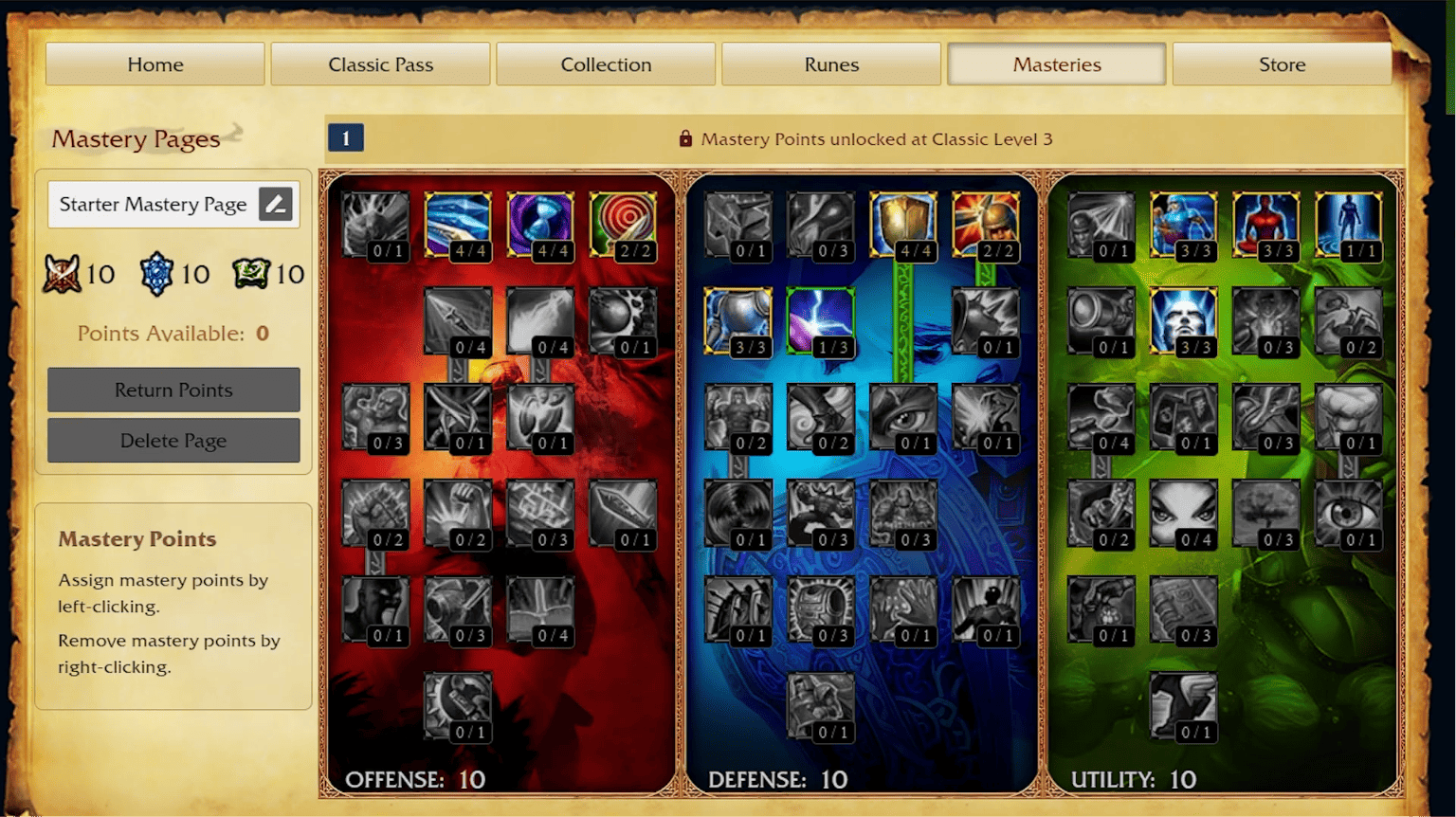
Runes are only half of Classic’s pre-game prep. The other half is Masteries taken from Season 3, which use 30 points across three trees: Offense, Defense, and Utility. Unlike modern League, this system is more about stacking small bonuses to make your Champion feel a tad bit better. The Classic LoL Masteries are:
|
Mastery Tree |
Best For |
|
Offense |
ADCs, mages, assassins, damage dealers |
|
Defense |
Tanks, initiators, bruisers, junglers |
|
Utility |
Supports, mana users, economy, map control |
Most champions use one main tree and one secondary tree. The old standard was often 21 points in the main tree to reach the final bonus, then 9 points elsewhere, and that remains true for Classic League. Common mastery spreads:
|
Mastery Setup |
Best For |
|
21/9/0 |
ADCs, assassins, many damage dealers |
|
21/0/9 |
Mages that want mana or utility |
|
0/21/9 |
Tanks and initiators |
|
9/21/0 |
Beefy junglers and bruisers |
|
0/9/21 |
Supports and utility-heavy picks |
Can’t speak for everyone, but iirc players thought that the difference these mastery points bring is minute at best, and it seems that the devs either thought so too or they just thought that this design was outdated and completely scratched it in favor of a new, more exciting Keystone system.


You got -20% OFF 
Best Runes to Buy First in Classic LoL
Your early IP should go into runes that unlock the most champions. Don’t start with GP5 Quints, Spell Vamp Quints, or some nonsense page for one champion unless you’re a one-trick pony. Below is the order of the best runes to buy first in Classic LoL:
- Attack Damage Marks
- Magic Penetration Marks
- Flat Health Seals
- Flat Armor Quintessences
- Scaling Magic Resist Glyphs
- Flat Ability Power Glyphs
- Attack Speed Marks
- Movement Speed Quintessences
- Flat Magic Resist Glyphs
These runes cover pretty much all roles and all their needs. After you get these initial runes, start buying more specific runes for your Champion of choice. If you main Singed, get Movement Speed Quints earlier. If you main mid, consider Flat MR Glyphs. Stick to the main rule, which is to finish pages before branching out. A complete mediocre page beats a pile of interesting runes that fail to satisfy the basic needs of your character.
Read our other LoL guides:
F.A.Q
How many runes are in a Classic LoL rune page?
A full Classic LoL rune page has 30 slots: 9 Marks, 9 Seals, 9 Glyphs, and 3 Quintessences.
What are Quintessences in Classic LoL?
Quintessences are the three large rune slots. They give bigger stat bonuses than regular runes and usually shape the page more than any single small rune.
What rune page should I build first in Classic League?
I’d build a basic AD page first if you play ADC, top, or jungle. If you mostly play mid, start with an AP page using Magic Pen Marks and Flat AP Glyphs.
Can you change runes during champion select in Classic LoL?
You can choose an existing page, but you need to build rune pages before the match. Classic LoL does not work like modern League where you rebuild the whole page during draft.
What masteries should I use in Classic LoL?
Most damage dealers use 21/9/0 or 21/0/9. Tanks often use 0/21/9 or 9/21/0, while supports usually lean toward Utility-heavy setups.