 Dallon Avery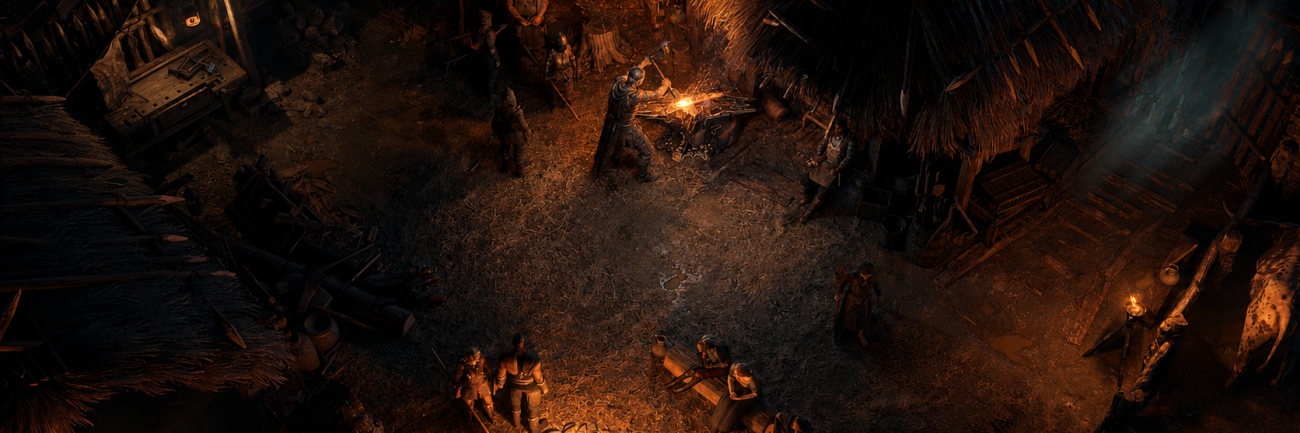
Path of Exile 2 Runeforging Guide Quick Overview:
- Armor Runeforging - allows you to add a Runic Ward to any armor using Verisium
- Unique Runeforging - upgrades low-level uniques, making them more relevant
- Runic Ward - a new resource that acts as your second health pool or as a resource for Kalguuran skills
- Alloys - currency items used to replace item modifiers with guaranteed crafted mods
- Remnants - randomly appear on maps and can be used to craft runes or currency items
Want to try Runeforging but don't have high-enough level? Buy PoE 2 Powerleveling at Skycoach and skip the leveling grind. Obtain any level and unlock Runeforging and other content!


Read closely 
Browse our hottest PoE 2 Boosting services








Unlocking Runeforging
Runforging in the Runes of Aldur league is a system that combines armor and weapon upgrades with a whole bunch of new runes that can be obtained from Remnants. I find it easier to divide Runeforging into categories because you will gradually unlock the functionality of Runeforging as you advance through the main campaign and its acts and follow Farrow’s quest to research this ancient art. So, those categories or mechanics are:
|
Act |
Mechanic |
What It Does |
|
Act 1 |
Verisium Runeforging |
Adds Runic Ward to armor |
|
Act 2 |
Alloys |
Adds modifier-replacement crafting |
|
Act 3 |
Unique Runeforging |
Upgrades low-level Unique weapons and armor |
|
Act 4 |
Ancient Runes |
Unlocks weapon-specific rune bonuses |
|
Endgame |
More Runic Recipes |
Expands the pool of runes, skills, supports, and advanced crafts |
Now, there are quite a few components involved in runeforging that you need to understand before we continue. I’ll do a little blitz, but you can read more about them in my Runes of Aldur overview.
- Remnants - crafting stations that can randomly appear on maps, allow you to craft runes or currency items from a random list in each remnant by fighting packs of empowered monsters, depending on the chosen crafting recipe.
- Verisium - main resource used in Runeforging, first obtained in Act 1 in a dungeon under the Tree of Souls. Later drops from monsters raised by Remnants.
- Alloys - currency items used to replace item modifiers with specific mods. Unlocked in Act 2 and may drop from Remnant encounters just like Verisium.
- Runic Ward - new resource used as a second health pool or to power Kalguuran skills. More on that later.
Now, you’re more or less up to speed with what’s used in Runeforging. Now, let’s talk about what you can do with it.
Armor Runeforging
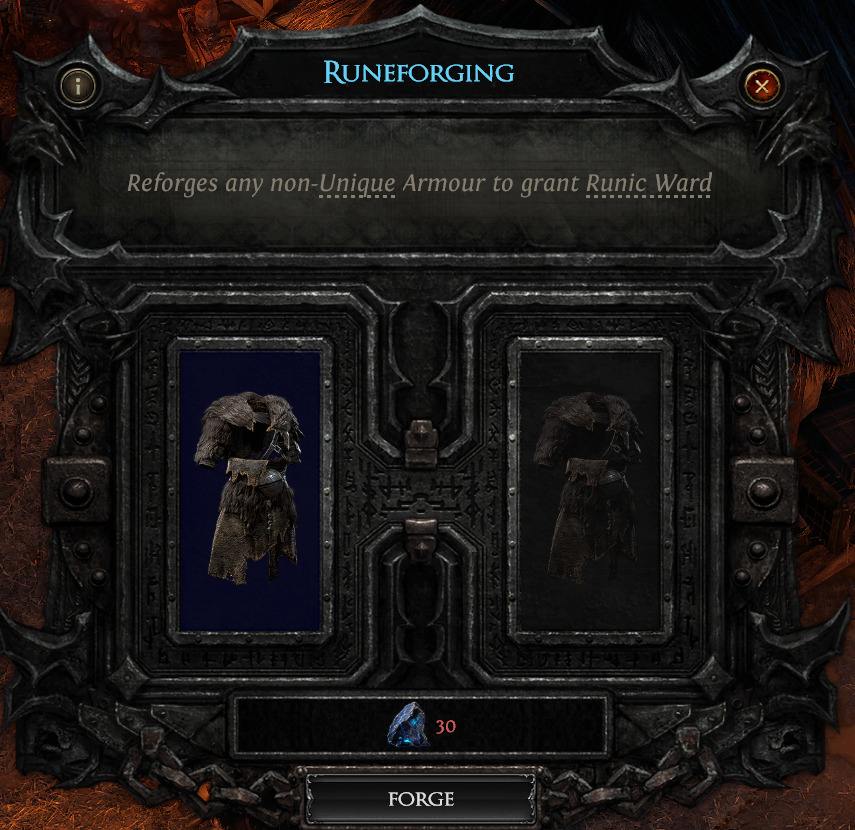
The first mechanic that you unlock as you follow Farrow’s questline in Act 1 allows you to upgrade any piece of armor to add some amount of Runic Ward to it.
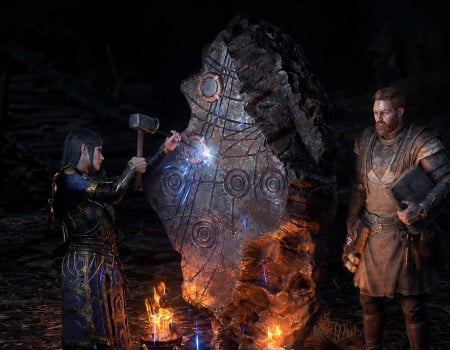
In Act 1, Farrow gives you a side quest to locate 3 sights with Runestones. The third one is found in Orham Farmlands. After that, Farrow will ask you to go back to the Grelwood, where you will both uncover a secret passage into the Lost Catacombs under the Tree of Souls. Inside, it contains a door to the Runic Vault, where you will first encounter Verisium. This will also unlock the Verisium Anvil in the Clearfel Camp.
Note that Farrow gives you a side quest, which means you’ll either have to backtrack to some older zones, as in the case of the Act 1 Runeseeker quest, or go off the beaten main quest path in later acts.
This unlocks Verisium Anvil, which you can use to reforge any non-Unique armor to grant Runic Ward. Armors with level 55 and above will trade some of their regular base defense stats for Runic Ward. But those below level 55 don’t have that downside. By the way, this works with shields, gloves, shoes, and helmet slot items too. Example:
|
Stat |
Hermit Garb |
Runeforged Hermit Garb |
Difference |
|
Evasion Rating |
16 |
16 |
No change |
|
Energy Shield |
16 |
16 |
No change |
|
Runic Ward |
0 |
29 |
+29 |
|
Base Movement Speed |
-0.03 |
-0.03 |
No change |
This upgrade will cost you 20 Verisium. As you can see, the low-level armor does not lose any stats on upgrade, but if you do this with a higher-level armor like Austere Garb, you’ll see some negative effects:
|
Stat |
Austere Garb |
Runeforged Austere Garb |
Difference |
|
Evasion Rating |
248 |
236 |
-12 |
|
Energy Shield |
76 |
72 |
-4 |
|
Runic Ward |
0 |
86 |
+86 |
|
Base Movement Speed |
-0.03 |
-0.03 |
No change |
|
Required Level |
80 |
80 |
No change |
|
Dex / Int Requirement |
67 / 67 |
67 / 67 |
No change |
Upgrading this armor will cost you 470 Verisium, and you’ll lose some Evasion Rating and Energy Shield in exchange for more Runic Ward.
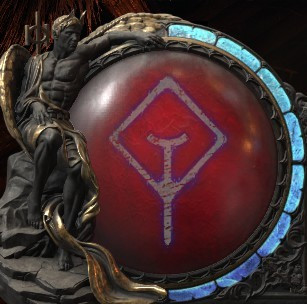
Runic Ward
So, what the hell is a Runic Ward? Let’s start with the official description:
“Runic Ward is a last line of protection, absorbing fatal damage instead of your Life. If you take damage that would cause your Life to reach 0 while you have Runic Ward, you will drop to 1 Life, and your Runic Ward will take the remaining damage. You will still die if you do not have enough Runic Ward to absorb the remaining damage. Runic Ward does not protect against Life loss that is not caused by taking damage.
Runic Ward constantly regenerates at a default rate of 5% per second.
Monsters can also have Runic Ward. While a monster has Runic Ward, it cannot be Culled.”
Note: Culling Strikes kill Normal enemies if their life is at 35% or below. Magic enemies are instead killed at 20%, Rare at 10%, and Unique at 5%. These thresholds are checked before the damage of the Hit is applied.
I wouldn’t be able to describe this any better myself! One last thing before we move on. Runic Ward can also be added to your armor with Ward Runes. You can get those from Remnants as well.
|
Icon |
Rune |
Level Requirement |
Armor Effect |
Bonded Armor Effect |
|
|
Lesser Ward Rune |
None |
+15 to maximum Runic Ward |
15% increased Global Armor, Evasion, and Energy Shield |
|
|
Ward Rune |
Level 15 |
+20 to maximum Runic Ward |
15% increased Global Armor, Evasion, and Energy Shield |
|
|
Greater Ward Rune |
Level 30 |
+25 to maximum Runic Ward |
15% increased Global Armor, Evasion, and Energy Shield |
|
|
Perfect Ward Rune |
Level 50 |
+30 to maximum Runic Ward |
15% increased Global Armor, Evasion, and Energy Shield |
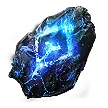
As soon as I saw that I could get the Lesser Ward Rune from the Remnant, I immediately went for it and then slotted it into my armor. That was even before I unlocked the Verisium Anvil later in Act 1. But that was a waste of an augment slot. You see, the problem is that 15 Runic Ward is never enough to save you from death. The attacks that kill you in Act 1 are rarely the ones that surpass your health pool by a measly 15 dmg. So, essentially, having only 15 Runic Ward is useless. This is how I figured that these Ward Runes are only needed when you’re really into Kalguuran Skills and want to stack as much Runic Ward as possible on top of armor runeforging that already gives you that.
Browse our hottest PoE 2 Boosting services








Kalguuran Skills
But that’s just one use of Runic Ward. The other use of Runic Ward is as a resource for Kalguuran Skills. These are new (23 active + 8 Support gems) skills crafted from Remnants that use Runic Ward instead of Mana. They work like skill gems, but their resource is tied to the Runic Ward system. You can find out more on that by checking out the official 0.5 patch notes.
An interesting fact about these skill gems: they don’t have any requirements or color, meaning they’re not strength/dexterity/intellect based skills.
Alloys
The next big thing you unlock is after completing Farrow’s quest in Act 2. Find the three Act 2 runic markers in Keth, The Bone Pits, and Deshar, then use the caravan route to reach Skull of the Titan. Clear the Runic Vault there and interact with the runic object at the end. After this, Alloy currency items become available from Remnant encounters.
Reddit and official forum posts report that Farrow doesn’t appear in Mystic Refuge because he is bugged, but that might have already been fixed in the recent patch 0.5.0b.
Unlike socketable augments, Alloys work similarly to crafting orbs. They let you directly craft new modifiers onto items, including modifiers that are not normally available.
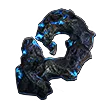
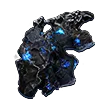
There are 13 new Alloy currency items:
|
Icon |
Alloy |
Item Type |
Guaranteed Modifier |
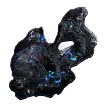 |
Runic Alloy |
Ring |
+(37–49) to maximum Runic Ward |
|
Amulet |
(6–10)% increased maximum Runic Ward |
||
|
Belt |
(15–20)% increased Runic Ward Regeneration Rate |
||
 |
Adaptive Alloy |
Staff |
Gain (42–52)% of Damage as Extra Fire Damage while missing Runic Ward |
|
Wand |
Gain (21–26)% of Damage as Extra Fire Damage while missing Runic Ward |
||
|
Sceptre |
(30–50)% Surpassing Chance to gain a Puppet Master stack when using a Command Skill |
||
|
Gloves |
(10–15)% increased Attack Speed while missing Runic Ward |
||
 |
Protective Alloy |
Belt |
Recover (32–45) Runic Ward when a Charm is used |
|
Weapons |
+(51–74) to maximum Runic Ward |
||
|
Shield or Buckler |
Recover (10–15) Runic Ward when you Block |
||
 |
Expansive Alloy |
Gloves |
Remnants can be collected from (40–50)% further away |
|
Body Armour |
(40–50)% increased Presence Area of Effect |
||
|
Helmet |
(15–20)% increased Mana Cost Efficiency |
||
|
Boots |
Temporary Minion Skills have +1 to Limit of Minions summoned |
||
 |
Swift Alloy |
Gloves |
(8–10)% increased Cast Speed |
|
Ring |
(7–9)% increased Attack Speed |
||
|
Belt |
Flasks gain (0.75–1.25) charges per second |
||
|
Shield or Focus |
(25–50)% increased Totem Placement Speed |
||
 |
Cyclonic Alloy |
Body Armour |
(15–30)% reduced Slowing Potency of Debuffs on you |
|
Boots |
(15–19)% increased Skill Effect Duration |
||
|
Gloves |
(20–25)% increased Duration of Damaging Ailments on Enemies |
||
|
Helmet |
(35–42)% increased Archon Buff duration |
||
 |
Prismatic Alloy |
Gloves |
Damage Penetrates (9–15)% Elemental Resistances |
|
Martial Weapon |
(20–30)% increased Magnitude of Ailments you inflict |
||
|
Focus, Staff, or Wand |
(40–50)% increased Exposure Effect |
||
|
Sceptre |
Minions have (40–49)% increased Magnitude of Damaging Ailments |
||
 |
Mystic Alloy |
Caster Weapon |
+1 to maximum number of Elemental Infusions |
|
Helmet |
Spell Skills have (10–15)% increased Area of Effect |
||
|
Gloves |
(10–15)% increased Area of Effect for Attacks |
||
|
Quiver |
(25–35)% chance to Chain an additional time |
||
|
Boots |
+(10–15) to Spirit |
||
 |
Sovereign Alloy |
Weapons |
(20–30)% increased effect of Socketed Augment Items |
|
Armour |
(24–30)% increased Runic Ward |
||
|
Jewellery or Belt |
(20–30)% increased Explicit Resistance Modifier magnitudes |
||
 |
Celestial Alloy |
Staff or Wand |
+(142–188) to maximum Mana and +1 to Level of all Spell Skills |
|
Martial Weapon |
+(327–427) to Accuracy Rating and (5–8)% increased Attack Speed |
||
 |
Transcendent Alloy |
Focus, Staff, or Wand |
(39–47)% increased Cast Speed and Gain (11–16)% of Elemental Damage as Extra Cold Damage |
|
Martial Weapon |
(15–20)% increased Physical Damage and +(7–10) to all Attributes |
||
 |
The Runebinder’s Alloy |
Staff |
(25–50)% chance to gain Nature’s Archon when your Plants Overgrow |
|
Wand |
+1 to Limit for Elemental Skills |
||
|
Sceptre |
+(4–5) maximum stacks of Puppet Master |
||
|
Crossbow |
+2 to maximum number of Summoned Ballista Totems |
||
|
Bow |
(40–50)% increased Effect of your Mark Skills |
||
 |
The Runefather’s Alloy |
Mace |
(60–75)% chance for Skills to retain 40% of Glory on use |
|
Quarterstaff |
Tempest Bells are destroyed after an additional (4–5) Hits |
||
|
Spear |
+(8–10) to Weapon Range |
||
|
Talisman |
Lightning Damage from Hits also contributes to Flammability and Ignite Magnitudes |
You use these on a Rare item to remove 1 random modifier and replace it with the one that comes with the Alloy, depending on the item type.
Note: Each item holds only one crafted modifier. Using an Alloy will overwrite any existing Essence mod — plan accordingly.
Unique Runeforging
Unique Verisium Runeforging unlocks in Act 3. Once unlocked, it lets you upgrade the base type of Unique weapons and armor that dropped below level 55. Weapons gain more serious damage, while armor gains higher base defenses and Runic Ward. Unique Armors above level 55 can still be Runeforged to modify their defenses to include Runic Ward at the cost of reducing their other defenses, similar to the base types.
To unlock Unique Verisium Runeforging, continue Farrow’s The Runeseeker quest in Act 3. Look for the three Act 3 runic stones in Jungle Ruins, Venom Crypts, and The Azak Bog. After interacting with all three, head to Infested Barrens and enter Mystic Refuge. Clear the area, reach the runic chamber, then speak to Farrow or interact with the final object. This upgrades the Verisium Anvil and unlocks Unique Runeforging. Here’s an example:
|
Version |
Cost |
What Changed |
|
Radiant Grief Lace Hood |
None |
Base Unique item |
|
Runeforged Lace Hood |
Lace Hood, 35 Verisium |
+Runic Ward (35) |
|
Runeforged Lace Hood with Ignite bonus |
Lace Hood, 590 Verisium, 1 Vorana’s Crest of the Scythe |
+Runic Ward (72) +(30–50%) increased Ignite Magnitude |
Radiant Grief is a good example of how Unique Runeforging can go beyond simple stat scaling. The basic Runeforged version adds Runic Ward, which makes the item more durable while keeping the same low-level requirement. But, using a new Crest item when Runeforging adds a new modifier to the unique. Crests are another currency used specifically in unique runeforging to add new modifiers to them. There’s a total of 4 Crests, each of which can be stacked up to 10 times in your inventory:
- Medved’s Crest of the Circle
- Vorana’s Crest of the Scythe
- Uhtred’s Crest of the Chalice
- Olroth’s Crest of the Sun
As of right now, I don’t have the information about where these come from, but I suspect you can find them in Expeditions and Sea Exploration in the Atlas.
Aldur’s Legacy Runes
If you have unwanted uniques, you can destroy them using Aldur’s Legacy rune to create a rune that contains some of the uniques’ properties. This rune can then be used on any item of the same type to add those properties to it. So far, poe2db lists over 60 runes which can be extracted from unique items this way.
You get access to it at the same time or shortly after you unlock Unique Runeforging in Act 3.


You got -20% OFF 
Ancient Runes
Ward runes aren’t the only type of runes that got added in this league. I’d like to also shout out the Ancient Runes, which are weapon-specific socketable runes that unlock after Farrow’s Act 4 quest. There are 13 of these runes so far, one per weapon type.
|
Ancient Rune |
Item Type |
Main Effect |
Bonded Effect |
|
Ancient Rune of Splinters |
Bows |
+50% Surpassing chance to fire an additional Arrow |
30% increased Projectile Speed |
|
Ancient Rune of Dueling |
Bucklers |
30% increased Parried Debuff Magnitude |
15% increased Block chance |
|
Ancient Rune of the Titan |
Two Hand Maces |
10% chance for Slam Skills you use yourself to cause an additional Aftershock |
15% increased Area of Effect for Attacks |
|
Ancient Rune of Shattering |
One Hand Maces |
40% increased effect of Fully Broken Armour |
Break 50% increased Armour |
|
Ancient Rune of Prowess |
Spears |
30% chance when you gain a Charge to gain an additional Charge |
30% increased Endurance, Frenzy and Power Charge Duration |
|
Ancient Rune of Control |
Quarterstaves |
50% increased Immobilisation buildup |
30% increased Damage against Immobilised Enemies |
|
Ancient Rune of Discovery |
Staves |
30% chance to create an additional Remnant |
+1 to maximum number of Elemental Infusions |
|
Ancient Rune of Decay |
Wands |
25% increased Withered Magnitude |
15% chance that when Volatility on you explodes, you regain an equivalent amount of Volatility |
|
Ancient Rune of Witchcraft |
Foci |
40% increased Area of Effect of Curses |
15% faster Curse Activation |
|
Ancient Rune of the Horde |
Sceptres |
Minions have 8% increased Attack and Cast Speed |
Minions have 10% increased Movement Speed |
|
Ancient Rune of Animosity |
Talismans |
Gain 2 Druidic Prowess when you Heavy Stun a Rare or Unique Enemy |
40% increased Stun Buildup |
|
Ancient Rune of Detonation |
Crossbows |
Grenades have 10% chance to activate a second time |
40% increased Crossbow Reload Speed |
|
Ancient Rune of Retaliation |
Shields |
8% increased Attack Speed if you have Blocked Recently |
+3% to maximum Block chance |
In Act 4, you need to find four map scraps, unlock Plunder’s Point, complete the Expedition-style encounter there, enter Deserted Post, then interact with the final object to unlock “Runic Inscriptions,” which includes Ancient Runes. After that, these runes will start appearing in Remnants.
Check out more Path of Exile 2 guides:
F.A.Q.
What is Runeforging in PoE 2 Runes of Aldur?
Runeforging lets you modify non-unique and unique armor and weapons to add Runic Ward to armor or guaranteed mods with Alloy. Low-level uniques can be made relevant this way.
What is a Runic Ward in PoE 2?
Runic Ward is a new resource that can be added to any armor-type item in the game. It is used as a second health pool that takes on the damage that surpasses your character’s main health pool. It is also used as a resource to activate Kalguuran Skill and Support gems.
How to add a Runic Ward to armor in PoE 2?
Adding Runic Ward to armor can be done in one of two ways:
- Through Verisium Anvil, requires Verisium.
- By socketing Ward runes into the sockets on your armor
Runic Ward can be added to unique rarity armor pieces as well.
How to get Alloys in Path of Exile 2?
Both Alloys and Verisium drop from Remnant encounters. But Alloys start appearing in the loot after you’ve unlocked them in Act 2’s Runeseeker quest.
What are Crests in Path of Exile 2?
Crests are stackable currency that drop from Expeditions. They’re used to add new modifiers to uniques during Runeforging. There are 4 types of crests, each of which can be stacked up to 10 times.
How to unlock Runeforging in Path of Exile 2?
Runeforging is unlocked gradually through the campaign Acts.
- Act 1 - Verisium Runeforging
- Act 2 - Alloys
- Act 3 - Unique Runeforging
- Act 4 - Ancient Runes
How to get Ancient Runes in Path of Exile 2?
Ancient Runes are unlocked from the Farrow’s quest in Act 4. After you’ve completed that, Ancient runes will start appearing as crafts in Remnants.