 Dallon Avery
AION 2 Kina Farming Guide Quick Overview:
- AION 2 has regular Kina and Kina (Bound), and they have different uses.
- Expeditions and Conquest dungeons are the easiest way to farm Kina.
- Alts increase weekly income because they have own Odyle Energy pools.
- Abyss farming combines Kina, Abyss Points, and tradeable drops.
- Trading, crafting, and gathering can be more profitable if you got the skills for it.
Need more currency but don't have time to spend on farming it? Buy AION 2 Kina at Skycoach, the most trusted platform on the market with hundrets of sellers and stellar reputation!


Read closely 
Browse our hottest Aion 2 Boosting services








Kina and Kina (Bound) Explained
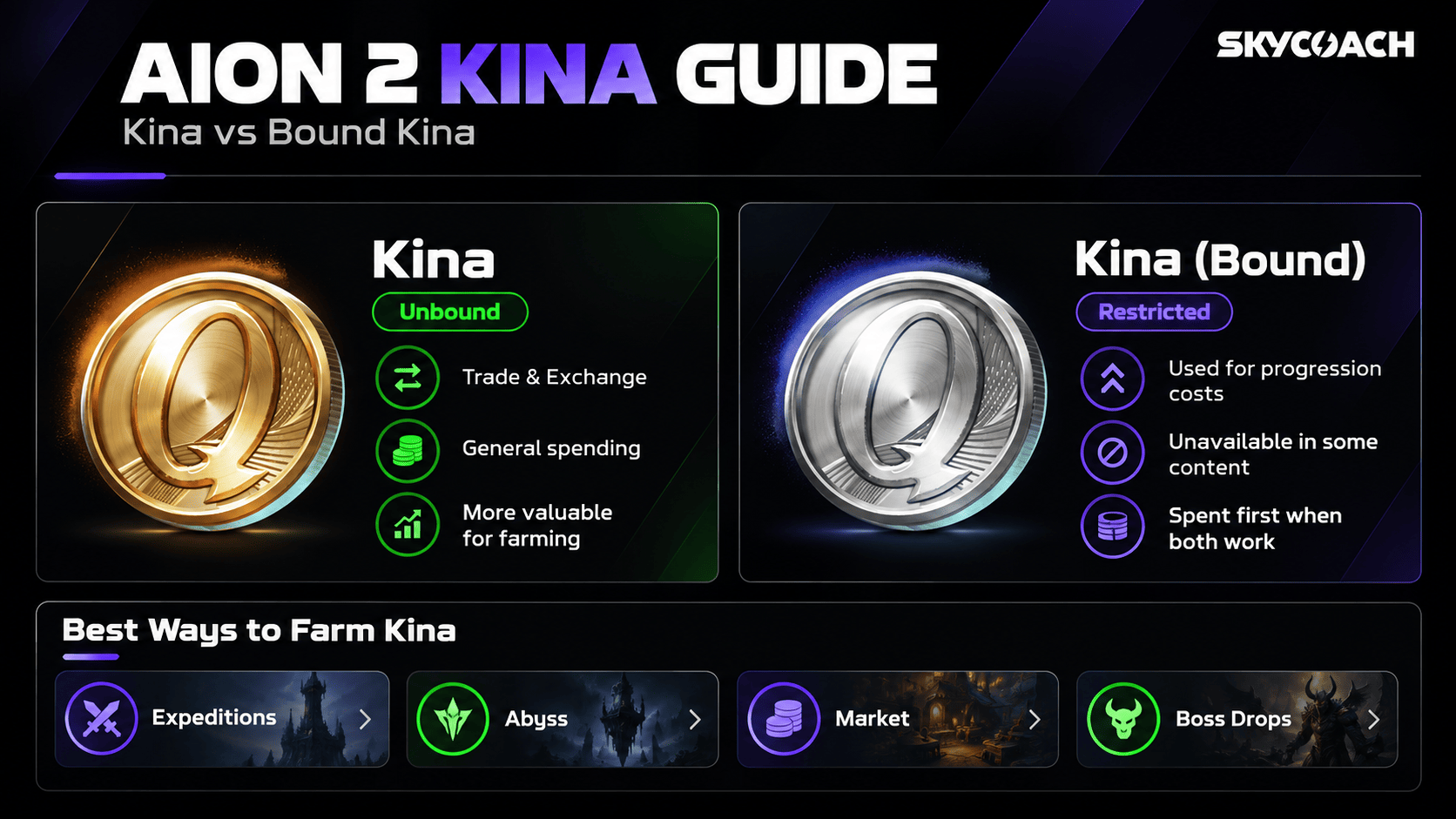
First of all, it’s important that we have a clear distinction in our heads, because there are two types of the same currency in the game. AION 2 has  Kina and
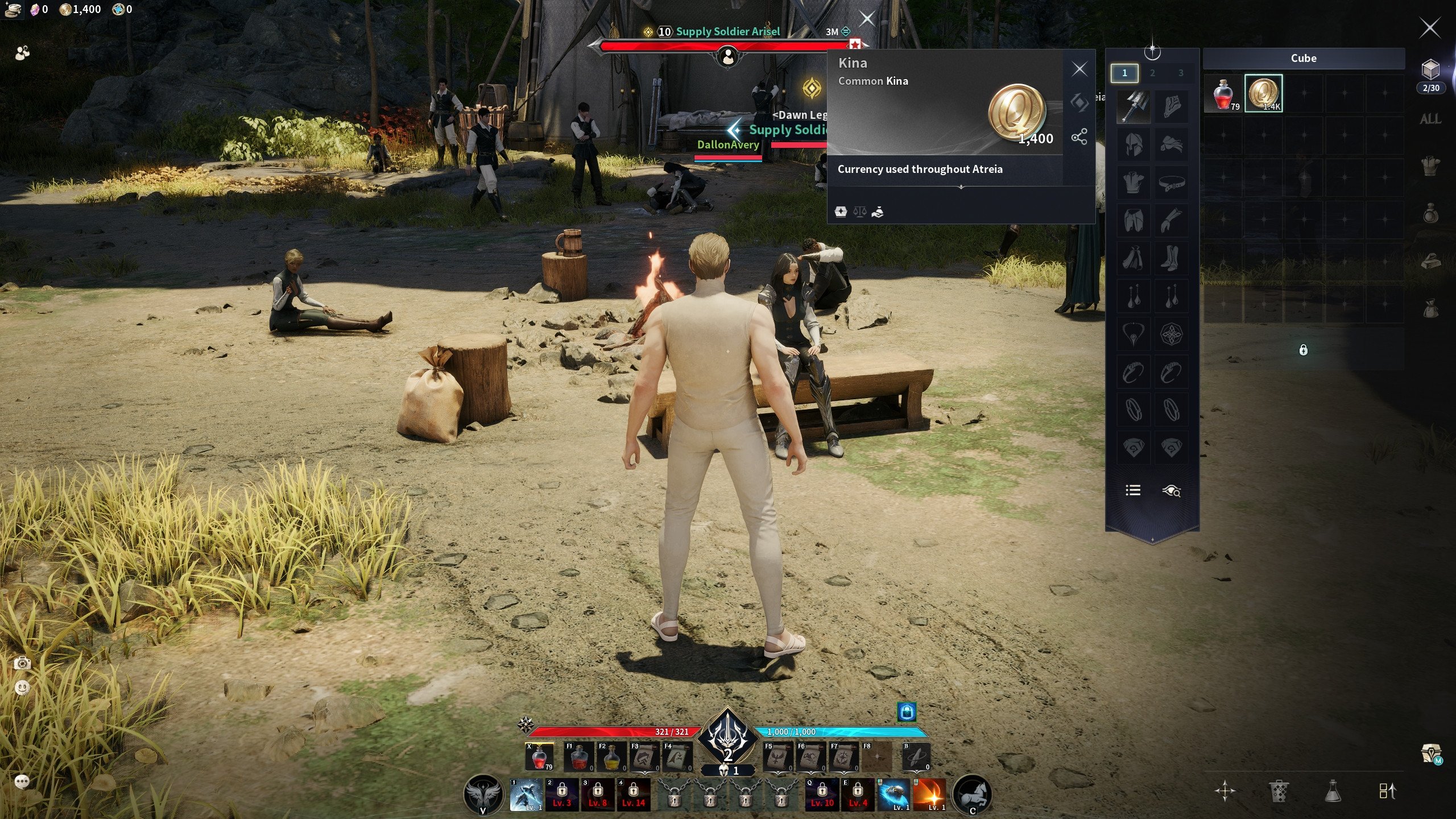
  Kina (Bound). They may look nearly identical when you receive them, but they are not equally useful. The Global client describes Kina simply as the “Currency used throughout Atreia,” while Kina (Bound) is described as the same currency “but unavailable in certain content.”
NC explains the distinction in its official Kina (Bound) introduction notice. Regular Kina is the more flexible currency because it can be used in the player economy, while Kina (Bound) is mainly meant for eligible character progression costs and other expenses that accept it.
|
Currency |
Main Purpose |
Player Economy |
|
|
Trading, Exchange purchases, storage transfers, |
Yes |
|
|
Most eligible progression costs and other regular expenses |
No |
When the Bound version can be the used in a transaction, it is used before the unbound so you never feel like you’re wasting the unbound version on something trivial.
It’s important because if you can make 3 million Kina, its generally better of those 3 million are unbound rather than bound.
For that reason, this guide focuses primarily on methods that generate regular Kina or tradeable items that can be sold for Kina. Bound Kina is still valuable because AION 2 has plenty of expensive progression costs, but it should not be treated as equivalent income when comparing farms.
Best Ways to Farm Kina in AION 2
There’s more ways to farm Kina in the game beyond just doing whatever rewards you with this currency direcly. A large part of your income comes from tradeable gear, materials, Manastones, Soulstones, Pantheon’s Artwork, and other items that can be sold to other players. If you’re willing to do all that
This is especially important on Global, where the early economy should make progression materials much more valuable than they are on older servers.
The best starting point, however, are Expeditions and Conquest dungeons because they give you Kina on top other rewards such as gear and upgrade materials. PvP Abyss farming is another reliable option because normal mobs can give Kina while also dropping materials and gear with market value. Bosses are much less viable option, but rare tradeable drops can be worth far more than hours of normal farming. So it all depends on luck. Check out the table
|
Farming Method |
Main Source of Profit |
Reliability |
Best For |
|
Expeditions and Conquest |
Direct |
High |
Simple farming |
|
Abyss Farming |
|
High |
Increased-risk farming |
|
Boss Farming |
Rare tradeable loot |
Low |
High-value jackpot drops |
|
Market Selling |
Selling valuable drops |
High |
For traders |
|
Crafting |
Selling profitable crafted items |
Variable |
If you have the time |
|
Gathering |
Raw materials |
Variable |
Early Global economy |
|
Battlefield and Abyss Points |
Currency conversion and sellable items |
Variable |
PvP-focused farming |
|
Hidden Cubes and Events |
|
Low |
Extra income |
|
Daily and Weekly Activities |
Fixed rewards and materials |
High |
Easy routine income |
The best way is to combine these methods instead of relying on only one. Spend your available Energy on worthwhile PvE content, sell anything valuable and use Abyss or market-focused farming once your limited rewards are exhausted.
Speaking of PvE Content, I’ve done this checklist guide, which gives you a good plan for taking the most out of the game’s content.
Global prices will also change quickly during the first weeks. Most of the values in this game come from the Asian version of the game, so the economy will like be different. So, just treat each number in this guide as a very rough approximate, okay?
Expeditions and Conquest - Best Consistent Kina Farm
Expeditions and Conquest dungeons are the most consistent Kina farms I found because their income can be planned around Odyle Energy. Odyle Energy regenerates at 15 every 3 hours, which works out to 5 Energy per hour, 120 per day, and 840 per week from natural regeneration alone. But this is only for those players who have the active subscription. Free players restore 10 Odyle every 3 hours.
The current Global data also lists an Energy cap of 560 without a subscription and 840 with one, so letting it sit capped for long periods directly reduces how many dungeon rewards you can claim. So you’re basically converting Odyle into Kina in a sense on with additional rewards on top.
To make a real profit from these, you need at least 1,400 Gear Score. At that point, Urugugu and Vakron dungeons become available as T2 farming options. Urugugu is especially useful for weapons and accessories, while Vakron is more relevant for armor. Once the main character reaches around 2,100 GS, Fire Temple and Horn Den become the next major step.
|
Dungeon |
Tier |
Gear Score |
Main Farming Value |
|
Urugugu Canyon |
T2 |
1,400 |
Weapons and accessories |
|
Vakron Sky Island |
T2 |
1,400 |
Armor |
|
Fire Temple |
T3 |
2,100 |
Higher-tier gear and |
|
Horn Den |
T3 |
2,100 |
Higher-tier armor and materials |
So, on your main what you do is you farm both Urugugu and Vakron until around 2,200 GS, then move up and farm Fire Temple and Horn Den once the character is strong enough. You can do like 3 Urugugu runs and 11 Vakron runs before that faithful upgrade, or you can go for 3 Urugugu and 7 Vakron. The exact number depends on drops, pity system progress, and how much Energy you buy or craft. And you can do that all on your alts separately, but more on that later.
How Much Kina Can Expeditions Make?
With one main character and four alts, weekly dungeon farming can reach roughly 56.8 million Kina under Taiwan reward values.
Each alt has its own Odyle Energy pool, so getting four alts to around 1,400-1,500 GS gives you four additional characters capable of farming T2 content. Your main can then move into Fire Temple or Horn Den while the alts stay on Urugugu and Vakron.
The exact Global total will depend on reward tables and whether each activity pays regular Kina or Kina (Bound), but the Energy and Gear Score should be pretty accurate. I would prioritize getting the main into T3 content first, then bring alts to the minimum Gear Score needed for efficient T2 farming.
Farming Kina with Alts
Here’s how to gear your alts for farming Kina.
|
Character |
Practical Target |
Main Farming Content |
|
Main |
2,100+ GS |
Fire Temple / Horn Den |
|
Alt 1 |
1,400-1,500 GS |
Urugugu / Vakron |
|
Alt 2 |
1,400-1,500 GS |
Urugugu / Vakron |
|
Alt 3 |
1,400-1,500 GS |
Urugugu / Vakron |
|
Alt 4 |
1,400-1,500 GS |
Urugugu / Vakron |
The expensive part is getting those characters ready in the first place. Some players manage to spend 9 hours per alt to reach around 1,400 GS once the main character is already leveled up and geared up and can help with shared resources and gear. That means the first week is much more time-consuming than the weeks that follow. If your goal is to farm millions of Kina that is.
There is also a useful gear-sharing trick here. Equipment can be moved through storage, so the main character's gear can temporarily help an alt meet progression requirements, improve its equipment, and then be moved back. I would still avoid over-upgrading alt gear, because Enhancement Stones and other early resources are much more valuable on the main.
A single character naturally regenerates 840 Odyle Energy per week. Five characters regenerate 4,200 Energy between them before crafted or purchased Energy is added.
For a casual player, none of this is mandatory. One well-developed character can still farm Kina perfectly well. I would only start investing in alts after the main can comfortably access the content that you enjoy. But alts are also useful for other things, but mainly because of they all have their own Odyle pool.
Abyss Farming
If you’re into PvP, or at least is not triggered by being PK’d, the Abyss becomes much more interesting once the main character reaches around 2,200 GS.
You can spend roughly 5-6 hours to open-world Abyss farming at that point, mainly to cap Abyss Points while also collecting regular Kina and tradeable drops.
So you basically have several things that you can turn into Kina. Mobs can drop Kina, while the loot pool includes gear, materials, Manastones, Soulstones, and other items that you just sell for Kina.
Turning Abyss Points into Kina
Abyss Points can also be converted into market value. Using Taiwan prices, I found a working reference of about 1 Abyss Point = 18.4 Kina through buying Abyss-related materials and turning them into sellable items such as Manastones.
That means:
|
Abyss Points |
Taiwan Reference Value |
|
1,000 |
~18,400 Kina |
|
10,000 |
~184,000 Kina |
|
50,000 |
~920,000 Kina |
|
100,000 |
~1.84 million Kina |
These are not fixed Global values. The conversion depends completely on the price of the required materials and the finished items on the server. Still, the ratio is about right.
Browse our hottest Aion 2 Boosting services








Boss Farming and Valuable Drops
Boss farming is kind of weird. It’s not a very reliable way to farm Kina, or definitely not as consistent, because how much you can make off it depends on RNG. But, the thing is, if you’re lucky, whatever you do get from them can be worth hours of farming regulard dungeons.
The Things you should know about is the Artwork from the Pantheon system, high-rarity equipment, Refining Stones, and other tradable items. AION 2 shows boss drop tables directly, so I would always check them before committing time to a particular target.
For example, High Overseer Nutah and Enraged Guardian Lord Nahma both of whom are bosses.
|
Boss |
Notable Tradeable Drops |
|
High Overseer Nutah |
Artwork: High Overseer Nutah, Epic Nutah armor, Unique equipment, Refining Stones |
|
Enraged Guardian Lord Nahma |
Artwork: Guardian Lord Nahma, Colossus: Guardian Lord Nahma, Unique Nahma gear, Refining Stones |
Artwork is particularly interesting because it belongs to the Pantheon system and can be traded. For example, the database marks Artwork: Guardian Lord Nahma as tradeable and obtainable from monsters.
In Taiwan, I have seen some Artwork listed above 10 million Kina, while especially desirable pieces have gone much higher. There’s no telling how much this artwork would go for on Global release, but I’m sure it’s going to be a lot.
Boss farming comes with its own risks too:
- You could zero return on your time spent on this;
- High reward comes from artwork most of all;
- Bigger bosses need higher gear score or party;
- reward eligibility can depend on participation or contribution;
- market value can fluctuate.
Because of that, it’s high risk high reward kind of deal, worthy of exploring in addition to farming dungeons.
Make Kina Through the Market
A large part of your Kina income will come from recognizing which tradeable items other players actually need and selling them instead of dumping everything onto an NPC. This is especially important during the first weeks of Global, when even basic progression materials can be expensive because thousands of players are upgrading gear, crafting, and completing weekly objectives at the same time.
The first thing I would check before selling any tradeable item is the Market. Refining Stones, Manastones, Soulstones, crafting materials, rare equipment, Pantheon Artwork, and dungeon or boss drops can all be worth far more to another player than their NPC sell value. I would pay particular attention to anything that is required by a current progression system or weekly objective.
Just make sure you have an active subscription that allows player market and trading. That’s important. Also, there’s no direct player-to-player trading, only the market or auction.
One system that can create sudden price spikes is Supply Request. The game has both Supply Request: Emergency and Supply Request: Weekly, and the weekly version can ask players to deliver specific Rare or Epic items, gear, or gathered materials. That means an otherwise unremarkable gear piece can become much more valuable if it is suddenly required by the weekly request. It’s also one of those things I added into the weekly checklist in my other guide.
A few item types I would always price-check before selling are:
- Refining Stones and higher-grade refining materials;
- Lesser, Intermediate, and Superior Manastones;
- Soulstones and related crafting materials;
- Rare and Epic gear;
- Pantheon Artwork;
- Items required for Supply Requests;
- Boss and dungeon drops with limited supply.
The exact value change all the time, so they’re worth keeping an eye on. So, don’t just sell extra ones to an NPC vendor.
Crafting for Profit
Crafting can make a lot of Kina too, but only if the finished item is worth more than what goes into it. I would never craft something for sale without checking the material cost first. If the materials are worth 300 million Kina and the finished item sells for 280 million, the craft is a loss even if some of those materials are already sitting in storage.
The interesting part is that AION 2 uses plenty of Bound materials. Those cannot be sold to other players, so using them in a profitable craft can turn otherwise locked resources into something with market value. That makes the real out-of-pocket cost lower than the full market value of every ingredient, which is why crafting profit should be calculated using what you actually need to buy.
The only problem here is that on top of active subscription to access player market, you also need to invest time into leveling professions, both gathering and crafting ones to be able to make something worth selling.
A good example is Manastone crafting through Alchemy. The database lists Intermediate Manastone at Beginner Lv. 20 with the following recipe:
|
Ingredient |
Amount |
|
Lesser Manastone |
5 |
|
Spiritstone Powder |
3 |
|
Professional Ink (Bound) |
2 |
The same craft has a 20% Combo Product chance to produce a Superior Manastone instead. That extra outcome is important when estimating long-term profit, because the average value of repeated crafts is higher than the value of the Intermediate Manastones alone.
There is also a direct Superior Manastone recipe later in Alchemy. At Mastery 85, it requires 30 Intermediate Manastones, 10 Spiritstone Powder, and 2 Exceptional Ink (Bound). So there are multiple points in the Manastone chain where market prices can create a profitable conversion.
Gathering for Kina
Gathering is one of the simplest ways to make Kina because you can just sell it. So it comes down to how efficiently you can hit the gathering spots and not waste your time leveling up crafting professions.
Again, I suggest using the first weeks of the game to your benefit as this is when everyone will be insanely lucrative to sell - materials, crafted gear, basically anything.
AION 2 currently has 61 gathering resources in the game data. These include Odyle, Ore, Rare Ore, Logs, Flowers, Gems, Herbs, Fruits, Vegetables, and Aquatic Life. The important part is that many resources also have higher-quality grades, such as Fine, Pure, and Radiant materials.
Some useful examples are:
|
Resource |
Example Higher Grades |
Main Use |
|
Odyle |
Fine Odyle, Pure Odyle, Radiant Odyle |
Weapons, armor, higher-tier crafting |
|
Orichalcum Ore |
Fine, Pure, Radiant Orichalcum Ore |
Blacksmithing and Armorsmithing |
|
Yggdrasil Log |
Fine, Pure, Radiant Yggdrasil Log |
Elyos crafting |
|
Asvata Log |
Fine, Pure, Radiant Asvata Log |
Asmodian crafting |
|
Sapphire Gemstone |
Fine, Pure, Radiant Sapphire Gemstone |
Handicrafting |
|
Diamond Gemstone |
Fine, Pure, Radiant Diamond Gemstone |
Handicrafting |
|
Ruby Gemstone |
Fine, Pure, Radiant Ruby Gemstone |
Handicrafting |
These materials have real demand because they appear directly in crafting recipes. For example, a basic Orichalcum Greatsword requires 3 Orichalcum Ingots, 5 Refining Stones, and 2 Odyle, while higher-grade weapons start consuming Fine Orichalcum Ore, Pure Orichalcum Ore, Radiant Orichalcum Ore, and the matching Odyle grades.
That is why I would not simply farm whichever node is easiest to find. I would compare the current Market price with how quickly I can gather the resource. A material selling for 20,000 Kina that I can collect repeatedly may be far better than something technically rarer that takes much longer to find or barely sells.
Battlefield and Other PvP Income
If you do prefer PvP in AION 2 a lot more than PvE, then it likely means that you enjoyed the first game. In any case, you can even farm Kina in other PvP activities besides the PvPvE Abyss.
On the Asian version, Battlefield currently rewards 3,000 Abyss Points for a win and 1,000 Abyss Points for participation, with each reward available up to three times per week. Arena rewards are smaller but have much higher weekly limits: 500 AP for a win and 300 AP for participation.
|
PvP Reward |
Abyss Points |
Weekly Limit |
|
Battlefield Win |
3,000 AP |
3 |
|
Battlefield Participation |
1,000 AP |
3 |
|
Arena Win |
500 AP |
30 |
|
Arena Participation |
300 AP |
10 |
Using the Taiwan reference of roughly 18.4 Kina per Abyss Point, three Battlefield wins would represent around 165,600 Kina in conversion value:
- 3,000 AP × 3 wins = 9,000 AP
- 9,000 AP × 18.4 Kina = ~165,600 Kina
If I also collected all three participation rewards, that would add another 3,000 AP, bringing the combined Battlefield total to 12,000 AP, or roughly 220,800 Kina at the same Taiwan conversion rate.
Arena has even more rewards. Thirty wins at 500 AP each equal 15,000 AP, while ten participation rewards add another 3,000 AP. That is 18,000 AP total, which would correspond to about 331,200 Kina using the same reference conversion.
But then again, you’d have to decide if you really want to turn Abyss Points into Kina, knowing full well that these points are used to acquire better PvP gear. So, you know, choose wisely.


You got -20% OFF 
Hidden Cubes, Shugo Festival, and Events
Hidden Cubes, Shugo Festival, and limited-time events are not my main Kina farming methods, but they can add a useful amount of extra value to a normal weekly routine. Most of that value comes from materials and progression items rather than large direct Kina payouts. It’s just that they’re also time-gated content that resets weekly.
Hidden Cubes require keys and can reward items such as Manastones, Soulstones, crafting materials, Stigma-related items, resurrection items, and Kina-related rewards. The results are RNG-heavy, so I would treat them as bonus income rather than something worth farming around exclusively.
Shugo Festival
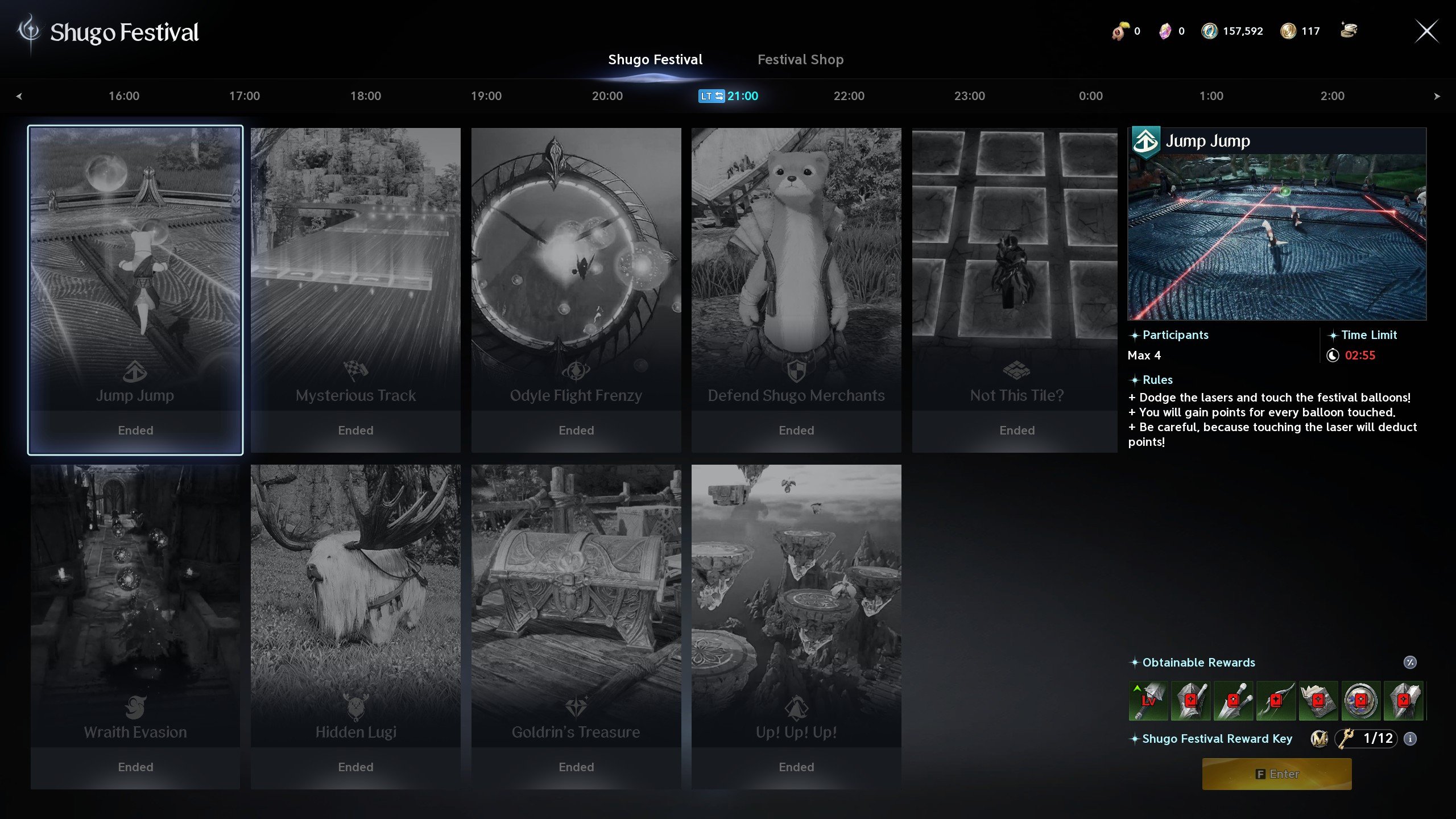
Shugo Festival is a rotating set of minigames with its own reward structure. The Global client includes activities such as Jump Jump, Mysterious Track, Odyle Fight Frenzy, Defend Shugo Merchants, Not This Tile?, Wraith Evasion, Hidden Lugi, Goldrin's Treasure, and Up! Up! Up!. These become active every hour on the hour.
From the Global client, these activities use Shugo Festival Reward Keys and offer different reward pools depending on the minigame. That makes Shugo Festival worth checking regularly, especially when the obtainable rewards include materials or progression items that are expensive on the Market.
Best Kina Farming Routine
Once you get your character to the max level, which you should do as your first priority anyway, then get up to a respectable gear score, you’ll have on your hands a pretty sizeable list of farming methods that you can pick from.
My usual priority would look like this:
- Spend Odyle Energy before it caps. Expeditions and Conquest should come first because their rewards are limited by Energy.
- Claim the most valuable dungeon rewards first. Once the cumulative reward rate starts dropping, the value of additional runs falls with it.
- Use alts only after they can clear worthwhile content efficiently. I would not sink time into weak alts just to increase the character count.
- Clear useful PvP and Abyss activities. These add Abyss Points, direct Kina, and tradeable drops.
- Use the Abyss for open-ended farming. After limited rewards are mostly exhausted, mob farming becomes a good place to keep generating value.
- Check the Market before selling anything valuable. Rare gear, Manastones, Soulstones, Refining Stones, Pantheon Artwork, and weekly-request items can be worth much more than their NPC price.
- Craft or gather only when the margin makes sense. I would always compare current material prices with the finished item or raw resource value first.
- Add bosses and events on top. These are excellent bonus opportunities, but I would not rely on them for consistent weekly income.
Just pick your poison, as they say.
Read our other AION 2 guides:
F.A.Q.
What is the fastest way to farm Kina in AION 2?
For consistent income, I would prioritize Expeditions and Conquest first because they combine direct Kina with gear and materials. Once the limited dungeon rewards are mostly used, Abyss farming, Market sales, and boss drops become the best ways to keep making money.
What is the difference between Kina and Kina (Bound)?
Regular Kina is the unrestricted version used in the player economy and other systems that specifically require normal Kina. Kina (Bound) is mainly used for eligible progression costs and cannot replace regular Kina everywhere. When comparing farming methods, I value regular Kina more because it gives me much more flexibility.
How much Kina can I make per week?
There is no fixed weekly amount because it depends on Gear Score, Odyle Energy, dungeon tier, subscription benefits, and how many alts you use. With one main and four alts, I found a Taiwan reference of roughly 56.8 million Kina per week from dungeon rewards alone, before adding Abyss farming, Market sales, bosses, gathering, or crafting.
Are alts necessary for farming Kina?
No. A single well-developed character can still make plenty of Kina. Alts mainly raise the weekly ceiling by giving you additional Odyle Energy pools and more chances to claim profitable dungeon rewards.
Is Abyss farming good for Kina?
Yes, especially once your limited PvE rewards are exhausted. The value comes from direct Kina, tradeable gear, Manastones, Soulstones, Refining Stones, crafting materials, and Abyss Points rather than one large fixed payout.
Should I sell gear to NPCs or on the Market?
I always check the Market first if the item is tradeable. Rare gear, boss drops, Supply Request items, Manastones, Refining Stones, and Pantheon Artwork can be worth far more to another player than their NPC sell price.
Is crafting profitable in AION 2?
It can be, but only when the finished item is worth more than the materials and mandatory costs. I would calculate the current market value before every serious craft, especially for Manastones and other high-demand progression items.
What should I spend Kina on first?
Early on, I would prioritize progression costs that directly improve the main character and unlock better farming content. Spending heavily on secondary characters or overpriced Market items too early can slow down access to the higher-tier activities that generate more Kina later.