 Dallon Avery
WoW Beginner's Guide Quick Facts:
- To play WoW retail, you’ll need the current expansion and play time subscription.
- Race and faction don’t matter as much today as they did back in the day. Choose whatever you like.
- You don’t need to use addons unless you need to see more information on your screen.
- WoW seasons last from one major patch to another (usually)
- Game plan: level up, finish the current story, play the endgame - chase higher ilvl gear through raids, dungeons, delves, Mythic+, etc.
Need a leg up when starting out? Buy WoW Gold at SkyCoach - the fastest and safest way to get gold brought to you by WoW veterans. Select the amount you need, your region, and realm, and it will be delivered to you in the blink of an eye!

Read closely 
Browse our hottest WoW Boosting services



How to Start Playing WoW: Preparation Checklist
If you haven’t played the game in a long time or at all, you’re most likely confused by all the different versions that popped up over the last couple of years, and as someone who has no idea what the order of expansions is like or even what the current one is, this whole thing has to be difficult to get through. So, I want to start by explaining how to actually get into the game before you start playing. And before I start, just know that the retail version refers to the latest expansion, which, as of the publishing of this guide, is called Midnight. Here’s what you need to get into it:
- Buy the latest expansion - base game and all previous expansions will be included.
- Buy subscription (30 days, 60 days, etc) - gives you access to the base game and all previous expansions besides the current one.
- Download the game through the Battle.net launcher
- Start playing
It is pretty simple once you start seeing how the expansions are structured, but there are a few things worth mentioning here before we move on to the game’s stuff.
Can you Play WoW for Free: Free Trial and WoW Token
The short answer is yes. Kind of. You can play the base version of the game without a subscription up to level 20, and with most of the features cut off - no trading, auction house, guilds, etc. This is known as the Free Trial.
At least you can try out different classes, do some dungeons, some in-game events, and experience Dragonriding, which is a faster flying mode that was added in the Dragonflight expansion.
Another way to play the game without paying real money is by buying the WoW token with in-game gold. That obviously requires you to already own the game and farm enough gold to afford it. The current price of WoW Token is around 250k gold, depending on the region and server.
Other WoW Versions
This beginner's guide is dedicated to the retail version, which is the easiest version to get into and start playing. But what of other versions, and what do they all mean? Let me explain.
- WoW Classic - a relaunch of the original version of the game with the same order of expansion releases. Current Classic is Mists of Pandaria.
- Season of Discovery - a version of WoW Classic with experimental features like reshuffled class specs, new mechanics like runes, etc.
- Classic Hardcore - WoW Classic, but if you die, you won’t be able to play the same character.
- Remix (Legion Remix, MoP Remix, etc.) - an event within the retail version that allows you to level up in one of the previous expansions with extra rewards. Good for alts.
- Classic Anniversary - basically, you get to play through Classic the second time around with minimal changes.
In general, Classic is for those who have that nostalgia, gamers who were there the first time. Revisiting and replaying that old version of the game is appealing to lots of WoW fans. The same goes for all the expansions under the title “Classic”.
Character Creation: Choosing Faction, Race & Class
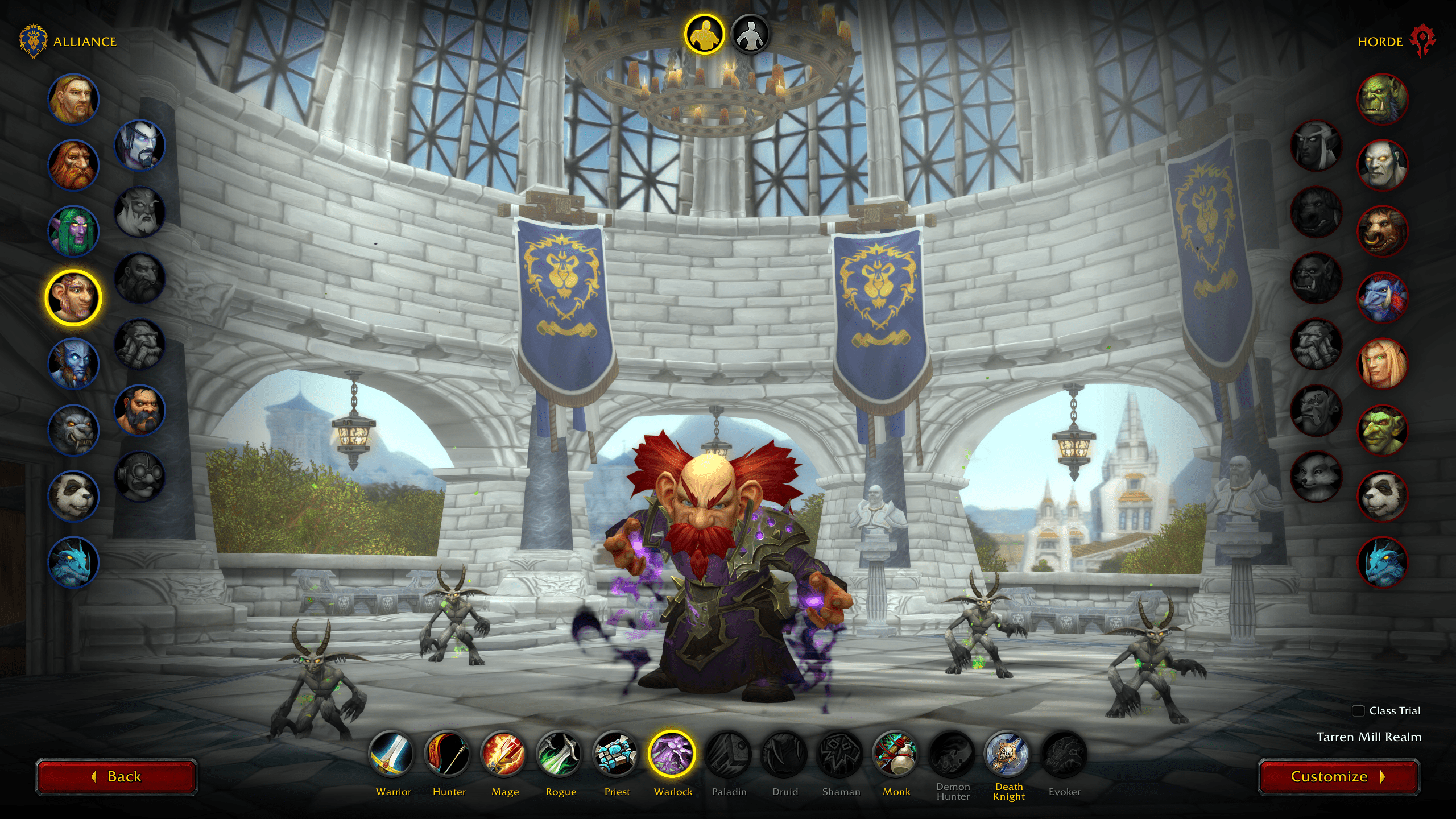
When you boot up the game, the first thing you see is the character creation screen. You have characters on the left who are loyal to the Alliance, and those on the right fight for the Horde.
Back in the day, the choice mattered a lot because the game was forcing faction-driven conflict through open-world locations with the PvP flag on. So, if you wanted to get to your quest marker or objective, you had to risk being attacked by players from the opposite faction.
These days, there’s no real difference, and you pick whatever looks cooler. Just know that each faction has its own capital city, and some locations and questlines are also faction-specific. Other than that, there’s nothing there. Even dungeons and raid grouping are cross-faction these days.
What Race to Play As
The choice of race doesn’t play any role either. All races have unique racial abilities and bonuses to professions, but they’re not substantial in any way. Most of these abilities just add to the role-playing element and nothing more. You can check out the full list of races and their racial abilities in the tables below. Hover your mouse over any ability to learn what it does.
|
Race |
Type |
Racial abilities |
|
Draenei |
Alliance |
|
|
Dwarf |
Alliance |
|
|
Gnome |
Alliance |
|
|
Human |
Alliance |
|
|
Night elf |
Alliance |
|
|
Worgen |
Alliance |
|
|
Void elf |
Allied |
|
|
Lightforged draenei |
Allied |
|
|
Dark Iron dwarf |
Allied |
|
|
Kul Tiran |
Allied |
|
|
Mechagnome |
Allied |
|
|
Pandaren |
Neutral |
|
|
Dracthyr |
Neutral |
|
|
Haranir |
Neutral |
|
|
Blood elf |
Horde |
|
|
Goblin |
Horde |
|
|
Orc |
Horde |
|
|
Tauren |
Horde |
|
|
Troll |
Horde |
|
|
Undead |
Horde |
|
|
Nightborne |
Allied |
|
|
Highmountain tauren |
Allied |
|
|
Mag'har orc |
Allied |
|
|
Zandalari troll |
Allied |
|
|
Vulpera |
Allied |
Neutral races can join either faction once they reach a certain level. The Allied race is a little different.
Allied races are locked by default, and you have to complete a few quests to unlock them. Most of these quests can be started from within the embassy in your capital city. You can talk to the NPC there and pick which quests you want to do. Haranir, the latest Allied race added, is a little different. To unlock it, you have to progress through the Midnight story. Unlocking the race also rewards you with a unique mount.
Browse our hottest WoW Boosting services




Heritage Armor
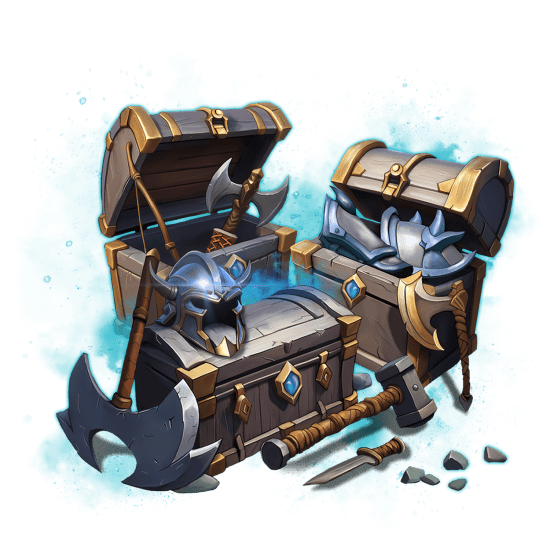
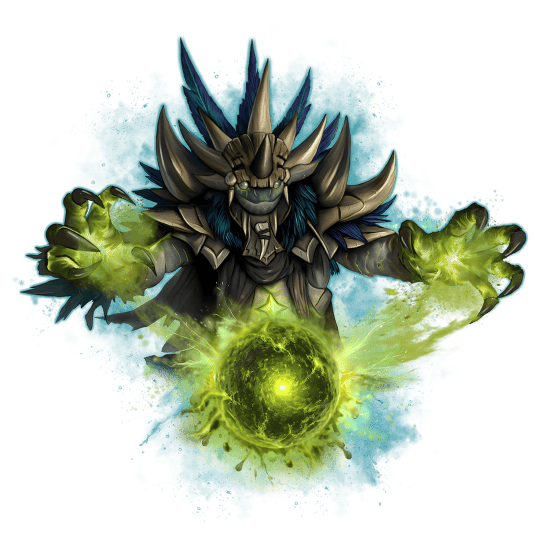
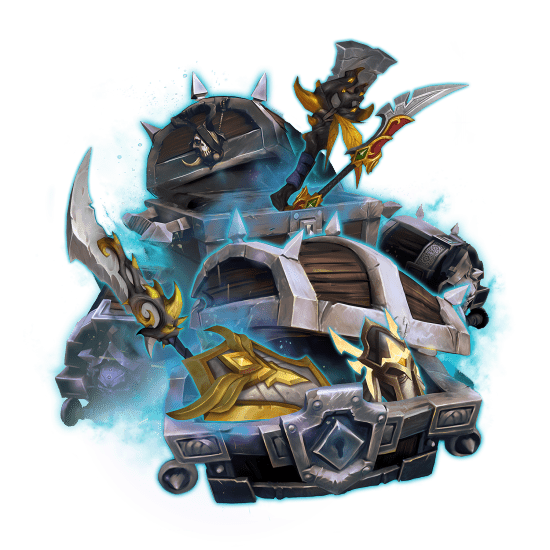
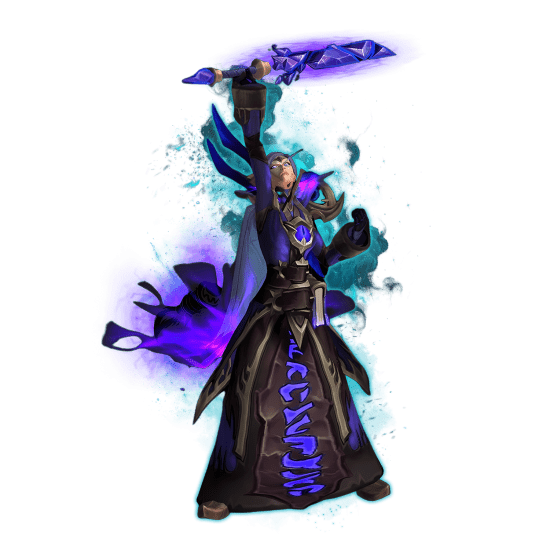
Another cool thing that I think you should know is that upon reaching level 40 for any race, you can start a special questchain and by the end of it, you will unlock a special heritage armor for your race that can be used as a transmog - a skin for any armor.
What Class to Play
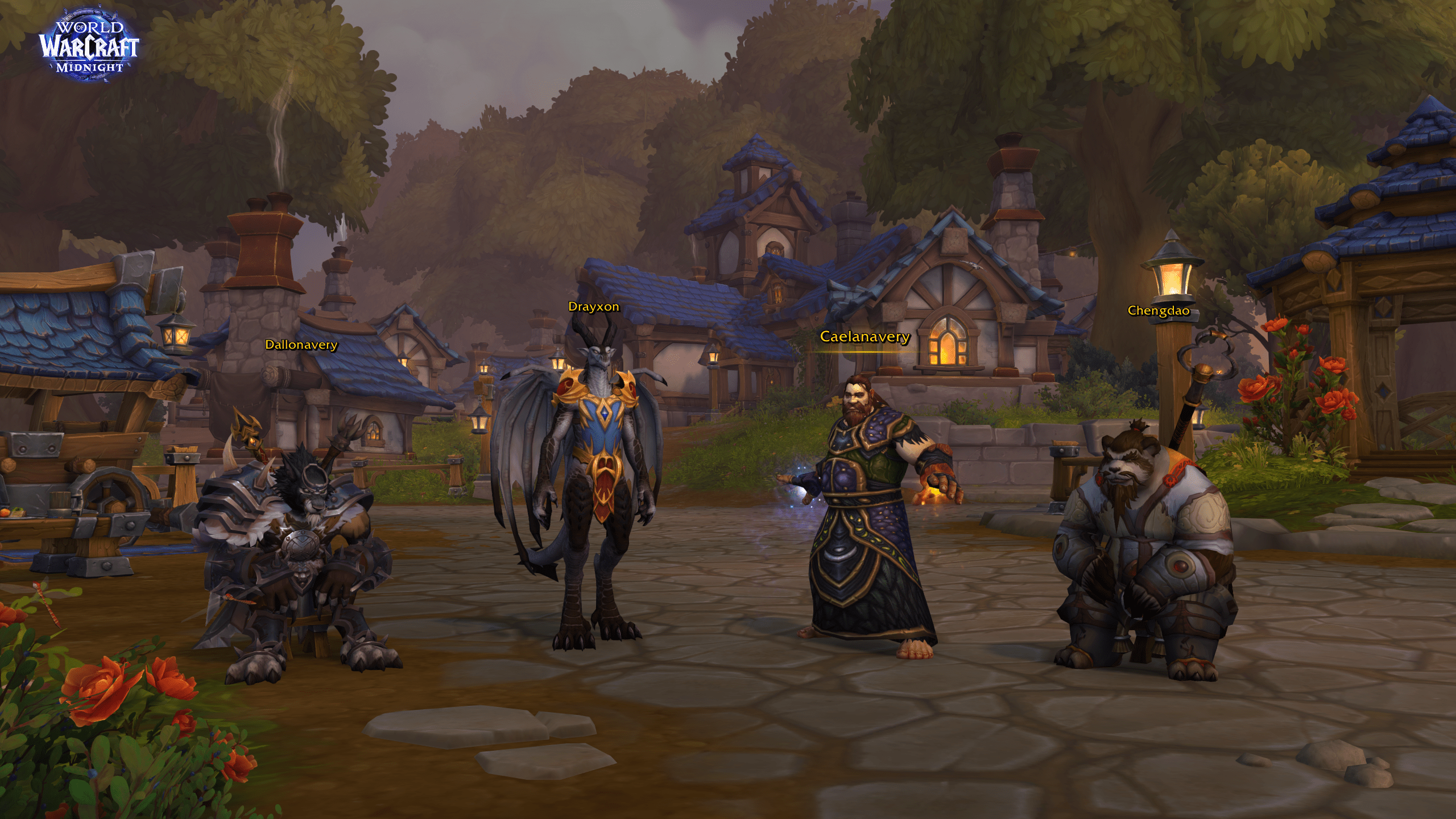
My best advice is - go with whichever class you vibe with. I’ve written a lot of class guides for retail and Classic WoW, and a lot of class tier lists. You can follow those if you want to know more about each class. But first and foremost, decide which class fantasy you like best.
Sure, you can look up the tier lists and pick a class that’s meta. But if you don’t like playing this class, what’s even the point? And besides, the game constantly pushes patches that rebalance the classes or entire class reworks, as happened for Midnight. Here’s the full list of classes and specializations just for reference:
|
Class |
Specializations |
|
Death Knight |
Blood, Frost, Unholy |
|
Demon Hunter |
Devourer, Havoc, Vengeance |
|
Druid |
Balance, Feral, Guardian, Restoration |
|
Evoker |
Augmentation, Devastation, Preservation |
|
Hunter |
Beast Mastery, Marksmanship, Survival |
|
Mage |
Arcane, Fire, Frost |
|
Monk |
Brewmaster, Mistweaver, Windwalker |
|
Paladin |
Holy, Protection, Retribution |
|
Priest |
Discipline, Holy, Shadow |
|
Rogue |
Assassination, Outlaw, Subtlety |
|
Shaman |
Elemental, Enhancement, Restoration |
|
Warlock |
Affliction, Demonology, Destruction |
|
Warrior |
Arms, Fury, Protection |
What are specializations? Well, since World of Warcraft is the most traditional MMORPG out there, it follows the 3-role philosophy:
- Tanks - a role whose job is to make the enemies attack you and not your friends. Has the largest amount of health and can force AI enemies attack you.
- DPS - either melee or ranged, this role’s job is to deal damage. But they also have less health than tanks.
- Healer - supports that either heal or buff allies. Their job is to keep tanks and DPS characters from dying.
Each class in the game has at least 3 specializations (players call them “specs” for short) that play differently. But, more importantly, each spec within the same class can fulfil a different role. The best example is the Druid class. Druids can be:
- Ranged DPS - Balance spec
- Melee DPS - Feral spec
- Tank - Guardian spec
- Healer - Restoration spec
So, picking a class doesn’t restrict what role you can play. Sometimes, the choice of available roles is obvious - a Warrior can be a tank or a DPS. That’s easy enough. But a Priest can either be a Healer or a DPS! Paladins can be tanks or healers! The list goes on. So, whenever you pick a class, just decide which one seems cooler to you.
Class Trial
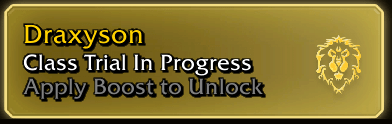
If you can’t decide which class to pick just from the character screen’s descriptions, you can tick the “Class Trial” option in the bottom right corner to “playtest” a class. When you create a character with this feature on, you will start with level 80, which is ten levels below the max level. This means that you can try out all the skills the class has and different specializations to see if you like them.
The Class Trial is time-limited - you can play up to 8 hours, which is enough time to decide if you like it or not. If you want to keep playing on this character, you must use the WoW Boost token. This token is usually given to anyone who buys the current expansion of the game, and its original purpose is to instantly give you level 80 for any character. These tokens are usually used to skip the leveling part whenever you’re creating a second, third, etc., character.
If you go for this option to find out which class to play, turn on the One-Button assistant that makes it so that all you have to press is one button, and the game will pick the best spells or abilities to use based on the situation. Otherwise, you’re not going to understand how a class plays if you just use random abilities.
How World of Warcraft is Structured
This is the biggest question I had when I was starting out, because I could not make sense of what anyone was talking about. Raids, dungeons, leveling, pet battles?! What the hell are pet battles? Let me explain.
You can divide the entire game into two major phases: the leveling phase and the endgame phase.
Leveling in WoW
Your first goal for your new character in WoW is to reach the max level, after which “the real game” starts. I break down leveling in my Midnight leveling guide in more detail, but here’s the gist:
- Levels 1-10- your tutorial experience done in Exile’s Reach (best for new players) or a race-specific starting location (outdated).
- Levels 10-80 - main leveling stage that you spent in the previous expansion. For Midnight, that’s The War Within.
- Levels 80-90 - leveling in the latest expansion and unlocking the endgame activities.
- Increasing Item LvL (ilvl) - there are no more levels past 90 in Midnight, but instead, you now get to work on upgrading your gear through repeatable quests and activities. More on that later.
Every expansion works the same way. You get to experience the most current content as soon as your character is 10 levels below the current max level. That’s when you get invited to do the expansion’s story through the main quest. Once you’re done with the story, you can take part in all of the endgame activities. Speaking of those.
WoW Endgame
World of Warcraft's endgame is designed around personal progression and playing whatever you want. Each expansion features a number of activities, each of which has its own progression and reward tracks that you can focus on. The endresult is the same, you’ll be increasing your gear’s ilvl. Here’s a short list of all the endgame activities in Midnight:
- Dungeons - an iconic type of group activity for up to 5 players. Can be done in different difficulties - Normal, Heroic, Mythic, and Mythic+. The last one is its own game mode. Also available with AI teammates in the form of Follower dungeons.
- Raids - another iconic type of group activity for groups of 10-30 players. It can also be done in Normal, Heroic, or Mythic difficulty. No M+ for raids.
- Delves - similar to dungeons but designed for solo play. They’re also shorter. There’s an entire progression system tied to Delves. See our guide for more details on that.
- Mythic+ - a unique way to run the hardest difficulty of dungeons with added modifiers and a timer. Accessed through a special item called “keystone” that can be upgraded to increase the difficulty of the run and its rewards.
- World Quests - repeatable dynamic quests that appear on the map and are tied to a specific faction. Provide quick rewards in the form of some items and reputation.
- World Bosses - giant bosses that roam the zones, can only be killed with a group of players, and appear on a timer. Usually have quests tied to them.
- Prey Hunts - new activity where you track down and kill a targeted monster. Has 3 difficulty levels - Normal, Hard, and Nightmare.
- PvP - structured PvP in the form of massive battlegrounds or smaller arenas, or the less popular open-world PvP. PvP has its own reputation, currency, and unique rewards. Ranked PvP rewards are what most players are after these days.
There’s also Housing, but it's not limited to endgame. You get access to it as soon as you leave the tutorial island, and it also has its own progression system tied to it. This is something players are doing when they’re tired of all of the activities listed above.
Also, don’t forget about crafting. WoW is famous for an extensive and deep crafting system that includes gathering and production professions. It would also put it into the endgame activities, since every expansion has its own unique list of recipes and items, and only the most current one has any real value. You can make gold with professions either by selling valuable crafting resources or by completing crafting orders created by other players.
Another thing that didn’t make it into the list because it is technically not a dedicated activity: renown farming. The game is full of factions beyond just Alliance and Horde, and each one has its own renown track. A lot of players will be farming reputation for the factions in Midnight expansion, specifically to get access to unique rewards, good gear, etc.
Great Vault
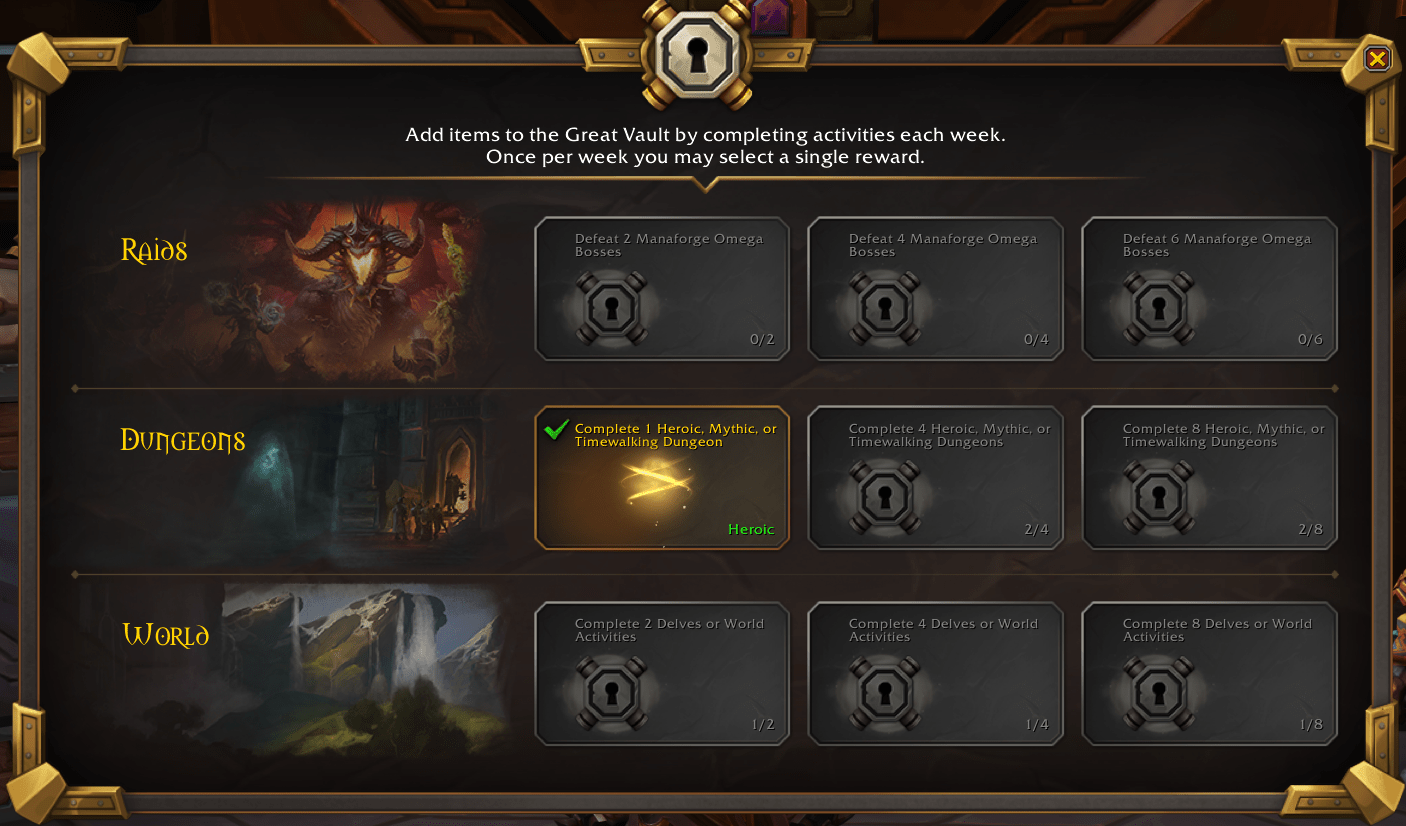
Once you complete the Midnight story, you’ll get access to the Great Vault, which is basically a system of rewards that gives you something the more time you spend in the game. Basically, the more raids, dungeons, or world content you complete in a week, the better reward you can get from this vault at the start of the next week.
The Great Vault is the only source of high ilvl gear, which you then need to upgrade by using special currency. Read more about gearing and how it works in my Midnight gearing guide.

You got -20% OFF 
Expansion Lifecycle: Seasons and Patches
As you probably know, all live service games receive constant updates that keep the game fresh. You also probably heard that WoW has had a bunch of expansions in the past, and Midnight is far from the last one. I think it’s really important to know how the expansion’s lifecycle goes because that will help you understand what you might miss if you decide to take a break from the game, and also when the best time to come back might be.
Let’s start with the list of expansions for the game and their order:
- World of Warcraft (base game)
- The Burning Crusade
- Wrath of the Lich King
- Cataclysm
- Mists of Pandaria
- Warlords of Draenor
- Legion
- Battle for Azeroth
- Shadowlands
- Dragonflight
- The War Within
- Midnight
- The Last Titan (upcoming)
Note that the number of the expansion is also the first number of the patch. WoW uses a three-part version system that looks like this: MajorPatch.MinorPatch.Build. For example, patch 12.1.5.
The first number is the Expansion cycle. Each expansion gets its own major number.
- Dragonflight = 10.x.x
- The War Within = 11.x.x
- Midnight = 12.x.x
The second numberis the major content patch. These are the big updates inside an expansion. They usually add: a new raid tier, a new Mythic+ season, a new zone, or a major system
There’s usually an 8-week period between major patches, and there are three major patches in the expansion:
- 12.0 – Launch patch
- 12.1 – First major content patch
- 12.2 – Second major content patch
The third number is the minor patch. These are smaller updates between major patches. They can still include new content like new story chapters, class tuning, catch-up systems, rewards, etc.
What are the Seasons in WoW
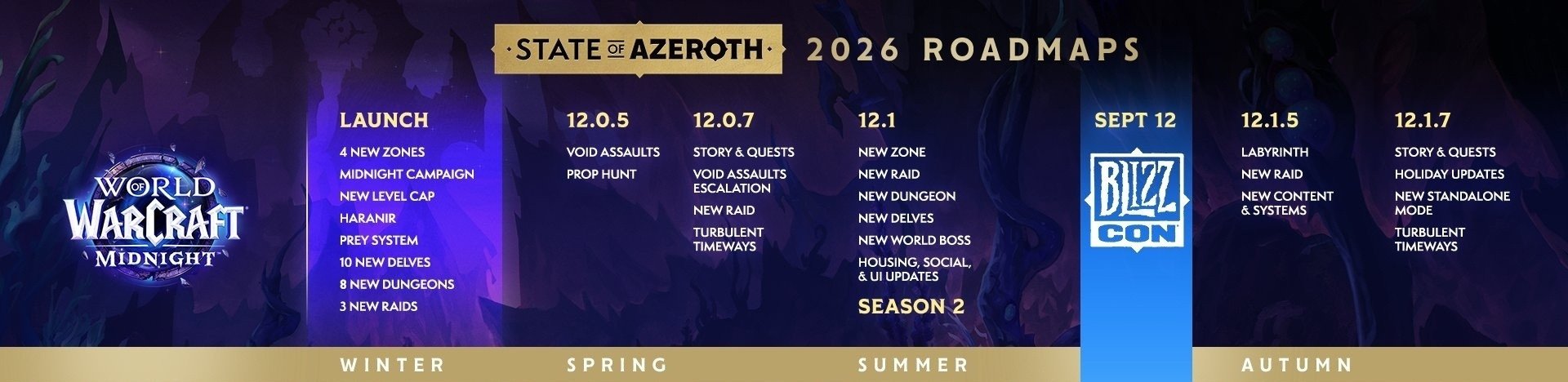
A season is a defined endgame period where specific content, rewards, and progression systems are active.
In Retail WoW, a season usually begins when a new raid tier launches. It’s tied to a major patch such as x.1 or x.2, and it functions as a soft reset of endgame progression.
Originally, the term “season” referred mainly to PvP ladder resets. Over time, Blizzard adopted it as an official umbrella term covering PvE and PvP progression together.
In practical terms, a season means:
- A new raid tier
- A new Mythic+ rotation
- A new PvP ladder
- A higher gear cap
- A fresh item level climb
Seasons last around 5-6 months, which aligns with the major patch cadence.
Minor patches like x.0.5 or x.1.5 do not start a new season.
So if you’re in “Season 1,” you are typically in the launch raid tier period, and you’ll stay there until the next major content patch. The image in this section shows Midnight’s lifecycle roadmap with the patch numbers, content, seasons, and dates. Once you see this, you can imagine that every expansion before and after Midnight followed a similar structure.
Should I Use Addons in WoW
Let’s go back to the game where I want to discuss something else that current WoW players use a lot, and new players aren’t quite sure what to do with.
First off, let me answer this question: Do you need addons to play WoW? The answer is a hard no. Now allow me to explain.
If you’re new to MMOs and you look at the in-game HUD, it’s already hard to tell what you need all of this stuff for. Luckily, the tutorial on Exile’s Reach does a great job explaining everything you need to know.
Back in the day, when WoW was just released, there was a lot of data that the game used “under the hood”. Stuff like: “who does the most damage in the group” or “who has aggroed the monsters”, or “what is the next ability the boss will use”. And since players needed to see that kind of stuff to get better at the game, they found a way to access all of that information and display it on the screen. That’s how addons were born. They allow us to customize how the on-screen display looks, show helpful additional information, etc.
As a new player, you don’t need to install and use addons. There are two reasons for that:
- You actually don’t need to see all of that additional information that hardcore players need to see. Unless you really want to.
- As of Midnight, the game already allows you to turn on most of those features by default and customize them without any addons.
I’ve written an extensive guide on how to customize your in-game HUD without addons, and another guide where I listed the best addons you can install right now.
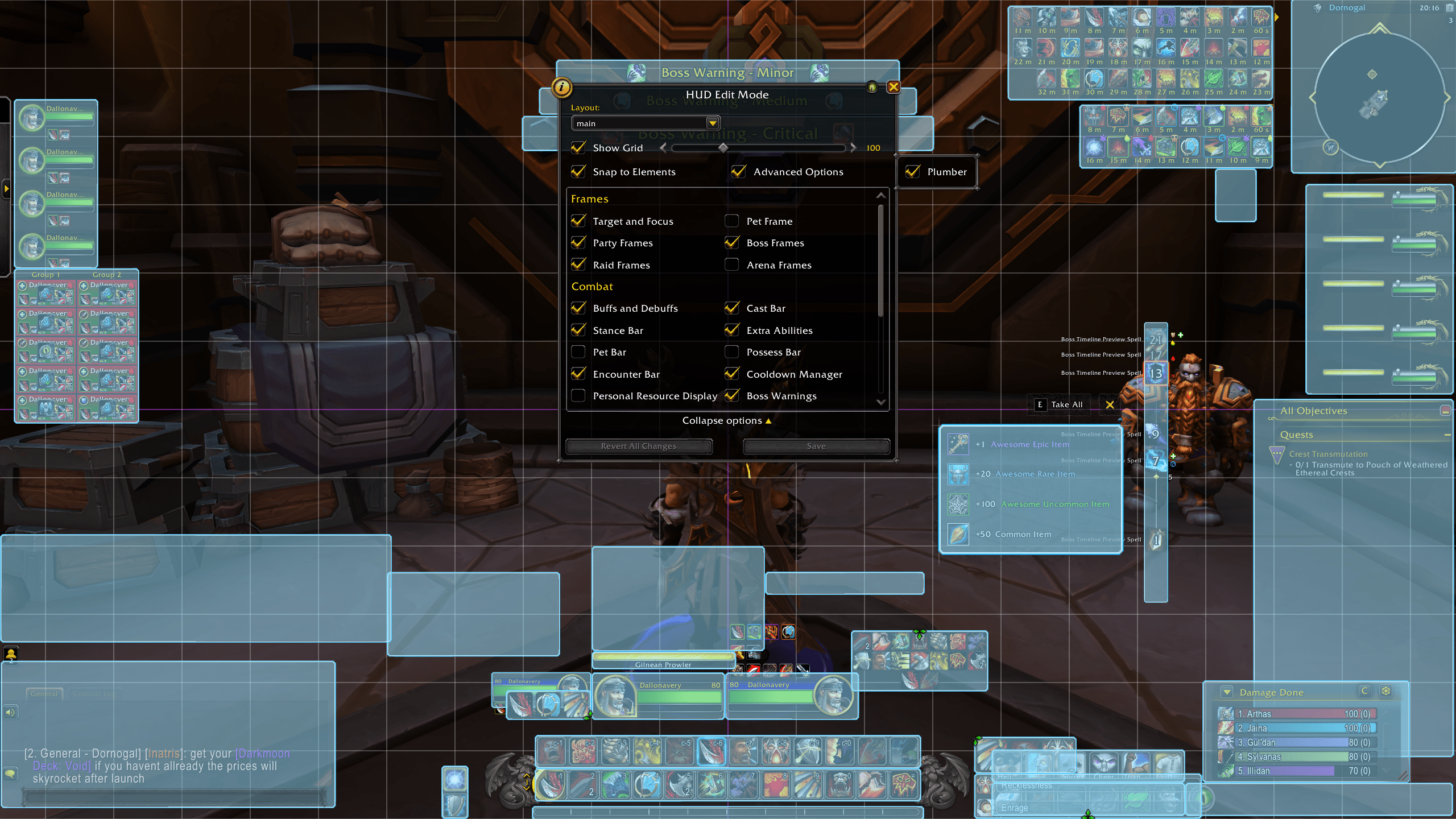
I would recommend starting by editing HUD - go into settings and move around different elements on the screen to where you want them to be. That’s a good start. Play around with your personal setup and then look up what other things you can turn on. Here are some ideas for you:
- Essential Cooldowns - show you separate icons with cooldowns for your most important abilities. This is only needed because it's hard to track them all when they’re on action bars. It doesn’t replace the action bar icons; it just adds bigger icons somewhere you can see.
- Tracked Bars - if you want to track a specific state or a buff, turn it on. It will show up as a bar.
- Nameplates - Customize the way different information is displayed on your and your enemy’s nameplates.
I want to stress how optional this is one more time. Only do this if you feel that, after playing for a while, something is missing and you want to see more.
After you’ve spent enough time tinkering with the in-game interface editor and additional options, you will likely start seeing its limitations. Midnight is the first expansion where the developers decided to introduce this level of customization in hopes that someday, it will replace all major addons. But it's still early, and some of the QoL things might still be missing. That’s when you can go look up some addons on http://curseforge.com/wow.
WoW Midnight New Player Tips & Tricks
There’s a lot about this game that I didn’t cover — things like transmogs, talent trees, the Dungeon Finder, the map, guilds, and much more. The goal of this guide was to introduce the essentials and help you understand how the game works at its core. The tutorial will walk you through the basics, and the rest you’ll pick up naturally as you play and explore.
I’d like to leave you with this list of tips and tricks that I found out when I started exploring Azeroth not that long ago myself. These are the things that you might not know about, or some weird stuff that I discovered.
- You can’t put a space or a dash in your character’s name. So plan accordingly
- Fast travel between different locations (not zones) is mainly handled by the portal room in your capital. Every expansion’s hub city will have a teleport to Stormwind and Orgrimmar. There, you will find a portal room that will take you to any other location. If, as a new player, you don’t see a specific portal or it doesn’t work, you have to get there by boat or on your own mount. After you’ve discovered the new place, its portal will become active.
- You can hide the helmet (or any other item slot) by creating a dedicated transmog outfit that hides the chosen slot, while everything else is unchanged.
- You can switch between the new active flying and the old flying styles by using the “Skyriding Flight Style” ability in your spellbook. This could be useful if you want the hands-off flying style.
- Warriors can actually dual-wield two-handed weapons. Don’t forget that!
- The Dracthyr race doesn’t need a flying mount. They are the mount!
- You can run all current dungeons solo with AI followers and get that loot.
- Some items are Warbound - meaning they can be used by any character on your account. So, don’t just sell them.
- You must equip bags to increase inventory space. Bags add a different number of slots, so sometimes you need to replace a smaller bag with a bigger one.
- You can reallocate talent points on the talent trees for free as long as you’re not in combat.
There are way more secrets and things to discover in the game, but I wish I knew these things when I came back into the game after years of not playing.
Read our other WoW guides:
F.A.Q.
What is the best WoW to start off with?
The best version of WoW for new players is retail and the current expansion. It has dynamic combat, nice visuals, and tons of content for hardcore and casual gamers.
How to start with WoW?
To start playing retail WoW, you’ll need to acquire the current expansion and a game time subscription. If you just buy the subscription, you won’t have access to the current expansion.
How can I play WoW?
Pick a race and class, then complete the tutorial instance and proceed to leveling in the previous expansion. When you’re about 10 levels below max level, you’ll be able to play in the current expansion content.
Can you play WoW solo?
Absolutely! Over the years, WoW has become even better for solo players since the devs added Delves, which are basically solo dungeons and follower dungeons - a difficulty for dungeons that lets you play with AI party members instead of real players.
What to do in WoW?
World of Warcraft is a “theme-park” MMORPG, and you can choose how you play. Most common ways to play include:
- Engaging with the current story
- Replaying older expansions through Timewalking and Chromie Time
- Engaging with the Housing system - includes acquiring house decor from all over the game’s content and activities.
- Crafting - another way to play the game without combat - gather resources and create items from weapons and armor to food and potions.
- Pet battles and fishing - two mini-games that wow fans love spending time with. Both work as collection-driven side activities that let you gather companions, rare catches, and unique rewards over time.
- Transmogs - create custom outfits by combining gear pieces from different sets from the oldest content to the current one.