 Dallon Avery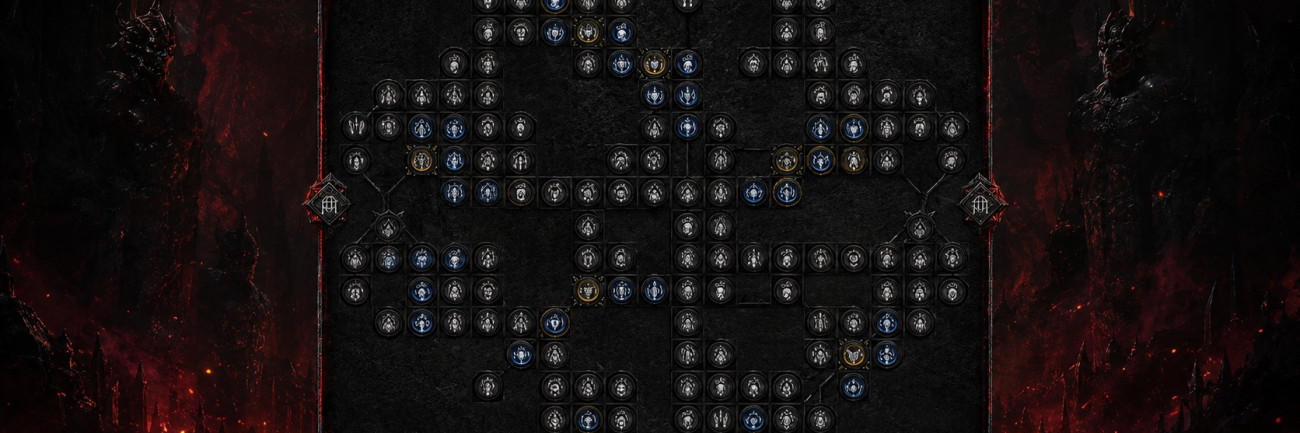
Diablo 4 Paragon Guide Quick Overview:
- Paragon Board is the continuation of the leveling system that allows you to upgrade your character past level 70.
- There are a total of 342 (42 seasonal) Paragon Points that you can invest in a total of 5 boards.
- Glyphs are items that are slotted into specific nodes, providing upgradable bonuses and enhancing other nodes in their vicinity.
- New boards are unlocked by opening a connecting node called “Board Attachment Gate.”
- Each board has between 70 and 180 nodes
Want to get to the Paragon Board faster? Buy Diablo 4 Powerleveling and get the freedom to invest in any passive bonus stats from all the boards available to you.


Read closely 
Browse our hottest Diablo 4 Boosting services





What is the Paragon Board in Diablo 4
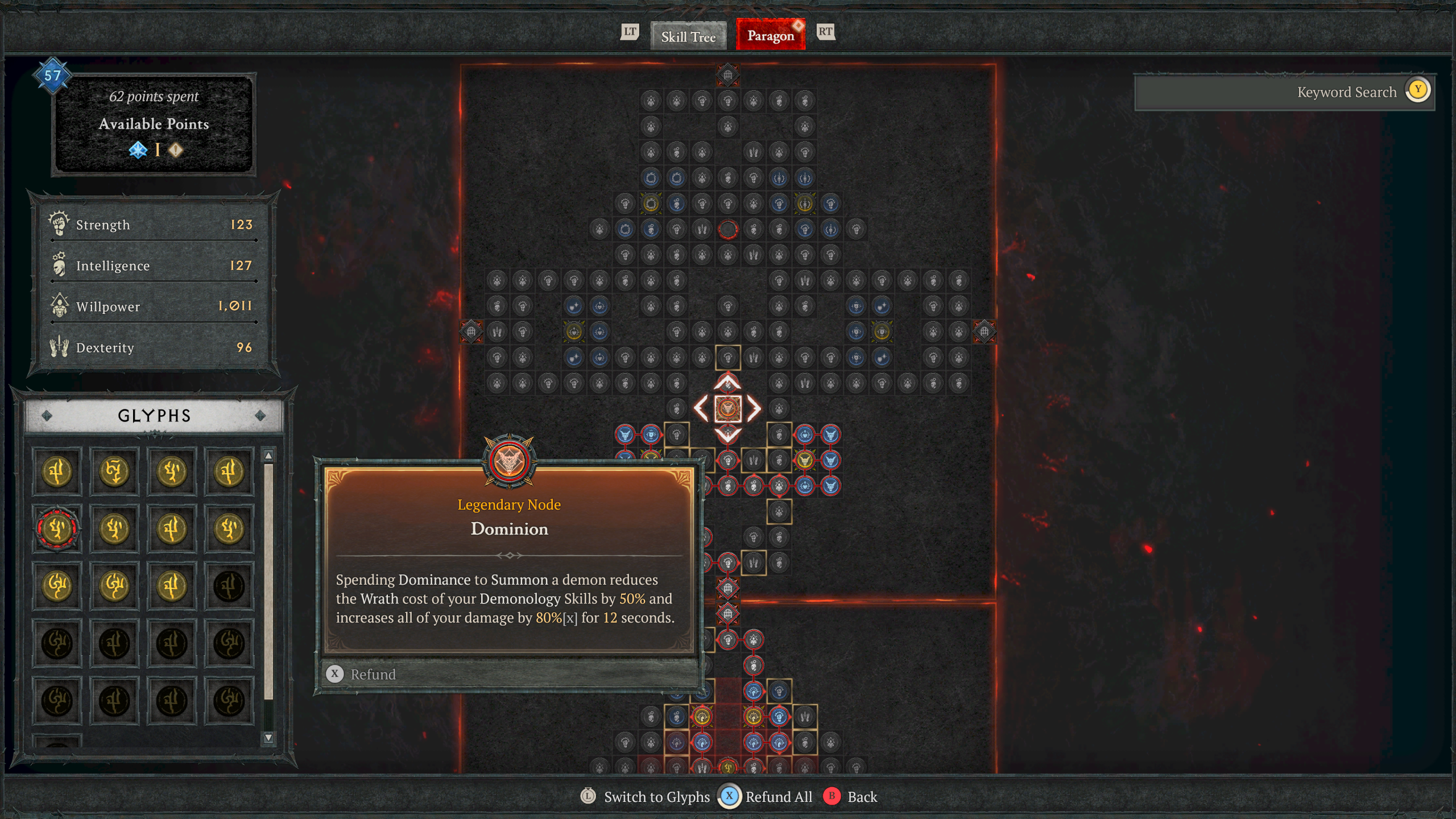
Paragon Board is an additional progression system that allows you to unlock more power after reaching the max level, which is currently level 70. With that, you can gain an additional 342 “times”. Every time you level up, you get 1  Paragon Point, which you can invest in one of many nodes on the board.
Each class gets 9 Boards, but you always start with the Starting Board. Once you reach the so-called “Board Attachment Gate” node and invest a point in it, you will then be able to choose one of four boards to progress to. In total, there are 9 boards with between 75 and 180 nodes on each.
After reaching level 70, the XP you get counts towards the next  Paragon Point. So, each time you level up, you get a Paragon Point instead of a Skill Point. That way, you’ll be able to get 300 points, and an additional 42 come from Season Rank rewards, but that only applies to seasonal characters. Now, let me explain what kind of nodes you can invest those points into and what they can give you.
Paragon Board Node Types
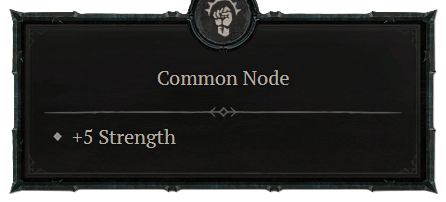
If you’re lost by looking at all of those colorful nodes on the board, I was there too, but don’t worry. Just like almost anything in the game, nodes have rarities, and higher-rarity nodes have more bonuses. Here are all node types:
- Common Nodes - most common nodes. Usually give +5 to a main stat, such as Strength, Intelligence, Dexterity, or Willpower. They are mostly used for pathing across the board.
- Magic Nodes - blue nodes give better stat bonuses or smaller secondary bonuses, such as damage, armor, resistance, life, or other build-relevant stats.
- Rare Nodes - yellow nodes give stronger bonuses than Magic Nodes and usually have an extra bonus that activates after meeting a stat requirement.
- Legendary Nodes - orange nodes give a powerful board-specific effect tied to a playstyle or mechanic. Normal non-starting boards have 1 Legendary Node, while the Starting Board does not have one.
- Glyph Socket Nodes - special socket nodes. Once unlocked, they let you insert a Paragon Glyph. The Glyph then boosts nearby nodes or gains bonuses based on the stats inside its radius.
- Board Attachment Gates - the gate nodes at the edge of a board. Unlocking one lets you attach another Paragon Board. They also give +5 to all stats.
You could find an entire guide on the Paragon Board pathing and how to find the best nodes to unlock, but my advice is to just follow your build’s pathing, as builds these days include that sort of thing. Also, keep in mind that when you’re selecting a new board to activate at the game, you can rotate them to make the Legendary Node closer to the gate node.
Paragon Glyphs
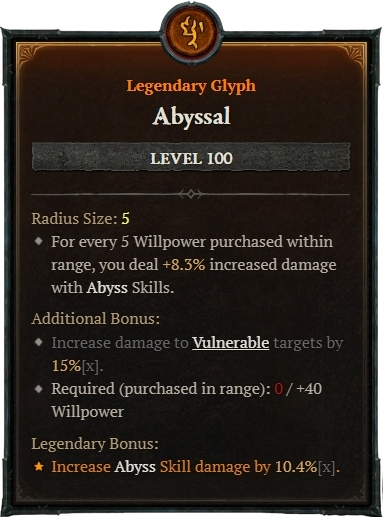
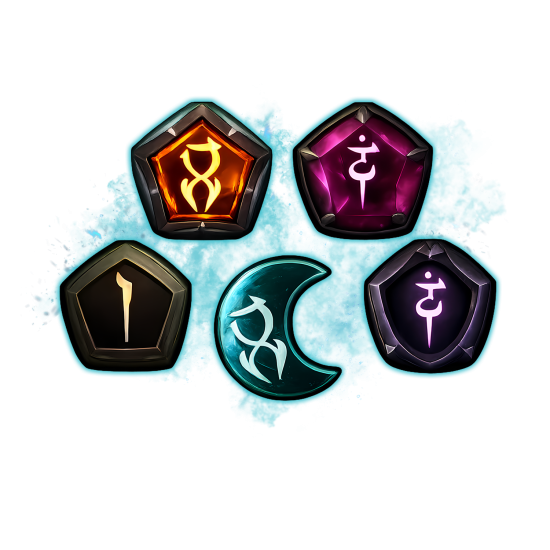
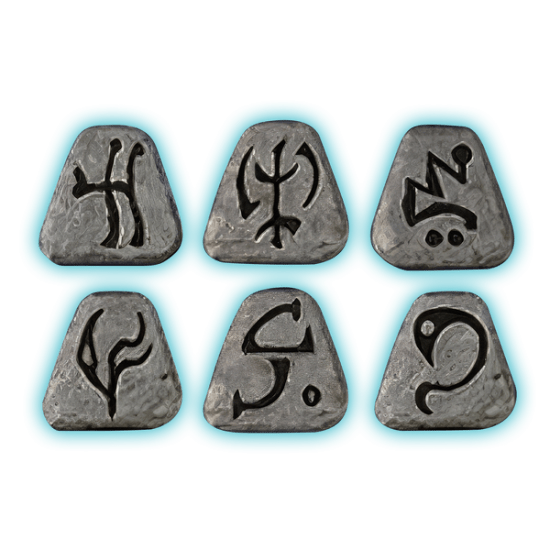
Glyphs are items that drop as ground loot just like gear, and they’re inserted into the sockets on a paragon board. Glyphs come in two rarities:
- Rare - basic glyph that offers a main bonus, then usually unlocks another effect once enough required stats are placed within its radius.
- Legendary - has increased radius and requires a specific amount of basic stats in a radius to work.
Each Paragon Board has one Glyph Socket. Since a character can use up to five boards total, that means you can have up to five active Glyphs at once. This includes the Starting Board and four additional class boards. Most Glyphs are tied to one class, though some effects and stat patterns can feel similar across different classes.
Glyphs start appearing once you reach Level 70 and enter Paragon progression. From there, they can drop from dungeons and other endgame activities. You can freely insert and remove Glyphs from sockets, so you are not locked into a choice if you change your build later.
The most important part of a Glyph is its radius. A Glyph does not only affect itself. It also interacts with the nodes around its socket. Some Glyphs scale from nearby stat nodes, while others improve Rare Nodes inside the radius. This is why the same Glyph can feel much stronger on one board than another.
Glyph radius works like this in the current season of D4:
- Level 1 to 14: Radius 3
- Level 15 to 49: Radius 4
- Level 50 to 150: Radius 5
A larger radius means the Glyph can reach more nearby nodes. This can help you meet its stat requirement, improve its scaling bonus, or affect more Rare Nodes. Because of this, low-level Glyphs are often much weaker than they look on paper. They may have the right effect, but they cannot reach enough nearby stats yet.
Browse our hottest Diablo 4 Boosting services




Glyph Leveling
Glyphs are upgraded through The Pit of the Artificer. After you finish a Pit run, you get three Glyph upgrade attempts. If you clear the run without dying, you get one extra attempt, giving you four total upgrades from a deathless clear.
Pit tier also matters. The higher the Pit tier is compared to your Glyph’s current level, the more value each upgrade attempt gives. This is why pushing higher Pit tiers is one of the fastest ways to level your most important Glyphs. A low-level Glyph can climb very quickly if you complete a Pit tier far above its current rank.
An attempt means that there’s a chance that an upgrade fails. You can even see the success chance in the UI.
When the Glyph is the same level as the Pit or higher, the upgrade chances are:
|
Glyph Level - Pit Level |
Upgrade Chance |
|
0 |
70% |
|
1 |
55% |
|
2 |
40% |
|
3 |
25% |
|
4 |
10% |
|
5 |
5% |
|
6-10 |
1% |
|
11+ |
0% |
When the Pit is the same level as the Glyph or higher, the results are:
|
Pit Level - Glyph Level |
Result per Attempt |
|
0-9 |
70% success chance |
|
10-19 |
+1 Glyph level |
|
20-39 |
+2 Glyph levels |
|
40-59 |
+3 Glyph levels |
|
60-79 |
+4 Glyph levels |
|
80-99 |
+5 Glyph levels |
There are also a few special rules to keep in mind:
- Pit tiers above 100 count as 100 for this system.
- If a Glyph is Level 45, it always gets a 100% chance to gain exactly 1 level.
- If a Glyph is just below Level 45 and would normally gain multiple levels, it stops at 45 instead of jumping past it. For example, a Level 43 Glyph upgraded by a very high Pit would only go to 45, not 46 or higher in one attempt.
This is why low-level Glyphs can jump upward very quickly in high Pit tiers, while high-level Glyphs become much slower to level if the Pit is not keeping up.
After Level 50, Glyph upgrades continue to improve the Glyph’s power up to the Season 14 cap of Level 150. Because of this, your best Glyphs are worth leveling early, especially if they activate important bonuses or scale well with nearby stat nodes.
When choosing where to place a Glyph, look at three things: the stat nodes nearby, the Rare Nodes inside the radius, and the pathing cost needed to reach the socket. A strong Glyph can lose value on a poor board if the nearby stats do not match its requirements. A weaker-looking Glyph can also become much better if the board gives it the exact stat spread or Rare Nodes it wants.
All Paragon Glyphs by Class
Each class has a list of unique Glyphs that can be divided into 4 categories per main attribute: Strength, Dexterity, Intelligence, and Willpower. Below, I decided to list all glyphs for all classes, so you at least have an idea fo what you can get and slot into those paragon sockets:
|
Class |
Strength Glyphs |
Dexterity Glyphs |
Intelligence Glyphs |
Willpower Glyphs |
|
Barbarian |
Ambidextrous, Challenger, Cleaver, Crusher, Executioner, Ire, Marshal, Might, Rumble, Seething, Twister |
Bloodfeeder, Exploit, Mortal Draw, Territorial, Weapon Master, Wrath |
None |
Brawl, Disembowel, Dominate, Imbiber, Revenge, Undaunted |
|
Druid |
None |
Exploit, Fulminate, Outmatch, Poise, Shapeshifter, Spirit, Tectonic, Territorial, Tracker |
Bane, Dominate, Guzzler, Keeper, Protector, Undaunted, Wilds |
Earth and Sky, Electrocution, Fang and Claw, Headhunter, Human, Werebear, Werewolf |
|
Necromancer |
None |
Abyssal, Essence, Exploit, Gravekeeper, Territorial, Warrior |
Amplify, Blood-drinker, Control, Corporeal, Darkness, Deadraiser, Eliminator, Exhumation, Mage, Sacrificial, Scourge |
Desecration, Dominate, Golem, Imbiber, Revenge, Undaunted |
|
Rogue |
Ambush, Assassin, Bane, Diminish, Exploit, Pride, Turf |
Chip, Closer, Devious, Explosive, Fluidity, Grenadier, Headhunter, Ranger, Versatility, Volley |
Canny, Combat, Control, Eclipse, Efficacy, Infusion, Nightstalker, Snare, Tracker |
None |
|
Sorcerer |
None |
Control, Destruction, Electrocute, Exploit, Flamefeeder, Invocation, Tactician, Territorial, Winter |
Adept, Charged, Conjurer, Elementalist, Eliminator, Enchanter, Stalagmite, Unleash |
Cryopathy, Imbiber, Pyromaniac, Reinforced, Torch, Warding |
|
Spiritborn |
Bane, Colossal, Exploit, Hone, Hubris, Innate, Outmatch, Turf |
Fester, Fitness, Fulminate, Headhunter, Jagged Plume, Menagerist, Spirit, Talon, Wildfire |
Canny, Consumption, Guzzler, Revenge, Ritual |
None |
|
Paladin |
Apostle, Challenger, Diminish, Law, Outmatch, Resplendence, Retribution, Sentinel, Turf |
None |
Canny, Control, Exploit, Honed, Judicator, Revenge |
Arbiter, Chip, Feverous, Imbiber, Spirit, Undaunted |
|
Warlock |
None |
None |
Attrition, Entropy, Guzzler, Hellforge, Occultist, Unbound |
Abyssal, Archfiend, Blood Frenzy, Control, Death Aura, Demonologist, Destruction, Eldritch Sight, Eliminator, Empowered, Headhunter, Ichor Carapace, Mastermind, Vanguard, Wrath |
So, just to make it clear one more time - you can get Glyphs from the Pits and Nightmare dungeons. You get 1 guaranteed Glyph at the end of a Pit run, so you might as well go there for both leveling the ones you exist and to get new ones. Enemies in Nightmare Dungeons also have a chance to drop Glyphs.


You got -20% OFF 
F.A.Q.
How many paragon points can I get in Diablo 4?
There are 300 Paragon points that you can earn from leveling up, and another 42 from Season Rank Rewards.
How many paragon boards do classes have in Diablo 4?
Each class in Diablo 4 has 9 paragon boards in total, with the first one always being the Starting board.
How many nodes are on a Paragon board in Diablo 4?
There are between 70 and 180 nodes on each board. With such a limited amount of points, you really have to pick which nodes you unlock on which boards.
How to get Paragon Points in Diablo 4?
You get 1 Paragon Point for leveling up past level 70, and then another 42 you get from Seasonal rewards.
Where to get Glyphs in Diablo 4?
You get glyphs from clearing the Pit of the Artificer as a guaranteed reward. Nightmare dungeon enemies also have a chance to drop glyphs.
How to level up Glyphs in Diablo 4?
Glyphs are leveled through The Pit of the Artificer. After finishing a Pit run, you can spend upgrade attempts on your Paragon Glyphs. A normal clear gives 3 upgrade attempts, while a deathless clear gives 1 bonus attempt, giving you 4 total upgrades from a perfect run.