 Dallon Avery
TBC Classic Anniversary Leveling Guide Quick Summary:
- This guide breaksdown the entire leveling journey you will go through from levels 1 to 70.
- Learn about the difference between leveling up through questing, dungeons, mob farming, and power leveling.
- Contains explanations for leveling mechanics like combat, recovery, and travel times
- We added a complete list of zone progression with level ranges for both Alliance and Horde, including Outland zones.
- There are now more tips and more insights on leveling in the Anniversary edition in general.
Do you need to reach Outland faster and don't have the time to waste on leveling methods? Buy TBC Anniversary Powerleveling at Skycoach and let our veteran WoW players level the character for you. Just select the current and desired levels, your class, and place the order! You can also pick up profession leveling if you want to! Join thousands of players worldwide who have already used this service to access the endgame!
Note: At Skycoach, you can Buy TBC Anniversary Boost at the best prices with fast delivery. Use our special PROMO CODE (in green) hidden in this article for a 20% DISCOUNT.
Browse our hottest TBC Anniversary Boosting services








What Changes in TBC Classic Anniversary Leveling
The best way to start this TBC Classic Anniversary leveling guide 1-70 is to talk about the changes made to the Anniversary version. Some of them affect how fast you get XP, how fast you level up, and how your plans for getting through levels 1 to 70 will work out. These adjustments apply to all of the expansion and do change how you play in all of the zones.
The most important leveling-related changes include:
- Reduced experience required from level 20 to 60, with roughly a 15% decrease
- Increased quest experience starting at level 30, with dungeon quests granting even more XP
- Earlier mount access with lower training and mount costs, which cuts down travel time in Azeroth
- Level cap increased to 70, unlocking the full Outland leveling path
- New playable races, Blood Elves and Draenei, each with unique starting zones and early quest hubs
- Paladins are available to the Horde, and Shaman sare available to the Alliance, expanding class options while leveling
- Many elite quests and elite mobs were adjusted or converted into non-elite content, making solo questing easier
- Dual Spec availability, allowing easy switching between questing and dungeon roles
- Fully functional meeting stones at dungeon entrances, reducing group setup time
- Instant mail between characters on the same account, simplifying gold and item transfers
- Removal of the buff and debuff limit means that there’ll be fewer Shamans in raid parties
- Guild banks are available from the start, supporting shared items and gold across your characters
All of these make leveling faster and a little bit more forgiving without changing much of how it’s structured. You can now skip more weak side quests, rely more on dungeon runs, and reach Outland with far less friction than before.
Keeping these differences in mind, let's break down the fastest and most reliable ways to level from 1 to 70.
How to Level Up Fast in TBC Classic Anniversary Edition

Once you’re done creating your new character, the starting zone experience is more or less the same. But, the first thing you’ll notice if you’ve done this thing before is that going from level 20 to 60 now requires way less XP, which is a nice thing. You’ll still need to watch out for what you’re doing and keep that downtime to a minimum, though. And you'd better pick a lane - one of the most commonly used leveling methods.
Below is a fresh TBC Classic leveling guide that breaks down the core leveling methods and how they have changed in the Anniversary version.
Leveling Through Questing
Questing is my personal favorite because I can’t get enough of the lore in this game. It is also the default way to go about it - follow the questlines and progress through zones where those quests take you. You’ll be getting even more XP rewards, especially from lvl 30 plus. So, doing it with quests is a totally viable way to get to lvl 70.
Pros:
- Consistent experience with very comfortable pacing from hub to hub
- Steady gear upgrades and gold income
- Natural reputation gains in Outland zones
Cons:
- Slows down in overcrowded zones during peak hours
- Some chains still require long travel or group steps
- Elite quests can stall progress if you go solo
Questing works best when you stack multiple objectives in the same area and skip low-value errands. Check out our “where to level TBC Classic Anniversary” section to learn the order of zones in which you progress through levels if you don’t know it already. Oh, and the addons that show quest locations save massive amounts of time and prevent unnecessary backtracking. BLOG20
Leveling Through Grinding (Mob Farming)
Grinding is still one of the best leveling methods in TBC Classic Anniversary. Obviously, the whole shebang is about killing mobs repeatedly in high-density areas instead of chasing quest objectives. You can also switch to doing it when you’re close to the next level or stuck between zones.
Pros:
- Reliable experience with no quest prerequisites
- Valuable drops and materials for extra gold
- Extra fast leveling for specific classes and specs
Cons:
- Repetitive over long sessions
- No guaranteed gear upgrades
- Heavy competition in popular spots
If only farming mobs sounds boring, try mixing it up with questing. Killing mobs along your travel routes or farming for a level threshold often beats forcing weak side quests.
Leveling Through Dungeons (Dungeon Runs)
Dungeon leveling gets better and better from the mid-30s onward and stays relevant all the way into Outland. Instance experience is solid, dungeon quests give you good rewards (gold-wise), and gear upgrades are something you’ll be chasing after anyway.
Pros:
- High experience per hour with a clean group
- Very tasty item rewards that last multiple levels
- No world PvP interruptions on PvP realms
Cons:
- Requires a reliable group
- Travel and setup time can slow things down
- Poor groups waste more time than questing
Dungeon leveling works best when you run each dungeon at least once for quests, then repeat only if you have a good group to farm out the gear. You can also do it solo on classes like Warlock or Druid.
Power Leveling – Grinding with a Friend
Power leveling relies on grouping with a higher-level character who clears content faster while you’re there, just absorbing the XP. This method becomes more common later in the expansion when many characters already sit at max level.
Pros:
- Extremely fast experience gains
- Minimal downtime and deaths
- Little gear dependency
Cons:
- Requires coordination and availability
- Can feel disconnected from the normal progression
- Often costs gold or favors
There are a bunch of strats for this, like the duo mage dungeon farming, and it works well if you need to level up your alt characters.
Leveling Guide - Doing It Fast
The best TBC Classic Anniversary leveling guide should be able to save you time, so here is something you can do for it.
Leveling from 1 to 70 in the Anniversary Edition is faster than it was in the original TBC Classic, but doing it the smart way still matters. Reduced experience requirements, better quest rewards, and earlier mount access lower the floor, not the ceiling. The fastest leveling still comes from controlling how much time you spend fighting, recovering, and traveling.
These three factors define your real leveling speed across Azeroth and Outland.
Combat Time
Combat time refers to the time you spend on gaining experience. Usually, that means killing mobs, but it can also mean completing quests. In the Anniversary Edition, increased quest XP and adjusted elite tuning reward faster kill speeds more than ever.
Ways to shorten combat time:
- Upgrade weapons and rank up your spells/skills as soon as you can to keep increasing your damage.
- Make sure to choose DPS specs if your class has them to level up faster
- Skip slow elite quests unless you already have a group
Classes with pets, ranged damage, or crowd control have the lowest combat time. Obviously. Mages, Hunters, Warlocks, and others always level up the quickest thanks to high DPS or access to minions.
Recovery Time
Recovery time is everything between pulls. Low on HP or mana? You gotta sit down and use some consumables. The time spent on that is the time you’re not leveling up. That’s what the recovery is. Also known as downtime. Even with faster XP gain, downtime still stacks up quickly across dozens of levels.
How to reduce recovery time:
- Don't risk it!
- Learn your class’s special recovery skills like Hunter’s Aspect of the Viper
- Level First Aid early to avoid long sit-down breaks
The Anniversary Edition doesn’t eliminate downtime, but knowing what your class can do makes it last much shorter than before.
Travel Time
Travel time is how much time you waste going from point A to point B and not leveling up. It remains the biggest threat to quick leveling, especially before flying mounts in Outland. Anniversary changes help, but picking the right route still matters.
How to control travel time:
- Chain quests in the same sub-zone before turning them in
- Set your hearthstone near active quest hubs, not capital cities
- Unlock flight paths immediately, even if you don’t need them yet
Earlier mount access is gonna help you level up fast in TBC Classic Anniversary, but you still need to pick your routes smarter. This is what separates fast leveling from hellishly tedious progress.
Browse our hottest TBC Anniversary Boosting services








Alliance Zone Progression (1–70)
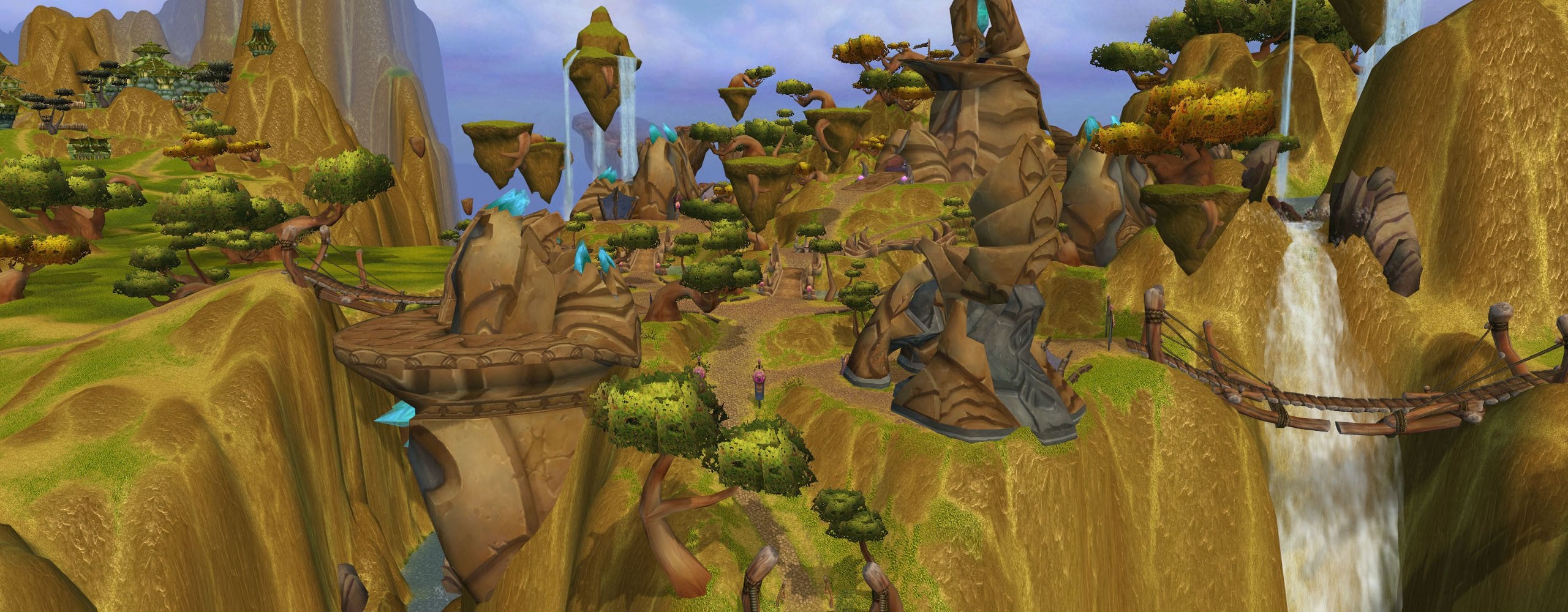
TBC Classic Anniversary leveling zones are the same as in the regular Classic version, but you’ll move through them a bit faster in the Anniversary edition thanks to reduced XP requirements, more quest hubs, and earlier mounts.
From 1 to 58, going through Azeroth is about as before, just faster and with fewer dead zones. Once you hit the late 50s, though, you’ll start getting ready for that Outland crusade.
Use this table to know where you’ll go at different level ranges. You do not need to complete every quest in every zone. Move on once quests turn green, or travel starts slowing you down.
|
Level Range |
Zone |
Key Notes |
Dungeons |
PvP |
|
1–10 |
Human starting zone with tight quest loops |
None |
No |
|
|
1–10 |
Dwarf and Gnome start with decent mob density |
None |
No |
|
|
1–10 |
Night Elves start is considered generally faster |
None |
No |
|
|
10–20 |
High-value quest chains and solid rewards |
Deadmines |
No |
|
|
10–20 |
Linear quest flow and low travel |
None |
No |
|
|
10–20 |
Dense hubs and steady XP |
None |
No |
|
|
20–30 |
Good XP and quests are close to each other |
None |
Likely |
|
|
20–30 |
Longer travel, good quests if you plan routes |
None |
No |
|
|
20–30 |
Faster with grouping, higher PvP risk |
Blackfathom Deeps |
Yes |
|
|
30–40 |
Huge quest volume, high gank risk |
None |
Yes |
|
|
30–40 |
Optional filler zone with slower progression |
None |
Yes |
|
|
30–40 |
Short loops, good transitions |
None |
Yes |
|
|
40–50 |
Central hub and great quest rewards |
Zul’Farrak |
Yes |
|
|
40–50 |
Lots of quick questchains and good XP pockets |
Dire Maul |
Yes |
|
|
45–50 |
Combat heavy, compact zone |
None |
Yes |
|
|
50–55 |
Excellent quest density and fast leveling |
None |
Likely |
|
|
55–60 |
Fast XP and good pre-Outland prep |
Scholomance |
Likely |
|
|
55–60 |
Endgame-style quests and good rewards |
Stratholme |
Likely |
|
|
58–62 |
Best entry to Outland, very fast XP |
Hellfire Ramparts |
Yes |
|
|
61–64 |
Dense hubs and low travel time |
Slave Pens |
Yes |
|
|
62–66 |
Reputation-friendly questing |
Mana-Tombs |
Yes |
|
|
64–66 |
High mob density, huge XP per hour |
None |
Yes |
|
|
65–68 |
Slower progression but with solid rewards |
None |
Yes |
|
|
67–70 |
Fast XP and great gold from quests |
The Mechanar |
Yes |
|
|
67–70 |
Final stretch, longer quest chains |
None |
Yes |
From level 58, Outland quest rewards will totally replace your old-world gear. You should stop chasing Azeroth quests once you can visit Hellfire Peninsula. The XP that you’ll get there is way higher than in Azeroth, and dungeon quests there are way better too.
Horde Zone Progression (1–70)
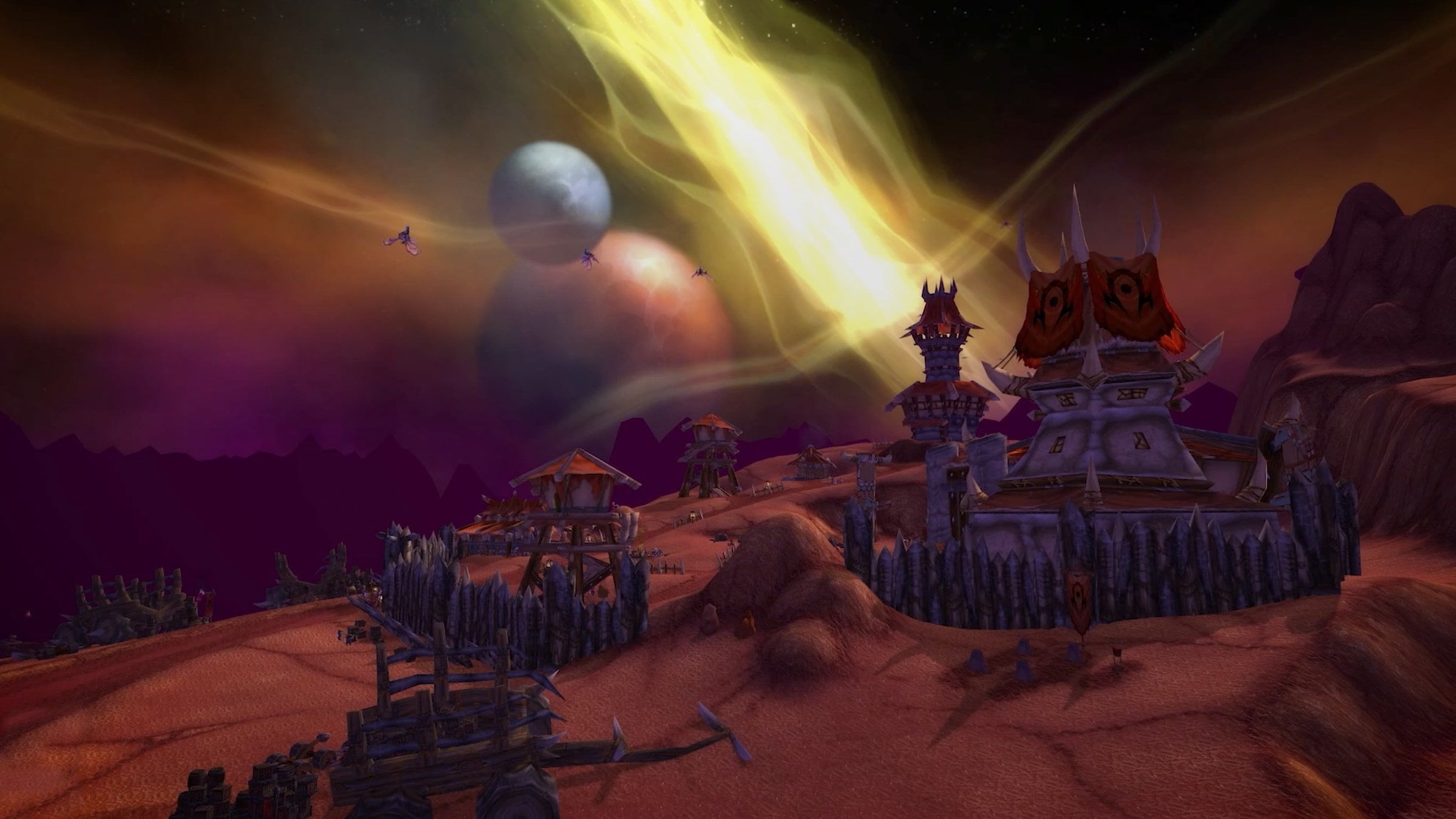
Horde TBC Classic Anniversary level zones follow a similar progression logic to Alliance, but you spend more time in contested zones, especially from the mid-20s onward. In the Anniversary version, reduced XP requirements and added quest hubs speed things up, so you move through Azeroth faster and hit Outland earlier with less grinding.
Again, you are not meant to clear every quest in every zone. Move forward once travel slows down or quests turn green.
|
Level Range |
Zone |
Key Notes |
Dungeons |
PvP |
|
1–10 |
Orc and Troll starting zone, compact quests |
Ragefire Chasm |
No |
|
|
1–10 |
Undead start with good early rewards |
None |
No |
|
|
1–10 |
Tauren start, very safe but slower |
None |
No |
|
|
1–10 |
Blood Elf starting zone, genuinely fast progression |
None |
No |
|
|
10–20 |
Huge quest volume and they’re close to each other |
Wailing Caverns |
No |
|
|
10–20 |
Short quest loops, easy XP |
Shadowfang Keep |
No |
|
|
10–20 |
Excellent follow-up to Eversong |
None |
No |
|
|
20–30 |
Compact hubs, but more dangerous |
None |
Yes |
|
|
20–30 |
Quick quests, heavy PvP |
None |
Yes |
|
|
20–30 |
Dense mobs and frequent conflict |
Blackfathom Deeps |
Yes |
|
|
30–40 |
Massive XP potential, gank heavy |
None |
Yes |
|
|
30–40 |
Slower but steady progression |
Maraudon |
Yes |
|
|
30–40 |
Optional filler zone |
Uldaman |
Yes |
|
|
35–45 |
Great quest rewards and density |
Dire Maul |
Yes |
|
|
35–45 |
Short quest chains, good XP |
Sunken Temple |
Yes |
|
|
40–50 |
Central hub with fast turn-ins |
Zul’Farrak |
Yes |
|
|
43–50 |
Combat-heavy and compact |
None |
Yes |
|
|
48–55 |
One of the fastest zones for XP |
None |
Likely |
|
|
48–55 |
Linear questing and good rewards |
None |
Likely |
|
|
50–60 |
Quicker leveling and story chains |
Scholomance |
Likely |
|
|
50–60 |
Huge XP and dungeon access |
Stratholme |
Likely |
|
|
55–60 |
Optional but steady zone |
None |
Likely |
|
|
58–62 |
Best Outland entry, huge XP gains |
Hellfire Ramparts |
Yes |
|
|
61–64 |
Dense hubs and fast loops |
Slave Pens |
Yes |
|
|
62–66 |
Reputation-friendly quests |
Mana-Tombs |
Yes |
|
|
64–66 |
High mob density and elite options |
None |
Yes |
|
|
65–68 |
Slower progression, but good rewards |
None |
Yes |
|
|
67–70 |
Excellent XP and gold income |
The Mechanar |
Yes |
|
|
67–70 |
Final leveling stretch |
None |
Yes |
Once you reach level 58, it’s time to go to Outland and leave Azeroth behind. Literally. Quest rewards scale better, dungeon quests give massive experience, and reputation gains start paying off for the endgame.
TBC Classic Anniversary Class Leveling Tips

TBC Anniversary leveling is different for each class, and it’s not because of the different edition of the game; it’s just a core principle of the earlier WoW. Below are a few class-related leveling tips and overviews that teach you how to get that lvl 70 a little bit faster:
- Druids are classic jack-of-all-trades levelers. Early levels can feel slow until Bear and Cat forms come online. Feral is the fastest and most reliable option, while Balance remains playable but unremarkable. The strength of the class comes from flexibility rather than raw speed.
- Hunter is the easiest and fastest class to level. Your pet does most of the work, which means almost no downtime. Beast Mastery is the clear choice, letting you chain pulls without stopping. This works all the time - from early levels all the way to max.
- Mages level quickly and fit easily into both dungeon and solo routes. All specs are viable. Frost excels at AoE farming, while Fire and Arcane focus on serious single-target damage. Free food and water remove downtime, and dungeon groups always want Mage utility.
- Paladins level slowly but very safely. Retribution is the best choice for solo play, while Protection shines if you focus on dungeons. Good defensives and self-healing make mistakes forgiving, even if kill speed never feels impressive.
- Shadow Priest is the standout leveling spec. It combines solid damage with pretty solid sustain and useful debuffs. Downtime is minimal once Shadow tools come online. Holy and Discipline only make sense for dungeon-heavy leveling or dedicated group play.
- Rogue leveling is kinda okay, but not anywhere fast. Combat is the best option thanks to steady damage and Blade Flurry. Stealth helps avoid unnecessary fights, but overall progress depends heavily on weapon quality and good planning.
- Shamans benefit a lot from how fast the Anniversary edition feels. Enhancement is faster and more reliable due to low mana issues and decent weapon scaling. Elemental works but drinks more often. Ghost Wolf is a major advantage and should be used constantly.
- Warlocks have almost no downtime while leveling. Pets tank enemies while you apply DoTs and cast Shadow Bolt. Life Tap and Drain Life removes the need to stop and recover. This makes leveling way quicker from start to finish.
- Warrior leveling is slower and very gear-dependent. Arms is the safest choice, while Fury only performs well with good weapons. Early levels are punishing, but dungeon tanking helps offset weak solo performance. Weapon upgrades are critical.
These TBC Classic Anniversary leveling tips should help you reach the max level much quicker. And there you have it!
Preparing for Outland (Levels 58–70)
Are you getting close to level 55-60? Congrats. You have about 10 more levels to go and a whole new set of zones to go through. These new zones are smaller but more densely packed. The dungeon rewards will give you bigger upgrades to your gear. But, you do gotta prepare before you step through the Dark Portal.
Before you go, you should make sure your character is ready in a few key areas. This is not about being overgeared. It is about avoiding friction once the leveling speed really ramps up.
Here is a quick checklist you should complete before heading to Hellfire Peninsula:
|
Preparation Area |
What You Should Have Ready |
|
Level |
58 minimum, 59 recommended |
|
Gold |
Enough for repairs, skills, and flight paths |
|
Bags |
At least 14–16 slot bags |
|
Professions |
Gathering skills active and up to date |
|
Quest Log |
Mostly empty |
Having space in your bags matters more than you think. Outland quests reward a lot of vendor trash and usable gear, and frequent vendor trips kill momentum. Clearing your quest log also prevents you from hitting the cap while chaining Hellfire quests.
Once you arrive in Outland, stick to one zone at a time until you have completed all of its quests. Then you can move on.
Dungeons here also hit differently. Hellfire Ramparts and Blood Furnace are huge experience boosts if you enter them at the correct level and with quests picked up. One or two clean dungeon runs per zone is more than enough. Farming them nonstop will slow you down, which is bad. Unless you are tanking or healing nonstop.
Gear expectations also change after 58. Old raid gear is fine, but it is not really that necessary. Quest rewards in Hellfire and Zangarmarsh quickly replace most pre-Outland items, except for weapons. If your weapon is too weak for the new zone, replace it as soon as possible, even if it comes from a simple quest reward.
Finally, remember that levels 58–70 are the final stretch. There’s no need to go back to Azeroth for any type of leveling. Trust me - don’t waste your time. Train your skills, vendor smartly, and keep moving forward through Outland zones.
Read our other TBC Classic Anniversary guides:
F.A.Q.
Is leveling faster in TBC Classic Anniversary?
Yes, leveling is noticeably faster compared to the original TBC Classic. Experience gains are higher, and downtime is reduced, especially in the early levels.
What is the fastest way to level in TBC Classic Anniversary?
The fastest method is questing mixed with well-timed dungeon runs. You should focus on green and yellow quests, reduce travel time, and use dungeons for major experience spikes.
When should I go to Outland?
You should enter Outland at level 58. Going later offers little benefit, since Outland quests and gear upgrades are significantly stronger than old-world content.
Is dungeon leveling worth it?
Dungeon leveling is worth it when done strategically. Pick up all dungeon quests and avoid repeating the same instance past its optimal level range.
What is the max level in TBC Classic Anniversary?
The maximum level is 70. This remains unchanged from The Burning Crusade expansion.
How long does 1–25 leveling take now?
Most players can reach level 25 in roughly 8 to 12 hours. Class choice, experience, and routing can push this higher or lower.
What are the best classes for leveling in TBC Classic Anniversary?
Strong leveling classes include Hunter, Warlock, Mage, Druid, and Paladin. These classes offer faster leveling thanks to pets, self-healing, AoE damage, or dungeon flexibility.